
The Mandarin Oriental adventure began 150 years ago in Bangkok
The hotel is in the Olympus of high hospitality, taking seventh place in the 50 Best Hotels of the World in 2025
by Sara Magro
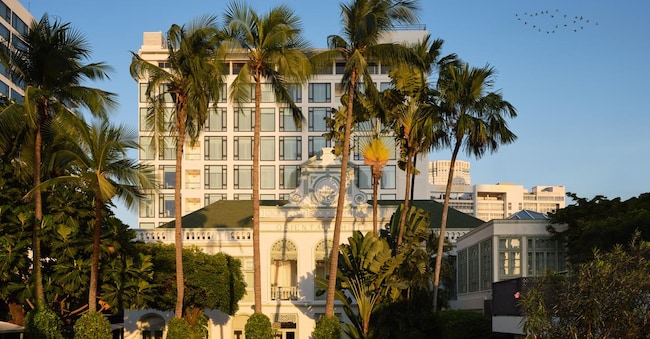
When you arrive at the Mandarin Oriental in Bangkok, you feel its grandeur at once. Now ranked seventh in the 50 Best Hotels of the World. The liveried concierge opens the car door with old-fashioned courtesy. You enter, look around, and breathe in history, even though everything is as perfect as if the hotel had opened yesterday. In the lobby there are people sitting, as in their living rooms, under woven wicker chandeliers. The atmosphere is colonial at times, contemporary with international comings and goings, relaxed on the terraces and around the pool. It is always contemplative, because from every corner the metropolis appears, jostling between the past of wooden long-tail boats and the present of skyscrapers and shopping malls as in Tokyo and New York.
A hotel that tells Thailand
Each floor has a butler. When you leave the spacious room, overlooking the Chao Phraya river, he greets you, asks if you need anything and escorts you to the lift. In the corridors, objects and books about Thailand are arranged. Breakfast is a festive feast: fresh fruit, cold meats, breads, cakes, expresso eggs, white rice and a smattering of cooked food. To go to the spa, on the other shore, you take the dragon-shaped boat and in a few minutes you surrender yourself to an ancient world of rituals and wise gestures that make you feel good. It is difficult to choose between twelve restaurants, but two are a must: La Normandie with Anne Sophie Pic's two Michelin stars and the China House with the recent arrival of Fei, one of China's top chefs. A dress code is recommended here, while during the day there are no formalities. In front of Bamboo Bar, there is a guy drinking a Shooting Star, the house drink, smoking a cigar and scrolling through the notifications coming in from the West where it is still business hours. When it's time to leave, you're already thinking about when you'll be back, because you've barely breathed in the history and life of this hotel that seems like a portion of a global village, where everything works.
A story that began in 1863
Indeed, when it came to the proverbial hospitality of the East, the Mandarin Oriental in Bangkok was always the prime example. At least, so claimed Marlon Brando, Elizabeth Taylor, Audrey Hepburn, Princess Diana. And hotels they had seen. The hotel's history began in 1863, when two American captains - Atkins Dyer and William West - set up a simple 'rest house' on the river to accommodate the first foreigners, merchants, businessmen, diplomats. Too bad that a fire destroyed it two years later and in its place, in 1876, opened its doors The Oriental, a new structure built by three Danes - Hans Niels Andersen, Peter Andersen and Frederick Kinch - with the intention of making it the first grand hotel by international standards in Bangkok and Thailand. The predictions were correct: the Oriental immediately became the reference point for Western travellers and with the change of owners - from Madame Maria Maire in the early 20th century to the Italian entrepreneur Giorgio Berlingieri between the 1960s and 1980s, the service improved to the point of becoming legendary, with afternoon tea in the Authors' Lounge, jazz concerts in the Bamboo Bar, divine massages, and an endless number of anecdotes. For example, the British playwright Noël Coward, a regular in the 1930s, used to write wrapped in a silk dressing gown, drinking champagne from breakfast and demanding fresh flowers every day, tea always at the same time and absolute silence in the corridor. Trained to a sacred respect for privacy, the waiters became magnanimous accomplices to the guests' fixations. They were the strong point of the Oriental where everything happened. During the Second World War, it was one of the few safe places where diplomats and secret agents could meet. It was rumoured that a spy could hide at every table, and the staff were instructed not to ask questions or listen in on conversations. Discretion has always been a dowry of the staff, rigorously in ties, mostly Thai and enduring: some have served for 30, 40, even 60 years, displaying a culture of continuity and familiarity that is difficult to equal. Perhaps the most important legacy of this history of kindness, care and loyalty. The most recent chapter in this monument began in 1974, when 49% of the Oriental was acquired by the holding company that already owned The Mandarin, another luxury Hong Kong hotel. It was the first step in the birth, in 1985, of Mandarin Oriental, a new group that today has a portfolio of 33 outstanding hotels, resorts and residences worldwide.

