
The maritime economy is worth 225 billion, and businesses are growing
Unioncamere report: direct added value stands at 78.9 billion, whilst total added value accounts for 11.4 per cent of Italia’s GDP

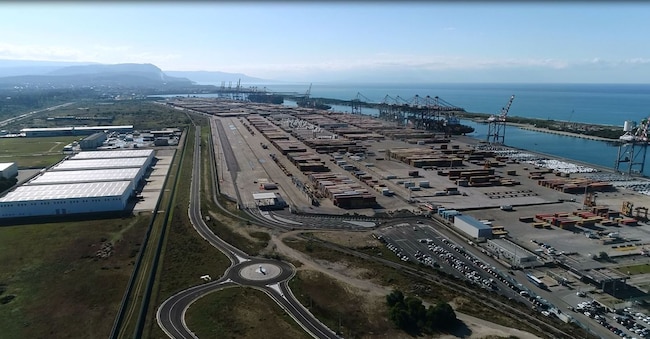
Italy’s blue economy is growing, now worth almost 225 billion, equivalent to 11.4 per cent of national GDP, with the South remaining the region with the greatest influence on the ‘maritime sector’. This is according to the 14th National Report on the Maritime Economy, drawn up by the Ossermare observatory in collaboration with the Tagliacarne Study Centre – Unioncamere, Informare, the Frosinone-Latina Chamber of Commerce and the Blue Forum Italia network. The document, which *Il Sole 24 Ore* is able to preview, will be presented today in Rome at the Ministry of Enterprise and Made in Italy, as part of the Blue Forum 2026.
According to the new Report, Italia’s maritime economy generates direct added value of 78.9 billion euros which, if we take into account the value generated in the rest of the economy (with a multiplier that has remained stable at 1.8 this year: that is, for every euro spent in sectors directly linked to the maritime sector, a further 1.8 euros are generated), amounts to 224.9 billion, equivalent to 11.4 per cent of Italia’s GDP. In the previous report, presented in July 2025, direct value added stood at 76.6 billion, whilst the value generated reached 216.7 billion and accounted for 11.3 per cent of GDP. Growth across the board, therefore, complemented by growth in the number of businesses and the workforce: in 2026, there were 253,599 businesses and 1.13 million people in employment, whereas in the previous year’s survey there were 232,841 businesses and 1.08 million people in employment.
Furthermore, if we consider the growth figures recorded by the Tagliacarne Institute in the Istat accounts for March 2026 – which update those from July 2025 – the Report confirms that the total value added of the maritime economy grew by approximately 9.6 billion, whilst direct value added rose by 3.8 per cent, compared with 2.1 per cent for the national economy; which, in absolute terms, equates to an annual increase of approximately 2.9 billion euros. As for the workforce, the rise in employment stands at +4.2 per cent, a figure almost three times that of the overall growth recorded in the Italian economy. The South, the 2026 Report goes on to state, remains the region ‘with the greatest weight within the “maritime system”, accounting for 34.2 per cent of value added and 39.9 per cent of employment across the entire national maritime economy. Central Italy also plays a significant role. The region generates 30.2 per cent of the added value and 29.7 per cent of employment in Italia’s blue economy. The figures are lower for the North. More specifically, the North-West accounts for 18.3% of the country’s blue value added and 14.4% of blue employment. Similar figures apply to the North-East, which accounts for 17.3 per cent of value added and 16 per cent of employment in the ‘blue’ economy.
The leading regions, in terms of the blue economy’s share of total regional GDP, are Liguria (14.4 per cent), Sardinia (7.5 per cent), Friuli-Venezia Giulia (7.3%), Campania (7.1%), Sicily (7.0%) and Lazio (6.8%). And, looking at the provinces, these are Trieste (21.4 per cent), Livorno (19.4 per cent), La Spezia (17.1 per cent), Genoa (16.2 per cent), Rimini (12.7 per cent) and Venice (12.3 per cent). As for human capital, although not immune to the problem of the mismatch between labour supply and demand, the data reveal ‘greater resilience in the “maritime sector”, with 65.9 per cent of maritime businesses reporting difficulties in finding staff with the right skills, compared with 68.4 per cent for the economy as a whole’.
According to Andrea Prete, president of Unioncamere, “the importance that the maritime economy has assumed, including at European level, in terms of its contribution to growth and employment, highlights how this sector has become a genuine driver of industrial policy. This is because it encompasses all the components of development, in terms of manufacturing, logistics, tourism and infrastructure.”


