Forecasts

The gallery market is measured by uncertainty

From the slowdown in 2025 to strategies for 2026: more selective trade fairs, new growth models and international collaborations

In galleria

5' min read

Translated by AI
Versione italiana

5' min read

Translated by AI
Versione italiana

From 2024 to 2025, the Italian tunnel sector went through a complex phase, moving between structural criticalities and signs of resilience. Between caution and renewed optimism, a portrait emerges of a sector aware of the difficulties but still capable of intercepting opportunities and rethinking its strategies.

A survey by Arteconomy24, in which some of Italy's leading galleries participated, reveals a 2025 made up of lights and shadows: fairs with slower results, a generational change in collecting that is still incomplete and increasingly selective growth strategies. The sector looks ahead cautiously, but continues to reorganise itself through new collaborations and international projects, outlining a picture that suggests possible opportunities for growth and consolidation in 2026 for those who know how to combine tradition, innovation and global visibility.

Loading...

The 2025 trend and expectations for 2026

This is the context for the assessments of the gallery owners interviewed, which reveal an articulated panorama, marked by prudence, but also by strategies of adaptation and repositioning. For Davide Mazzoleni, owner of Mazzoleni, Turin, in 2025 the main difficulty was the prudence of collectors, which lengthened decision-making times and reduced enthusiasm in purchases, especially in the medium-high bracket. Added to this was the increase in operating costs - in particular logistics, insurance and participation in fairs - which made even more selective and strategic planning necessary. Against this backdrop, the 2025 turnover "remained stable overall, sustained by a greater weight of private sales and by collectors increasingly oriented towards quality rather than quantity, in line with a trend that is now evident globally". The art dealer, who has recently opened an office in Milan as well, looks to 2026 with cautious optimism: "It is reasonable to expect moderate growth, sustained not so much by an increase in volumes as by more structured operations, by a greater incidence of private sales and by a growing focus on works with a solid historical and curatorial basis".

The year just ended for the Raffaella Cortese Gallery (Milan, Albisola) was slightly down on 2024. During the year, the main difficulties concerned the collection of receivables and payment delays, while some exhibitions did not achieve the expected results. For 2026, 'expectations are geared towards the recovery of the slight losses and a general improvement in economic results, with a recovery in turnover that we hope will be at least 20%,' explains Raffaella Cortese. A goal that should be supported by investments in digital tools, personnel and international projections - such as biennials and institutions - as well as new artistic choices capable of accompanying this growth. However, some uncertainties remain, particularly related to the generational change in collecting: the number of young collectors remains limited and average budgets are consequently lower.

More stable, but without a real trend reversal, is the balance drawn by Francesca Simòndi, owner of Simòndi Gallery, Turin.
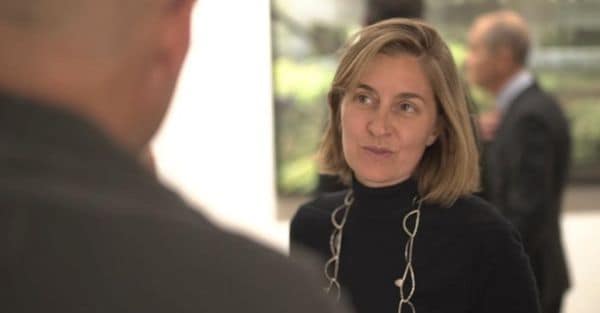
Francesca Simondi, titolare di Simondi Gallery

"After a net decrease between 2023 and 2024, the situation has gradually stabilised, but without any real recovery; turnover is therefore decreasing; a significant element of the last two years has also been the sharp increase in operating costs, which has significantly affected the overall economic sustainability, squeezing margins even further.

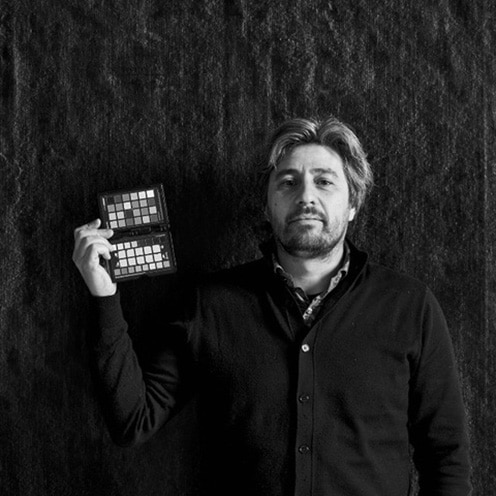
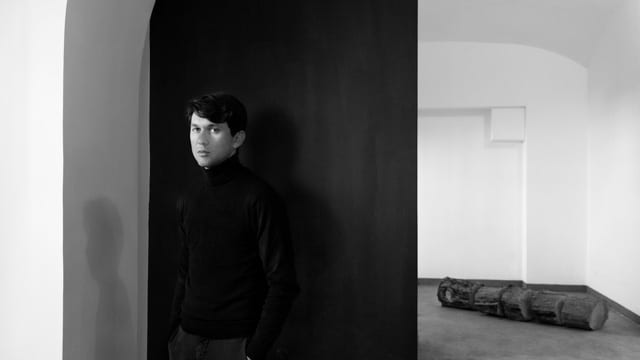
Nicolò Fano titolare di Màteria

Different, but no less cautious, is the interpretation of Nicolò Fano owner of Màteria, Rome, according to whom the 2025 figures confirm the stabilisation "of the imbalances of a complicated period. Successfully overcoming such a difficult phase, for galleries like ours, is a positive sign and confirms a strategy that sees gradual growth as the antidote to an era marked by uncertainty'. Based on the trend at the end of 2025, the gallery closed with a growth in turnover, while maintaining a cautious approach in its forecasts.

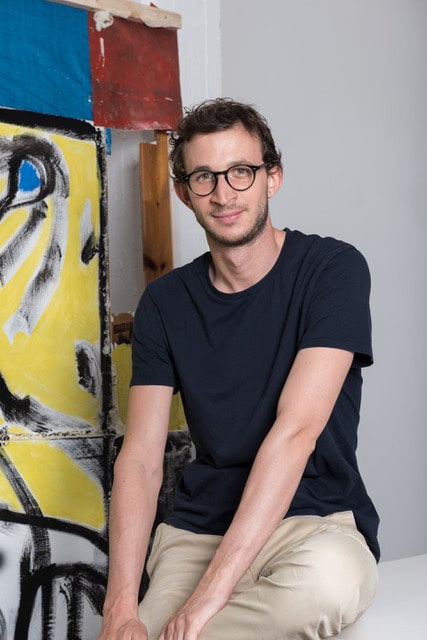
Matthew Noble, titolare di ArtNoble Gallery (Photo credit Michela Pedranti)

For Matthew Noble, owner of ArtNoble Gallery in Milan, the balance of 2025 was positive with a slight increase in turnover, "especially considering the emerging nature of the gallery and the artists represented," explained the young gallery owner. The main difficulty, as already indicated by other colleagues, was the uncertainty of the market, "this climate has made collectors more cautious and less inclined to invest, especially in the segment of first market works, which tends to be more affected by phases of economic and geopolitical instability". Making forecasts always remains complex - it's a bit of a 'jackpot'," Matthew Noble continues, "but we are forecasting growth and are working on a more structured business model that, if the environment allows, should lead us to an increase in turnover during 2026.

Dario Bonetta di A+B gallery (Photo courtesy Alberto Petrò)

The year 2025 closed with results that were overall better than expected for A+B Gallery in Brescia, although it confirmed a still complex picture. "The year," explains gallery owner Dario Bonetta, "was in fact characterised by a new phase of contraction and the need for further capital injections into the business; the 2025 turnover dropped by approximately 20 per cent. For 2026, the objectives are to recover losses, resolve outstanding situations, and consolidate the positioning achieved, while aiming for moderate development in foreign markets'.

The future role of trade fairs

A transversal theme that emerged from the survey concerns the role of art fairs, which are increasingly expensive and, in many cases, difficult to sustain. The balance between participation costs and commercial results often appears unbalanced, calling into question a model that risks becoming structurally unsustainable, opening up the need for in-depth reflection on its future.

According to Davide Mazzoleni: "trade fairs remain central, but with a different meaning compared to the past: no longer just places for immediate transactions, but platforms for relations, positioning and project dissemination. In line with what is observed in international collecting, fairs are used to increase visibility and the catchment area, also through greater attention to the quality of the proposal. With this in mind, we will continue a strategy of optimising our trade fair and exhibition presence, with an increasingly targeted dialogue with collectors, both in Italy and abroad, particularly in the East".

More critical is the position of Raffaella Cortese, who emphasises: "how the costs of participating in fairs are steadily increasing, while margins have progressively decreased, to the point where the gallery is left with an average of 15-20 per cent. In 2025, fairs nevertheless represented an important opportunity to make contact with new collectors from different geographical contexts, in particular from Asia'.

The Màteria gallery in Rome has chosen to adopt a more selective strategy: not being able to sustain a high number of appointments, the focus has been on fairs that over time have demonstrated consistency, curatorial quality and care for exhibitors, balancing the presence between Italy and abroad with approximately two national and two international fairs per year. The stand-sharing experience - started by the gallerist at Art Düsseldorf with the A+B gallery in Brescia - was further expanded thanks to a particularly positive collaboration at Paris Photo with Large Glass (London). Looking ahead to 2026, Fano explains: "this collaborative attitude is destined to strengthen further and the sharing of a stand in the Main Section of Arte Fiera Bologna with the Monitor gallery (Rome, Lisbon), with whom a collaboration is also active in Rome, has already been announced. This will continue at Art Brussels, in the Discovery section, where a curatorial dialogue project between Thomas Braida (Monitor's artist) and Francisca Valador will be presented".

Each gallery searches for its own spaces and finds different strategies to make ends meet, always guaranteeing a high offer to collectors and a highly collaborative relationship with international colleagues.

Copyright reserved ©
Loading...

Brand connect

Loading...

Newsletter

Notizie e approfondimenti sugli avvenimenti politici, economici e finanziari.

Iscriviti