Cannes

'The Meltdown', a political thriller about historical memory from Chile

The Un certain regard section featured the new feature film by Manuela Martelli, already director of the successful '1976'

by Andrea Chimento

3' min read

Translated by AI
Versione italiana

3' min read

Translated by AI
Versione italiana


Loading...


Manuela Martelli is really starting to be a name to be reckoned with: after the highly successful debut feature '1976', the Chilean director signed a second equally interesting feature film, entitled 'The Meltdown', which was included in the Un certain regard section of this year's Cannes Film Festival.

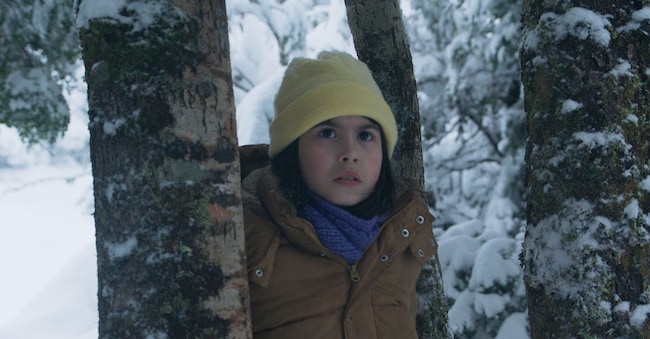
Set in Chile in 1992, at a time when the dictatorship is formally over and the country is undergoing a complex democratic transition, 'The Meltdown' tells the story of Inés, a nine-year-old girl who has been left temporarily by her parents in the care of her grandparents, who own an isolated hotel in the mountains in the middle of the ski slopes.
Among the tourists he has to deal with is Hanna, a 14-year-old German skier who mysteriously disappears one night.

Despite the moment in time that is narrated, one can feel the full weight of the historical memory of the dictatorship in this film, which curiously and unconventionally thinks around themes that recall the tragedy of the Desaparecidos.

At the same time, however, it is probably no coincidence that Martelli chose as his other main character a German girl, born in the context of those two Germanies that ceased to exist just a few years ago.


An engaging script


The search for the missing young woman is, however, only ostensibly the narrative heart of this thriller, which, rather than the investigation, is interested in the effects that this disappearance will soon begin to have, as much in Inés as in the other characters on the scene.

Childhood is recounted by Manuela Martelli in an unconventional way, leading us to take the little protagonist's gaze but also, at the same time, to share her own limitations, caused by a perspective that is still immature and unable to fully grasp what is happening around her.

Although the first part is more incisive than the second, the film has a script that remains engaging until the end, thanks also to the good rhythm of an editing that keeps the attention constantly high.

Some passages are a tad didactic, but the symbolism proposed - starting with the snowy setting - stimulates more than one reflection and confirms the director's style as one of the most original in contemporary South American cinema.


Congo Boy


Also within Un certain regard was another film that is important to talk about: 'Congo Boy', by 1997-born Congolese director Rafiki Fariala.

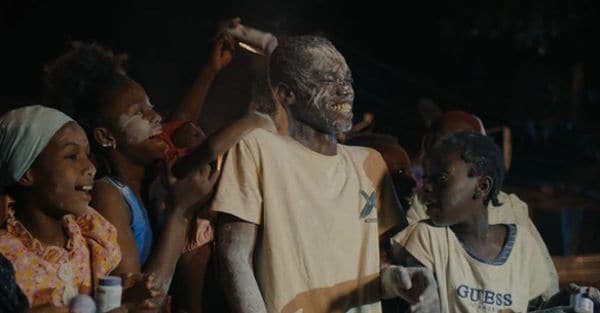
Set in Bangui, Central African Republic, the film stars Robert, a 17-year-old boy who dreams of a musical career. However, civil war is tearing the country apart and he finds himself having to take care of his younger siblings when his parents end up in prison.

Fariala's second work (the first, 'We, Students!' had been at the Berlinale in 2022), 'Congo Boy' is a sincere product that shows all the saving power of music and art in general.

There are perhaps no great sequences to be memorised, but the overall design holds up for the entire duration and the significant messages are numerous: from the individual's courage to never give up, despite serious difficulties, to the socio-political investigation of the condition of an entire country, Fariala knows what he is getting at and his work is among the most interesting seen in this first week of the Cannes Film Festival.

Copyright reserved ©
Loading...

Brand connect

Loading...

Newsletter

Notizie e approfondimenti sugli avvenimenti politici, economici e finanziari.

Iscriviti