New York

The Met gets even bigger with the Neue Galerie

The merger will be completed in 2028 and will bring the exceptional German and Austrian modern art collections of the institution founded by Ronald Lauder into the museum's encyclopaedic collection on Fifth Avenue

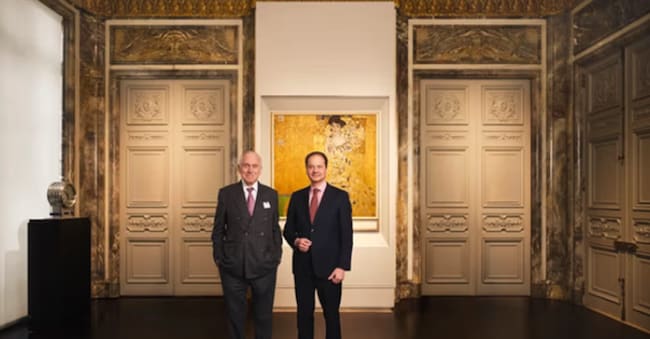
by Marilena Pirrelli

“Ritratto di Adele Bloch Bauer” di Klimt alla Neue Galerie

8' min read

Translated by AI
Versione italiana

8' min read

Translated by AI
Versione italiana

The Metropolitan Museum of Art ("The Met") and the Ronald S. Lauder Neue Galerie New York ("the Neue Galerie") have a historic agreement to merge the Neue Galerie with the Met, scheduled for 2028. The agreement will bring together the most important collection of 20th century Austrian and German art outside Europe under one institution, while preserving the unique museum experience of the Neue Galerie. Coinciding with the 25th anniversary of the Neue Galerie, the agreement represents a fundamental step towards the preservation and enhancement of this extraordinary cultural heritage for future generations. The Neue Galerie's collection includes iconic works by Gustav Klimt, including the famous 'Portrait of Adele Bloch-Bauer I', as well as masterpieces by Egon Schiele, Oskar Kokoschka, Ernst Ludwig Kirchner, Max Beckmann, Gabriele Münter, Josef Hoffmann and many others. The historic partnership between the two institutions reflectsRonald S. Lauder's long-standing vision for the Neue Galerie and a shared commitment with the Met to ensure perpetual access to the Neue Galerie's prestigious collection and museum space.

Extending its decades-long leadership in building one of the most important collections of its kind, the Met and the Neue Galerie have also announced that Mr. Lauder and his daughter Aerin Lauder Zinterhofer intend to donate to the joint institutions a selection of 13 exceptional 20th century Austrian and German paintings from their personal collection, which will further enhance the strength of the Museum's collection and enrich this crucial period in art history. Among the donations that Mr. Lauder will make at the conclusion of the agreement are: Gustav Klimt's exceptional large-scale portrait 'Die Tänzerin (The Dancer)' circa 1916-18; works already in the collection include 'Die Russische Tänzerin Mela (The Apple of the Russian Dancers)' by Ernst Ludwig Kirchner (1911) and 'Umberto Gallery' by Max Beckmann (1925). Future donations promised by Ronald S. Lauder and Aerin Lauder Zinterhofer include The Black Feather Hat (1910) by Klimt and important works by Otto Dix, George Grosz, Franz Marc and others.

Loading...

As part of their long-term commitment to the management of the Neue Galerie, Ronald S. Lauder and Aerin Lauder Zinterhofer also plan to make a substantial donation to support a fund for the long-term care and preservation of the gallery, with a further commitment of substantial funds to support the costs associated with the integration of the collection and the management of the building.

In support of this historic donation and initiative, and to ensure the continued operation of the Met and the Neue Galerie indefinitely, several members of the Met's Board of Trustees have made donations to create a major endowment fund. The largest donation came from Marina Kellen French, a Board member and long-time supporter of the Met and Lauder family. Early major funding has also been pledged by Met trustees Candace K. Beinecke, Jim Breyer, Daniel Brodsky, Richard Lockwood Chilton Jr., Betsy Cohen, Stephen M. Cutler, Robert Denning, Blair Effron, Amy Griffin, Yan Huo, Hamilton ("Tony") E. James, Michael B. Kim, Julia Koch, Sacha Lainovic, Janice YK Lee, Dasha Zhukova Niarchos, John Pritzker, Frank E. Richardson, Jennifer Rubio, Alejandro Santo Domingo, Karen Seymour, Beatrice Stern, Gaby Sulzberger, David Winter and other anonymous donors.

ronald S. Lauder, co-founder, president and chairman of the board of directors of the Neue Galerie, said: "Over the past twenty-five years, the Neue Galerie's exhibitions, permanent collection, design and book shops, and Café Sabarsky have created an experience that transports visitors to another era: early 20th century Vienna and Weimar Germany. The merger with the Met in 2028 will preserve and strengthen the legacy of the Neue Galerie forever. I am particularly grateful to Max Hollein for his leadership and deep understanding of the historical importance of this collection. Under his leadership, the Met continues to distinguish itself not only as one of the world's greatest museums, but also as a steadfast custodian of culture, memory, and identity. I am confident that Max and the Met are ideally placed to help preserve this legacy for the future. Through this partnership, we can take the Neue Galerie forward with prestige." Ronald S. Lauder has long been a major supporter of the Met, particularly through his promised donation of 91 works of European arms and armour, one of the most significant contributions to the Museum's collection in this field in decades, announced in December 2020. In recognition of Mr. Lauder's philanthropy, the arms and armour section of the Museum was named after him: the Ronald S. Lauder Arms and Armour Galleries. His support has strengthened the Met's ability to present this material at the highest level of scientific rigour and public engagement.

Concluding the deal Max Hollein, Director and CEO of the Met, said: 'Ronald Lauder is a collector without equal. Among his many fields of interest, Austrian and German fin de siècle art is the one he is most devoted to. Ronald has created a museum that is in itself a work of art and ultimately a profound reflection of his passion, expertise and philanthropy. We are deeply grateful to Ronald, Aerin and their family for their generosity and long-standing commitment to sharing their magnificent collection with the world, and we are honoured to carry on their extraordinary legacy. I also express my gratitude to Marina Kellen French and our many Board members who have generously committed to supporting this initiative."

The merger

The Met and the Neue Galerie plan to complete the merger and bring the Neue Galerie's collection and its William Starr Miller House under the Met's ownership in 2028, after obtaining all necessary approvals. Once completed, the Neue Galerie and the William Starr Miller House will be renamed The Met Ronald S. Lauder Neue Galerie. The unified museum will continue to display the collection, carry out programming, and welcome visitors to its galleries, shops, and the popular Café Sabarsky. The larger assets of the Neue Galerie, including its endowment fund, will be transferred to the Met and will help sustain the collection and activities. The Met's Ronald S. Lauder Neue Galerie will join the Met Fifth Avenue and Met Cloisters as a new member of the Metropolitan Museum of Art. By bringing together the curatorial and operational expertise of the Met and the Neue Galerie, the merger would expand the Neue Galerie's programmes and research capabilities, as well as introduce the collection to a broader audience, both locally and internationally, through increased interpretation, digital initiatives, and collaborative programmes. It would also create new opportunities for curatorial research and exchange, allowing the works of the Met and the Neue Galerie to be explored and presented in new and dynamic ways that honour the founding missions of both institutions. To guide this new chapter, the Met and Neue Galerie would jointly establish a dedicated Special Advisory Board, with Ronald S. Lauder as its first chair.

The story of Ronald S. Lauder in his letter

"From the very beginning, the Neue Galerie has been a deeply personal and enduring passion for me. I often think back to my childhood in New York in the late 1950s and early 1960s, a time when art and creativity flourished simultaneously. In many ways, it must have seemed like Vienna half a century earlier. That was the world that shaped me. One evening, my parents took me to dinner at the Met to celebrate the donation of aPierre Bonnard painting by Florence Gould. I found myself seated among many of the leading collectors of the day, people whose generosity would later define the great museums of this country. I sat there, absorbing everything, and began to imagine what a life as an art collector would be like. I remember thinking that I would be lucky to become a great art collector, or perhaps a great collector of drawings, or even a great collector of medieval art. The next day, I met Florence Gould and told her about these ambitions. I have never forgotten her answer: "Why not be all three?".
In 1967 I met Serge Sabarsky, who became my mentor, partner and friend for the next 29 years. A decade later, Serge and I began to share a vision: to create a museum dedicated to Austrian and German art. In 1994, we found the ideal home in the William Starr Miller House, at the corner of 86th Street and Fifth Avenue, and Annabelle Selldorf oversaw its restoration with great care and precision. Unfortunately, Serge did not live long enough to see the museum's opening, but I know how proud he would be to see the Neue Galerie today. The Neue Galerie opened its doors in November 2001, just two months after 9/11. The city was still in shock, but in a small way, the opening of the museum offered a sense of rebirth. In the first few weeks, there were queues a mile long. Since then, more than two million visitors have passed through our doors.
In 2006, we had the pleasure of hosting one of the most extraordinary figures ever to grace the walls of a museum: 'Adele Bloch-Bauer, the Woman in Gold'. Gustav Klimt's portrait became the Mona Lisa of the Neue Galerie and continues to attract visitors from all over the world.

Over the past twenty-five years, the exhibitions, the permanent collection, the design and book shops, and Café Sabarsky in the Neue Galerie have created an experience that transports visitors to another era: early 20th century Vienna and Weimar Germany. And as Serge used to say: 'If the coffee is not good, the museum will not be good'. None of this would have been possible without the dedication of Renée Price, the founder and historical director of the Neue Galerie. I met Renée in the 1970s, when she was director of Serge Sabarsky's gallery. She participated in the early discussions that led to the creation of the museum and understands its mission better than anyone. I am also grateful to her management team and all the staff, whose daily work has made this vision possible. Their commitment has meant a great deal to me personally. The merger with the Met in 2028 will preserve and strengthen the legacy of the Neue Galerie forever'.

The Metamorphosis of the Neue Galerie

The Neue Galerie was originally conceived by art dealer and museum exhibition organiser Serge Sabarsky and entrepreneur, philanthropist and art collector Ronald S. Lauder. After Sabarsky's death in 1996, Lauder not only carried on their shared vision, but fully realised it, founding and shaping the Neue Galerie as a unique institution dedicated to Austrian and German art and design of the early 20th century. The museum opened to the public in 2001 in the historic William Starr Miller House on Fifth Avenue, after a renovation led by renowned architect Annabelle Selldorf. The Neue Galerie also operates the well-known Viennese restaurant Café Sabarsky, a design shop, a bookstore, and more. The Neue Galerie's extraordinary collection presents Viennese art from around 1900, exploring the special relationship between the fine and decorative arts of the time, together with works from the major German art movements of the early 20th century, including the Blaue Reiter, the Brücke, the Bauhaus and the Neue Sachlichkeit. The Neue Galerie will proceed with the planned renovation of its building during the summer, closing for works on 27 May 2026 and reopening to the public in autumn 2026 with its 25th anniversary exhibition. The six-storey Beaux-Arts-style building, designed by Carrère & Hastings, was built in 1914 and this project will help to ensure the longevity of the Neue Galerie's historic location.

The Met's renovation

The Met is propelling the Museum into the future with the renovation of a quarter of its nearly 180,000 square feet of galleries on Fifth Avenue. These reimagined spaces will tell new stories through the breadth of the collection while enhancing the visitor experience, infrastructure, and sustainability. The $1.5 billion investment campaign includes: the Michael C. Rockefeller Wing dedicated to the arts of Africa, Oceania and the Ancient Americas (opening summer 2025); the new Condé M. Nast Galleries (opening on 10 May 2026 with the inaugural Costume Art exhibition); new galleries for the arts of ancient West Asia and ancient Cyprus (opening in 2027); redesigned dining and retail spaces within a newly reactivated entrance on the Met Plaza (opening in 2027); and the transformative Tang Wing for modern and contemporary art (opening in 2030).

The Met was founded in 1870 and today is housed in two iconic New York City venues: the Met Fifth Avenue and the Met Cloisters. It welcomes over 5.7 million visitors a year and is among the five most visited art museums in the world. It exhibits tens of thousands of objects spanning 5,000 years of art history from around the world.

Copyright reserved ©
Loading...

Brand connect

Loading...

Newsletter

Notizie e approfondimenti sugli avvenimenti politici, economici e finanziari.

Iscriviti