
Milan's fashion district closed to traffic from 12 May
Months of discussions with the traders, but in the end Palazzo Marino did not back down. Restricted hours for logistics

2' min read
2' min read
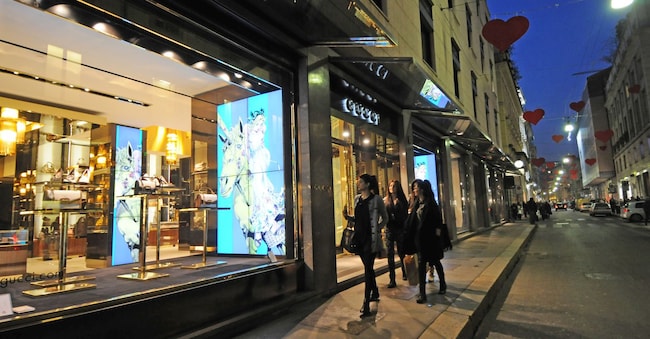
From Monday 12 May, Milan's fashion district, the luxury shopping district, will be closed to traffic. It will officially become a Ztl zone, with a few exceptions to allow loading and unloading for commercial activities, as part of a wider project that sees the pedestrianisation of a large area of the centre, from Castello Sforzesco to Corso di Porta Venezia, which will come to life by 2027. The opposition of the shopkeepers has not stopped Palazzo Marino's intentions.
The Ztl will be in force every day, 24 hours a day, in the blocks defined by Manzoni, Senato, San Damiano, Corso Monforte and Cino del Duca streets. From the date of activation, there will be a two-month pre-operational period for the cameras, a period in which the 'electronic eyes' will be used to carry out tests to verify the correct functioning of the automatic detection of infringements, but will not impose fines. However, any fines may be issued by the Local Police officers.
After months of discussion with the associations of tradesmen and logistics operators, the Ministry of Transport gave its approval, with the following timetable: goods transport vehicles will be able to enter from 8 p.m. to 1 a.m. at night and from 9 a.m. to 11 a.m. in the morning and, if they are transporting perishable foodstuffs, also from 4 p.m. to 6 p.m.
The exemption times were defined on the basis of a study by Amat on pedestrian flow trends, which found that the peak period is between 11 a.m. and 6 p.m., with a peak of pedestrians per hour (around 7,000) between 1 p.m. and 3 p.m. These two elements made it possible to vary the times, finding a solution that was appropriate for a pedestrian area.
The ban on access will be in force for all vehicles with the exclusion (subject to registration) of residents and domiciled persons, owners of garages or parking spaces in the ZTL area, those going to garages in the area, service vehicles for companies carrying out maintenance work (e.g. water and gas systems), craftsmen and installers providing occasional services (who are allowed 50 entries per year) and vehicles of organisations offering free first aid and social-health assistance.


