
From the allure of Parioli to the more sober Ostia Antica: the two extremes of the capital
The less affluent area is actually a residential area for large families
2' min read
2' min read
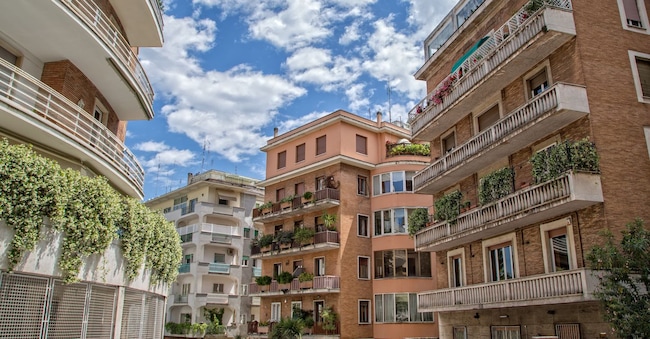
From Parioli to the areas of Piazza Barberini, Piazza Colonna, Via del Corso (where many new luxury hotels have opened in recent months, as well as the Valentino Foundation's cultural space), to the Trieste district, and then going down, cap by cap to Tor Vergata, where Calatrava's Vele construction site stands, to Ostia Antica. Putting the Roman neighbourhoods in order by income is an unexpected journey when considering the two extremes, and it is Barbara Donato, Director Loan Origination Aareal Bank Italy, who grew up in Ostia Antica (cap 00119 and average income 17,317 euro) with her family of origin and has now moved to Parioli (cap 00197, average income 77,532 euro) who describes the two contexts: "Ostia Antica is not a place characterised by social unrest, it is lived with essentiality. People know each other, there are large families that live with a more sober tenor than that which is palpably visible walking down the streets of Parioli'. According to data from the Inland Revenue Agency, in Ostia Antica today people buy houses for amounts in the order of 1,500-2,200 euro/sqm, for villas and small villas they go up to 2,700 euro/sqm. "There are no clothes shops, there is no haberdashery. For anything you go to Ostia or Rome. The valuable element is the train stop'. Echoing her is surveyor Pietro Labbadia, who lives and works in the suburb: 'Ostia Antica is a happy island, in fact it is much sought after especially for residential areas. There are no pockets of decay,' he repeats, 'there are council houses from the 1950s. There is a health station, the archaeological area, kindergartens and more than one school. Jobs? Many are employed in the public sector and there is a share of entrepreneurs and freelancers, especially in the construction sector'. If Ostia Antica surprises by being last on the list, Parioli's first position is recognised and shared. "Its hilly and scenic location," says architect Fabrizio Capolei, who lives in the area with his studio 3c+t Capolei Cavalli, "has made it attractive to middle-class families, with Art Nouveau and neoclassical villas and palaces, tree-lined streets and wide green spaces, a symbol of prestige and well-being. Capolei describes the neighbourhood as being populated by established professionals and middle-class families 'with an active social life', where 'top schools were attended by students from wealthy families'. The well-known Piper Club had become part of the Parioli district of the 1960s as an element of rupture and innovation. And today? "The streets are animated by young professionals, international families and residents from various socio-economic backgrounds. Culture but also entertainment with restaurants, cafés, boutiques. Add to this 'the Villa Ada Park and the Villa Balestra Garden that allow residents to enjoy moments of relaxation and recreation in the open air. There is also a critical note related to concerns about gentrification and the risk of alienating historical residents'.


