
The Moretti case: ‘Understanding complex businesses, not looking for scapegoats’
Vittorio Manes. Lawyer and professor of criminal law at the University of Bologna: ‘Managers are not all-powerful: criminal law still has to come to terms with corporate organisation’

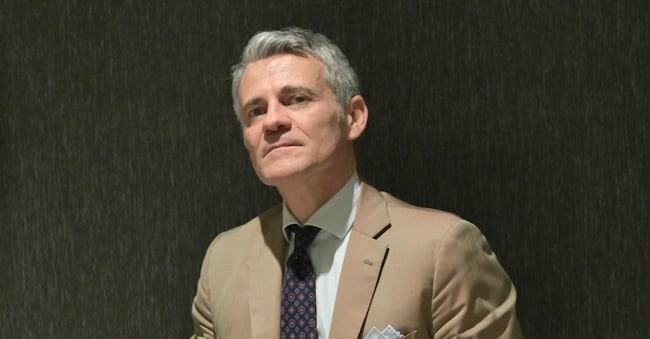
The day after the latest ruling on one of Italy’s worst rail disasters, in Viareggio, the victims’ families are left to grieve; in Orvieto, Mauro Moretti,, former chief executive of FS, is sent to prison. And the legal community – whilst duly respecting the court’s ruling – is questioning a verdict that raises once again the issue of criminal liability for the top management of complex companies. This is particularly true for offences of negligence, as in Moretti’s case. ‘There is a lack of proximity to the source of danger: it is one thing for a plant manager, who can go and carry out checks and realise that a particular hazardous situation required further action beyond that prescribed by the regulations, but the CEO of FS is not out on the tracks,’ is how several legal experts summarise their concerns. “The problem has long been highlighted by the most attentive legal scholars. It seems to me that in quite a few cases, the – albeit understandable – effort to identify liability leads to constructing a criminal charge against a top executive who perhaps does not actually exist: the idealised cliché of the omniscient, omnipotent and all-seeing manager, without taking into account the actual powers of intervention that the real person possessed, here and now, in the given situation”, agrees Vittorio Manes, professor of Criminal Law at the University of Bologna and a lawyer.
Professor Manes, in a forthcoming book exploring the issue of personal and culpable liability in complex organisations, analyses the Viareggio case in particular. Whilst awaiting the grounds for the judgement, what is your view on the factors that led to Moretti’s conviction?
It seems to me that the main criticism centred on the senior management’s negligent handling of organisational risk: in essence, this amounts to a failure to exercise powers of control, guidance or correction with regard to the chain of command within which the activities of the complex organisation under its governance are organised. More generally, case law seeks to prevent the shifting of responsibility downwards or the dilution of accountability. However, the effect this may produce is, on the contrary, a centripetal pull towards senior management of extremely serious responsibilities, which are attributed even in the absence of conduct that could reasonably be expected, to those whose primary and overriding responsibility is to deal with different matters, such as the group’s political and economic policy decisions.
The Court of Cassation itself, in a previous ruling on the Viareggio case, states that it is ‘reasonable to doubt’ whether certain checks on the ‘maintenance history’ of the goods wagon and its components ‘fall within the remit of the person in charge of a company of considerable size’. So what?
Alongside the need, as I was saying, to prevent organisational complexity from becoming a smokescreen for irresponsibility, it seems to me that there is also a more problematic factor at play: a sort of social expectation that, in the event of major disasters or tragic incidents, demands the identification of a visible, recognisable person who is symbolically commensurate with the gravity of what has happened. And this figure is often sought at the very top, because the top appears, in the eyes of public opinion, to be the natural seat of power and, therefore, also of responsibility. The point, however, is that criminal law cannot be satisfied with this symbolic equivalence between power and responsibility. It is not enough to be the head of an organisation to be held criminally liable for everything that happens within it. It is necessary to ascertain, on a case-by-case basis, what the actual powers were, what information was actually available, what alternative courses of action could realistically have been taken, and what causal impact these might have had on the event. Otherwise, criminal liability risks becoming a form of positional liability, based not on the individual’s fault but on the need to identify, in any event, a top-level figure to whom the incident can be attributed.


