New professions

The movement director: a cross between a psychologist, a film director and a choreographer

By exploring the dramaturgy of the body, Pat Boguslawski has transformed the ritual of fashion shows into stage movement and the models into performers. Today, he has stepped behind the camera.

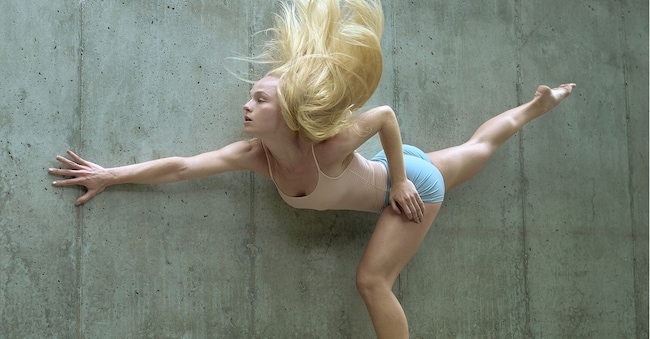
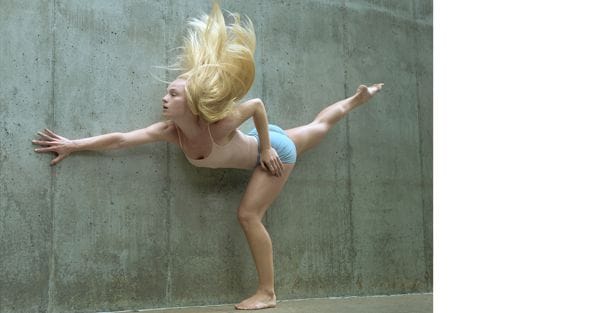
La ballerina professionista Aliza Russell in una foto di Pat Boguslawski, scattata a New York nel maggio scorso. (©Pat Boguslawski)

6' min read

Translated by AI
Versione italiana

6' min read

Translated by AI
Versione italiana

New York, 16 May 2026: Times Square is closed to traffic. Giant advertising screens light up the world’s most famous crossroads, whilst a crowd of stars, photographers and onlookers wait for the show to begin. Then they arrive: ladies from the Upper East Side, businessmen with laptops under their arms, Gen Z youngsters, red-carpet divas. They cross the square with different strides, postures and demeanours, like characters straight out of a film. Tom Brady struts down the catwalk in a suit, Paris Hilton plays herself, and Cindy Crawford brings the show to a close in a whirlwind of black feathers. For Gucci’s Cruise 2027 collection, Demna didn’t just bring a collection to New York. He staged a human drama. But for a garment to become a character, exceptional casting and spectacular set design alone are not enough. It requires rhythm, gestures and a precise way of occupying space. Behind that choreography of bodies lies Pat Boguslawski, the creative mind who has transformed movement into one of the most sophisticated languages of contemporary fashion.
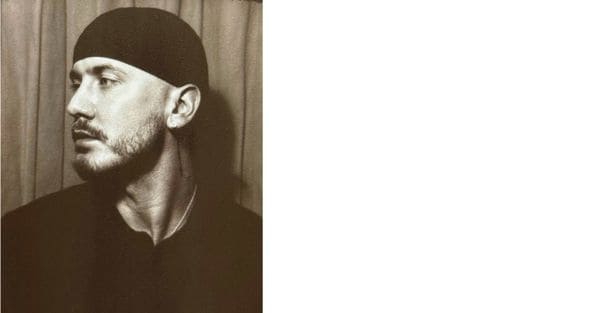
Un autoritratto di Pat Boguslawski, polacco, di base a Parigi. Lo definiscono “movement director”, ma lui dice di sentirsi più un regista o un acting coach.

A Polish former dancer and model, Boguslawski worked for almost eight years with John Galliano at Maison Margiela, contributing to some of the most memorable fashion shows of recent years. He has collaborated with Haider Ackermann for Tom Ford, with Junya Watanabe, and directed Nicole Kidman and Rihanna in the cover shoots for W. His profession is still difficult to define precisely, as it straddles the boundaries between directing, psychology and choreography. ‘It’s always tricky to sum it up in a single sentence. People call me movement director, but I don’t actually think I really am one. If I had to choose just one word, I’d say I direct.’ He directs the music, the lighting, the set design, the emotions, the movement, the action. Rather than a choreographer, he sees himself as a director or a sort of acting coach. For him, the point isn’t to teach a sequence of steps, but to help the person wearing an outfit understand who they are becoming. When he sees a look for the first time, he starts with intuition and, even before that, with the character. ‘I need to understand who that person is, what story they carry with them and what they need to convey on the catwalk or in front of the camera. Only then do I think about how they’ll move. I don’t just turn up and say: “Do this step, then turn like this.” That’s what a choreographer would do. I start from something deeper: from what the character is feeling and from what I want the audience to feel.”
Loading...

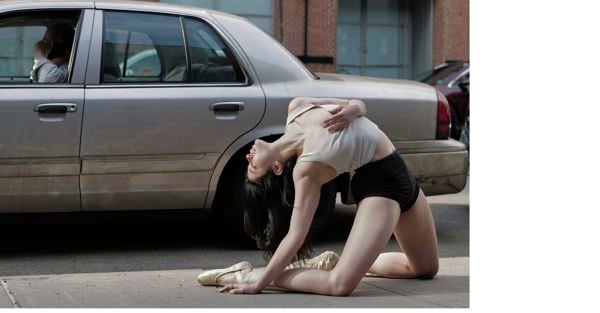
Uno scatto di Boguslawski a New York con protagonista la ballerina Shelly Cochrane. (©Pat Boguslawski)

This is where his work ceases to resemble a lesson in poise. Models, he says, are actresses. They must not simply show off a dress well, but make it look believable. ‘When I work with them, I try to help them understand what works and what comes across as artificial. I always want to bring out the best in each of them.’ Many experience that session almost like a masterclass: they observe the way he moves, receive guidance, and pick up tips. Then they return, perhaps the following season, and something has changed. “I can see they’ve improved, that they’ve taken those suggestions on board. In a way, it’s a school.”

His life story, too, seems tailor-made to lead him there. He began studying dance in Poland at the age of 15, then continued in London and Los Angeles. At 18, he was discovered as a model and walked the catwalk for Dior, Rick Owens and Alexander McQueen. But he never really felt like one. “I saw myself more as a performer.” At the age of twenty-three, he returned to Poland to study acting. “At the time I was confused; I wanted to do everything at once: be a dancer, a model and an actor. Now I realise that those experiences were preparing me for the work I do today.”
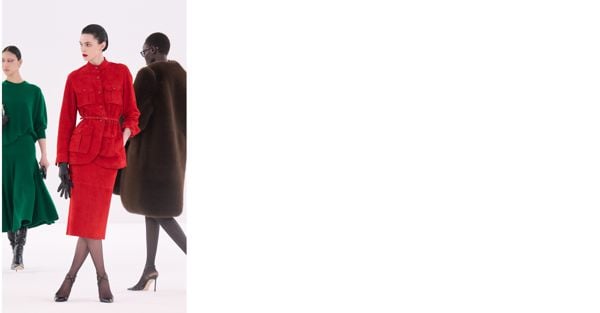
La sfilataA/I 26-27 di TOM FORD by HAIDER ACKERMAN, realizzata con la consulenza di Boguslawski.

The moment when it all began to take shape came during the rehearsals for an Alexander McQueen fashion show. Sarah Burton spotted him amongst the other models: he had captured the spirit of the collection, the relationship with the music, and the way the body was meant to inhabit the space. She asked him to show the others how to walk in a more theatrical way. “Something clicked at that moment, even though I didn’t yet think it could become a career.”
Then came John Galliano. Eight years together at Maison Margiela, in a relationship that Boguslawski describes as a learning experience, but also as a constant exchange. “He is a master, a genius. Watching him work showed me what it means to have a total passion for fashion. He lives through clothes, images, emotions and glamour: everything he creates belongs to his world.”

Galliano taught him a great deal about acting and movement, but it was not a one-way relationship. Boguslawski contributed his own ideas, and Galliano gave him something just as valuable in return. ‘Being by his side meant witnessing a level of perfection bordering on madness every single day. After an experience like that, it becomes difficult to find the same intensity anywhere else.’

That intensity, according to Boguslawski, is precisely what fashion began to lose at a certain point. In the 2000s, the fashion industry took an increasingly commercial turn. The focus shifted to the product itself, and to how to showcase and sell it. Even styling became less free: the need to adhere more strictly to the identity and codes of the fashion houses reduced the scope for interpretation and creativity.

‘Back then, people mixed things up, experimented and had fun. Models were able to express themselves, and photographers had greater freedom. When that freedom disappeared, it was immediately evident in the images: there was a lack of emotion. Fashion had become more controlled and also more predictable.’

He had grown up looking at the work of Richard Avedon, Steven Meisel, Irving Penn and Nick Knight. ‘There was always something happening in their pictures.’ Then he saw fashion photography become more clinical, more commercial, almost lifeless, and he thought that perhaps he could help breathe new life into it. He was looking for less staged images, in which movement and performance left room for something unexpected.

Loading...

La ballerina professionista Aliza Russell in una foto di Pat Boguslawski, scattata a New York nel maggio scorso. (©Pat Boguslawski)

This is also why movement direction is no longer merely a detail of production. In a system saturated with images, it helps to shape a fashion house’s language, to make it recognisable, and to create gestures and sequences that outlast the fleeting nature of social media feeds. But Boguslawski is wary of those who prioritise virality.

‘When someone says to me, “We want to create something huge, something that goes viral”, I always think it won’t work. Going viral cannot be the starting point.’

With Galliano, he worked from dawn until late at night, simply trying to do the best job possible. They didn’t think about results, figures or the reaction on social media. ‘I think that’s what made those fashion shows so memorable. The intention was to create something with love and to the highest standard, not to rack up millions of views. If you focus on the end result, you lose sight of the process. And without the process, you’ll never achieve a truly important goal.’

Today, his career is taking a new direction. After more than ten years spent crafting scenes, gestures and images on set, he has also begun working as a photographer. The decision stems from a specific frustration: creating an image only to see another one chosen instead. ‘It was the photographers who decided which shots to publish. I often saw photographs that were different from the ones I had imagined.’

At a certain point, he realised that, to truly convey his vision, he had to step behind the lens. He doesn’t see it as a change or a leap, but as the natural continuation of what he has always done. Before, he directed the body, the emotion and the moment. Now he can also choose which of those moments will be preserved. ‘I’ve always directed images. Now I’m the one who decides which one will be the final one.’

Copyright reserved ©
Loading...
Loading...

Newsletter

Notizie e approfondimenti sugli avvenimenti politici, economici e finanziari.

Iscriviti