
The parking mirage between ZTL, multi-storey car parks and parking bans
Rising cars and insufficient parking spaces: between town planning regulations, constrained historical centres and parking monetisation, cities struggle to find a balance between parking, controls and alternative mobility
by Davide Madeddu (Il Sole 24 Ore) and Mike Konstantopoulos (EfSyn, Greece)
 Aggiungi Il Sole 24 Ore
ai preferiti su Google
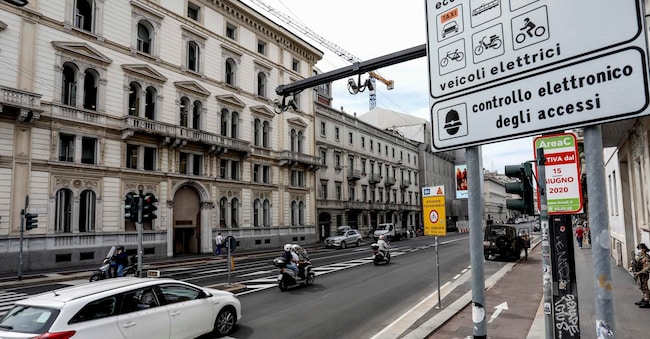
Parking, if it is not a mirage, is very close. Because in most cities, from the capital to the smallest towns, motorists have to deal with the lack of parking spaces. According to the Aipark observatory, the association that brings together parking operators, Italia is at the top of the European ranking for the number of cars: 693 per 1,000 inhabitants, against an EU average of 560.
According to the Observatory, a substantial part of urban traffic, about 30 per cent, is generated by vehicles looking for parking: "an enormous figure when one considers that 75 per cent of the European population," writes the Observatory, "lives in cities and that the search for a parking stall is only the last leg of a journey".
The average search time is 15 minutes per day, rising to more than double that in our country. And despite the obvious inconvenience, 3 out of 4 Italians (76%) continue to travel by car.
A solution to this situation, which leads to an obvious imbalance, could, according to the Observatory, come with new parking spaces. Which translated into numbers would mean over 670,000 spaces to be added to the existing ones. As much as an uninterrupted line of cars 3,000 kilometres long. Just to give an example, like from Rome to Moscow.
In this scenario, then, there is the so-called wild parking: from double-parking, to parking on pavements, to occupying pedestrian crossings and parking spaces for the disabled. A situation that has prompted the municipal administrations to intensify controls with penalties. These range from the traditional windshield wiper fine to a tow ticket and even removal.

