The Museum of Saved Art reopens in the Sala Ottagona
An outpost of legality and knowledge of the past, it exhibits works stolen from underground or from the sea bed: objects without an exhibition history and without a known context

3' min read
3' min read
After a long closure, the Museo dell'Arte Salvata (MAS) reopened its doors on Thursday 26 June in the evocative setting of the Sala Ottagona at the Baths of Diocletian. Doing the honours was Edith Gabrielli, director of the Vittoriano and Palazzo Venezia, who is also acting director of the Museo Nazionale Romano, taking over from Stéphane Verger.

From the outset, Gabrielli dismantled the criticism that had been levelled at the MAS project, namely the accusation of decontextualisation of the works, collected, even for not short periods, in a 'transit museum'. To those who, like the French philosopher Robert de la Sizeranne, liken museumised works to 'corpses', Gabrielli responded decisively: "our challenge is to prove the opposite. The MAS is in fact a dynamic space, capable of restoring meaning and context to stolen, lost and never shown to the public, making them accessible and comprehensible, also thanks to flexible and innovative museological tools. For stolen works, whether from underground or from the sea bed, the question becomes more complicated: these are often objects without an exhibition history, without a known context, real 'borderline assets', as Gabrielli has defined them. Antiquities that - for the public - are new objects, to all intents and purposes. Hence Gabrielli's provocative idea: 'they are like works of contemporary art'.
The symbolic value of the place, as stressed by the director of the Department for the Protection of Cultural Heritage and Landscape (DIT) Luigi La Rocca, is central. The MAS does not merely preserve these works, but returns to the community assets that were in danger of being lost or forgotten. After major restoration and refurbishment, the new MAS exhibition tells stories of rescues, police operations and international collaborations. The museum thus becomes an active platform for restitution and knowledge, based on a network between the Ministry, Carabinieri TPC, foreign prosecutors and police, restorers, researchers and the scientific community.
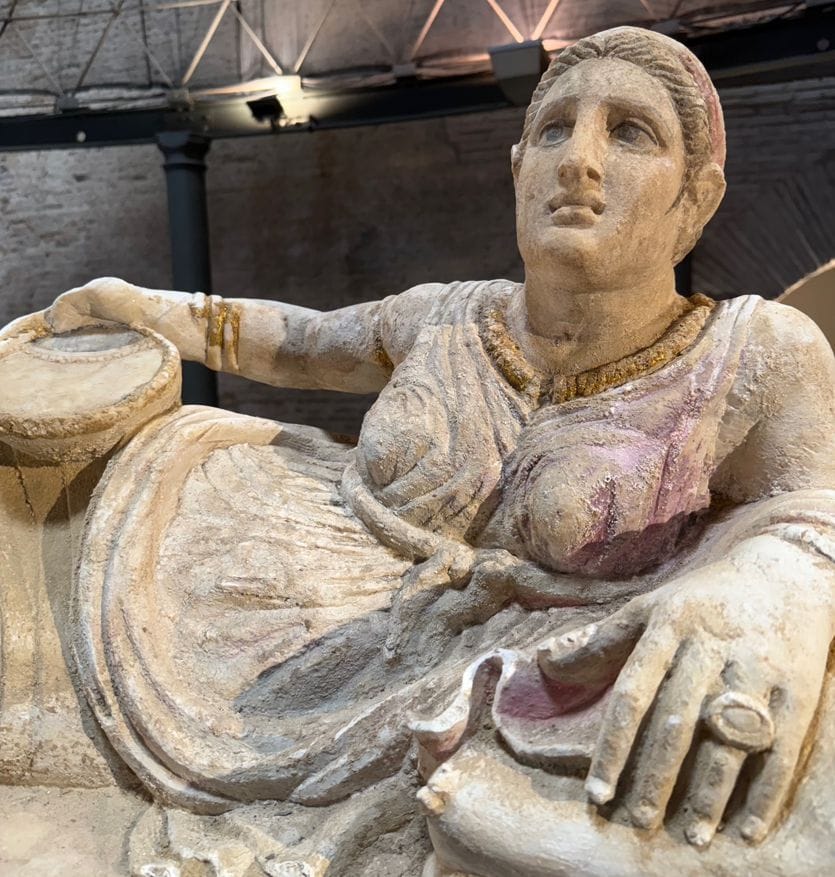
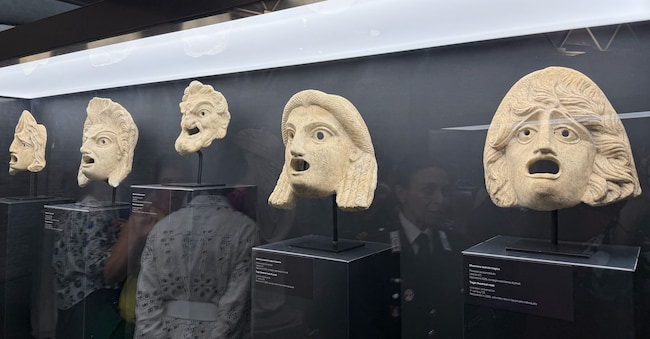
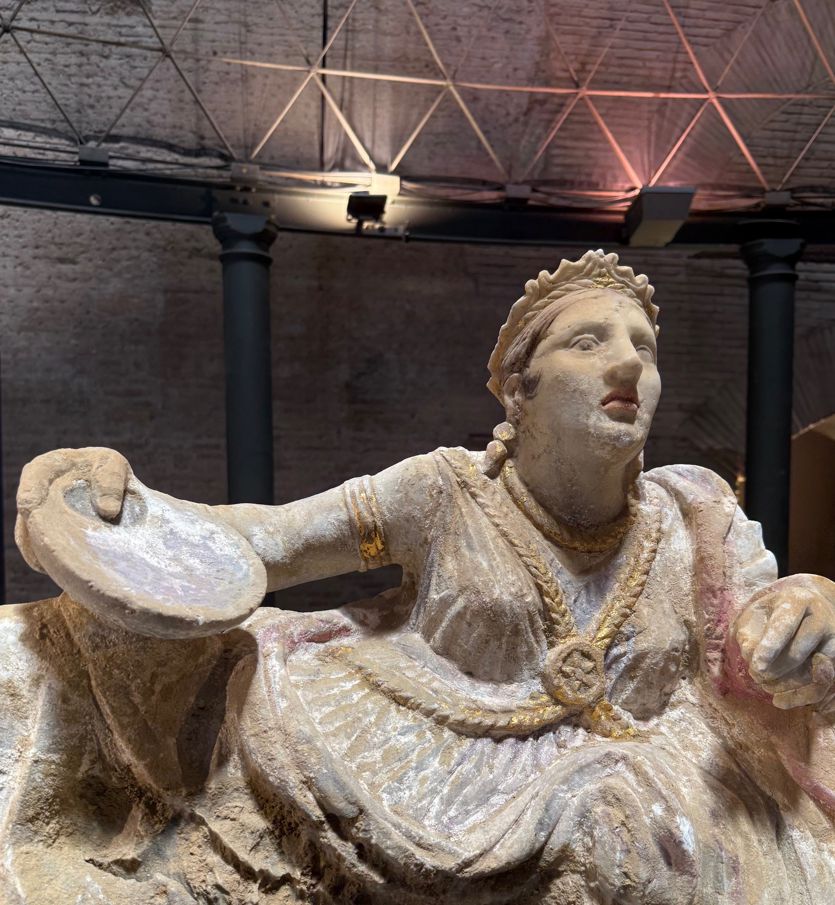
The itinerary, which is divided into heterogeneous exhibition nuclei, includes bronze helmets and two bronze statues of togati, returned from Brussels and New York, but coming from the Perugia area, which have been compared to the recent findings in San Casciano dei Bagni. There is also a beautiful Etruscan alabaster urn, still being studied by the Central Institute for Restoration, while an entire section is dedicated to three archaeological sites "massacred" by tomb robbers between the 1960s and 1990s: painted slabs from the 6th-5th centuries BC from Etruscan necropolises, ambers and silverware from Morgantina and Apulian pottery.