
The Baker Hughes mystery: 60-million plan authorised and then blocked
The multinational was about to start an investment in the port of Corigliano Rossano but Mayor Flavio Stasi forced a U-turn

3' min read
3' min read
The start of a project to develop a logistics area on the quay of the port of Corigliano Rossano dies in the bud with Baker Hughes' renunciation of a 60 million euro investment and 200 jobs. A turnaround on which an aura of mystery with points of incredulity descends. How is it possible that the municipal administration of Corigliano Rossano made the American multinational desist from a multi-million euro investment, showing an attitude that the company perceived as a palpable aversion? The culmination of the affair was mayor Flavio Stasi's extraordinary appeal, not to the TAR, but to the Head of State to ask for the cancellation of the authorisations - considered irregular - already granted by the Port Authority. At that point, the march was reversed: 'A decision,' the company explains, 'taken with great regret.
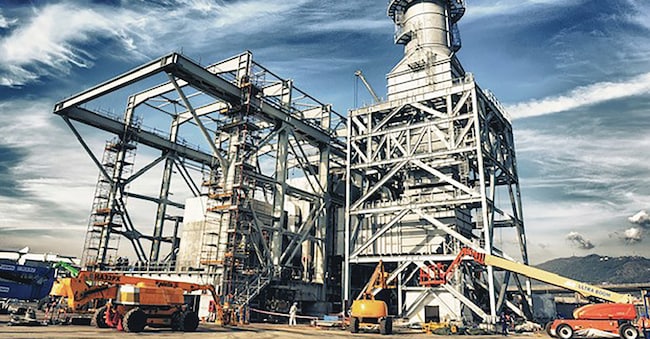
"I issued the Zes single authorisation myself. It was a loophole, given that it is an act that goes against all urban planning prescriptions," explains, still annoyed, the president of the Port Authority of the Southern Tyrrhenian and Ionian Seas, Andrea Agostinelli, who fought for the success of the operation, "after a long negotiation, bureaucratically complex, amidst quibbles, crossed vetoes, preliminary investigations and prescriptions, with a building concession granted on the basis of a 1971 master plan still in force, Baker Hughes was ready to occupy about 100 thousand square metres of the quay area. Once fully operational and with the shed completed, five ships would have entered and left the port of Corigliano Rossano every month to deliver materials and ship the large structures built in the port to the Carrara headquarters of Nuovo Pignone, a company of the Baker Hughes group. Instead, 'no' was said to an unmissable development opportunity that would have been realised in full respect of environmental sustainability'.
The American multinational has been operating for over 60 years in the industrial area of Porto Salvo, where it manufactures structural components for turbines with high-tech processing. And it is there that part of the investment that was planned for the port of Corigliano Rossano will flow: about EUR 26 million will be recovered in the ZES area of Vibo Valentia. "Our choice had fallen on the port of Corigliano because of the combination of several factors," explains Maria Francesca Marino, who directed the Baker Hughes plant in Vibo Valentia and is now in charge of the one in Avenza, as well as being president of the Metalmechanics section of Confindustria Vibo. "The geological characteristics of the quay, the strategic position, the total absence of pollution, the size of the available surface area, and the high draught, which allows the arrival of ships suitable for shipping the large and complex products that we intend to produce on the site," she explains.
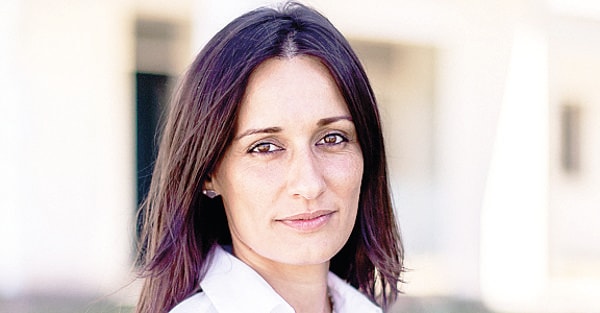
And in Calabria, the door remains open: "The company confirms the investments planned for the Vibo site," continued Francesca Marino, engineer, "which will enable the company to boost production capacity and build new infrastructure, testifying to the role of Calabria in Baker Hughes' corporate strategies and global supply chain. A high management training school and an academy for the acquisition of specialised technical skills will also be launched.
In his second term in office, Mayor Stasi explains that he acted 'to protect the interests of the community and the regularity of procedures' by proposing the company's relocation to an alternative site, in the Schiavonea industrial zone, but one that was evidently unsuitable for the project.

