
"The new EU Commission now changes the agricultural policy".
Agricultural companies denounce the excessive dispersion of resources. Prandini: 'We need courage, the US is pressing us'. Lollobrigida: 'Too many cuts'.
4' min read
4' min read
A clear turnaround is needed on the reform of the EU agricultural policy. A real change of pace from a situation that, as EU Commission President Ursula von der Leyen wrote in her letter of assignment to the new Commissioner for Agriculture, Christophe Hansen, "has been marked by too many hyper-environmentalist choices". A decisive change of course from a season in which the farmer was seen as part of the environmental problem and not as an ally on the road to a solution.
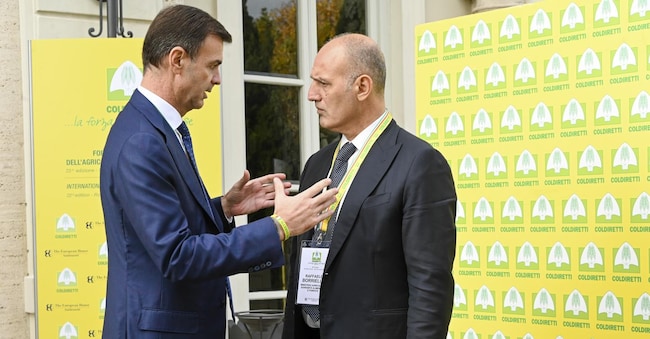
This is the main challenge for Italian and European agriculture in the aftermath of the vote on the new EU Commission that emerged yesterday in Rome during the Coldiretti Agriculture and Food Forum.
Guidelines for the CAP reform
The new EU executive will take office on 1 December next. From that moment on, the 90 days will start within which the new head of the agri-food sector ('food and farming', we read in the letter of appointment) will have to prepare the guidelines of his commitment, which will have as its main pillar precisely the reform of the last, much contested, CAP.
And central will be precisely the guidelines and contents from which the debate and later the negotiations will have to start. Also because on the resources front the premises are anything but rosy. The starting point will be the current budget of 384 billion allocated for the whole of Europe and for the entire seven-year programming period. A budget that will also have to be reduced by about 25 billion in integration that the previous CAP obtained in the post-pandemic period on the basis of the Repower Eu plan.
"We need more courage," said the president of Coldiretti, Ettore Prandini, "The United States has allocated USD 1,400 billion to US agriculture over ten years. One way forward could be to set up a European fund additional to the CAP and dedicated to innovation in agriculture. Another proposal of ours is to concentrate aid on real farmers, whereas today EU funds are also received by many 'hobbyists' who are not professional farmers. In Italy there are 1.6 million applications for CAP aid every year and our feeling is that those who really work the fields by profession are far fewer. We estimate that at least 30 per cent of direct aid (around 1.5 billion per year) goes to hobbyists. Therefore, there is in our view about EUR 600 million per year to be recovered from real agricultural production'.


