
The new global balance of power in the gas sector and the role of LNG: the Hormuz unknown
Since 2022, liquefied natural gas has seen its share of the Italian and European gas portfolios increase exponentially, with the United States now the world leader in production
by Cheo Condina
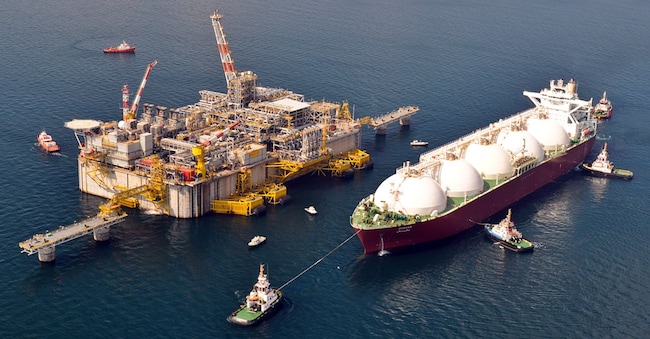
Gas: Back to the Future. To paraphrase the title of Robert Zemeckis’s famous film, if – hypothetically – it had been set in early 2022, just before the Russian attack on Ukraine, it would have presented industry players with entirely unexpected scenarios. This is because today’s global gas market – precisely as a result of events since March 2022 – is completely different from what it was four years ago.
New balances, new suppliers, new mixes: all against a backdrop of global demand that remains strong and the new, much more recent shock of the closure of the Strait of Hormuz, through which 20 per cent of all global LNG passes. It is worth remembering that liquefied natural gas has, in fact, been the big ‘winner’ – if one can put it that way – of the Russia-Ukraine conflict, with the United States climbing the rankings to become the world’s leading producer.
Europe and the US: the LNG revolution
The fact is that the European gas market has undergone an unprecedented transformation, evolving from a rigid, continental system tied to long-term pipeline contracts (the so-called ‘take-or-pay’ agreements) into a hyper-dynamic, liquid but structurally volatile, governed by the routes of gas tankers and highly vulnerable to geopolitical bottlenecks, such as the Strait of Hormuz. To gauge the scale of this transition, we must start with the figures for 2021, the last year of pre-conflict stability. At that time, the European Union based its economic model on low-cost gas from Russia, which alone covered 40 per cent of the EU’s demand, feeding over 150 billion cubic metres a year into the network via pipeline. Within this balance, Italia was among the most exposed countries, with a dependence on Moscow of nearly 40 per cent, equivalent to 29 billion cubic metres imported via the Tarvisio hub. The outbreak of hostilities in Ukraine and the subsequent decoupling strategy launched by Brussels have completely overturned this paradigm: Russian gas flows via pipeline to Europe have plummeted, whilst Norway has taken over as the pivotal hub for continental gas security, with 52 per cent of imports distributed across the markets of Northern and Central Europe.
To make up for the massive shortfall of around 110–120 billion cubic metres caused by the halt in Russian gas supplies, Europe has had to reinvent its infrastructure, becoming the world’s leading importer of LNG, with imports in 2025 reaching the all-time record of 146 billion cubic metres, meeting around half of the EU’s total demand. The main commercial beneficiary of this shift has been the US, which has risen to become the undisputed global energy superpower. Between 2021 and the end of 2025, US production capacity literally exploded thanks to the expansion of mega-terminals along the coast. A few figures may give an idea of the scale of the phenomenon. Since the outbreak of the war in Ukraine, the United States has massively increased its liquefaction capacity and, consequently, its exports, which have risen from 104 billion cubic metres in 2021 to an estimated 155 billion in 2025, a figure likely to be revised upwards to 186 billion by 2027. At the same time, European imports of US LNG have risen from 18.9 billion cubic metres in 2021 to around 79.4 billion in 2025, a 350 per cent increase: today, the United States supplies the Old Continent with over 50 per cent of its liquefied gas and could reach 80 per cent by 2030. Who are the other main European suppliers? In 2025, Russia accounted for 20 billion cubic metres (though the path towards a definitive end to these supplies is already reducing imports), followed by Qatar with 12.6 billion, half of which was destined for Italia, but is now dependent on the Strait of Hormuz. In turn, however, shipments to Europe account for only a small proportion of the Gulf state’s exports; it sells over 80 per cent of its LNG production (now second only to the United States) mainly to South Korea and Japan.
The situation in Italy
In this major global realignment of the gas market, Italia has demonstrated a significant capacity for restructuring. With imports from Moscow now at zero, the country’s new backbone has become Algeria, which, via the TransMed subsea pipeline, has delivered a record volume of over 20 billion cubic metres (equivalent to 32.8 per cent of the national total) to Mazara del Vallo. At the same time, LNG has become an indispensable pillar thanks to the regasification terminals at Cavarzere, Livorno, Panigaglia and the new floating units at Piombino and Ravenna: by 2025, liquefied gas had exceeded 18.7 billion cubic metres, covering almost a third of national energy demand. Admittedly, the blockade of the Strait of Hormuz has set the emergency red light flashing once again: the disruption to traffic has halted around 20 per cent of the global supply of liquefied gas – equivalent to 110 billion cubic metres per year – completely paralysing outgoing shipments from Qatar. Whilst there are partial alternative routes for oil via pipelines through Saudi and Emirati territory, there are no physical alternatives for LNG: the fuel must necessarily be transported in liquid form on dedicated gas carriers. This blockade has highlighted Italy’s vulnerabilities, albeit to a lesser extent than in the past. In the LNG portfolio established by Italia for 2025, Qatar was the second-largest overall supplier after the United States, providing around 7 billion cubic metres per year. Consequently, the disruption in the Strait of Hormuz instantly cut off 11 per cent of Italia’s total energy requirements, forcing the government to reopen emergency supply routes with Algeria and Azerbaijan.


