
Sielte’s new plan: from the network to high-value services
The completion of the PNRR construction projects marks the start of a phase of diversification into software, critical infrastructure, transport and energy

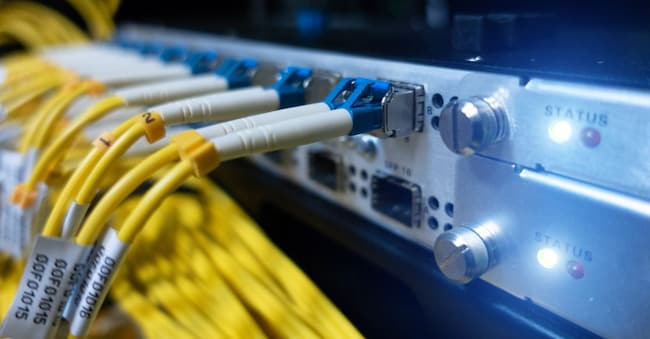
Sielte is celebrating its centenary. And this anniversary coincides with a major transformation the company is preparing for, just as the PNRR project begins to draw to a close. For this company, founded in Genoa in 1925 as the Italian arm of Ericsson and now controlled by the Turrisi family, with 4,000 employees, 31 offices and a turnover of over 900 million in 2025, this transition is not a cause for celebration. It is an industrial one. With the race to build ultra-fast networks now over – a race in which Sielte took part as a representative of that group of companies historically involved in building the infrastructure for the telecoms sector – the most difficult challenge lies ahead: transforming fibre, expertise and local presence into a model that is less reliant on public investment and more focused on services, management and integration.
The second half of 2026 will mark a turning point in this regard. Sielte is drawing up a 2026–2030 business plan designed to rebalance its activities, offsetting the decline in network ‘creation’ by strengthening ‘delivery’: maintenance, operations and support. However, the scope will expand to include software, ICT applications, digital solutions, smart mobility, smart cities, renewable energy and transport. The rationale is not to squander the capital built up during the NRRP period, but to redirect it towards areas where security, productivity and technological sovereignty are at stake.
“The post-PNRR phase must mark the transition from an extraordinary period of network development to a new phase of harnessing the skills, infrastructure and technological capital that have been built up,” says Salvatore Turrisi, chairman of Sielte. He adds: “We have made a decisive contribution to the roll-out of Italy’s ultra-fast connectivity,” says Turrisi, “and it is now essential not to squander this industrial and human capital.”
The company’s history stretches back a long way. Sielte was involved in the post-war reconstruction of the telecommunications network, in electrical and railway infrastructure, and in the Socrate project for fibre-optic cabling in the 1990s. Following its separation from Ericsson and its relaunch under the Sieti-Itel group, since 2010 it has established itself as a systems integrator in the telecoms, energy and transport sectors. Now the aim is to take another leap forward: from a builder of physical infrastructure to a platform operator.
“The network,” Turrisi emphasises, “is now the enabling platform for strategic, high value-added services such as the security of critical infrastructure, smart cities, energy efficiency and the modernisation of public administration. The real challenge is to manage the transition from construction to operations, guiding the supply chain towards new strategic areas such as energy, transport and system integration.”


