The new import rules

The new procedures for the introduction of non-European goods into the EU

Regulation (EU) 2019/880 kicks off: everything you need to know about the new European rules for importing goods, the necessary documents, how to register, roles and timeframes

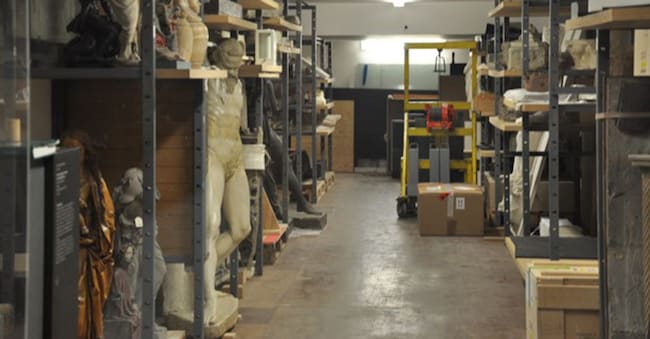
Magazzino di stoccaggio di opere d’arte

4' min read

4' min read

On 28 June 2025, the European system for the import of cultural goods (Import Cultural Goods - ICG) officially came into operation, implementing the Regulation (EU) 2019/880 of the European Parliament and of the Council on the introduction and import of cultural goods and the Executing Regulation (EU) 2021/1079. The system, which is hosted on the TRACES NT platform of the European Commission, is intended to regulate the introduction and import of cultural goods from third countries into the Union, with reference to the categories listed in Part B and C of the Annex to Regulation 2019/880.

Which assets and which documents?

.

Regulation 2019/880 absolutely forbids the introduction into the territory of the EU of cultural goods listed in Part A of the Annex if they have been unlawfully removed from the countries where they were created or discovered. The burden of proof is on the importer, who must therefore, depending on the type of good, provide the necessary documentation to prove its legality.

Loading...

For the import of cultural goods listed in part B of the Annex, such as archaeological objects or parts of monuments at least 250 years old, import licences issued by the Member State concerned will be required. The documents required to prove "that the cultural goods in question have been exported from the country concerned in accordance with the laws and regulations of that country" to be uploaded into the ICG system are set out in Article 8 of Regulation 2021/1079 (e.g. documents certifying that the export complies with the laws of the country of origin or that there are no rules in this respect, photographs, customs documentation; sales invoices, insurance documents, transport documents, etc.).

The import of cultural goods listed in part C of the Annex, such as collections of fauna and flora, coins, objects of ethnological interest, paintings, sculptures, manuscripts and books, which are more than 200 years old and have a value of more than EUR 18,000, however, is only allowed upon presentation of a declaration by the importer. This declaration by the importer consists of a declaration that the goods have been legally exported from third countries and a standardised document describing the relevant cultural goods. However, also for these goods, the importer will have to be in possession of the same documents required for the goods in Part B of the Annex to be produced upon request, according to Art. 12 Regulation 2021/1079.

Registration

.

In order to obtain the authorisations provided for in the legislation (licence or declaration), economic operators established within the customs territory of the Union will be required to register in the new system. Registration will have to take place via the TRACES NT platform, accessible with EU Login, SPID or CIE credentials. During registration, it will be necessary to indicate a 'role' within the system, reflecting the function that the person will perform.

The choice of 'role'

.

The roles envisaged are 'holder of the goods' or 'exemption beneficiary'. The 'holder of the goods' corresponds to the person who intends to apply for an import licence or make the declaration required by the legislation. In the case of the holder of the goods, possession of the EORI code is required, which stands for Economic Operator Registration and Identification, i.e. a unique code, assigned by the European Union, for the identification of economic operators (companies and individuals) involved in customs import and export operations within the EU. This code, in Italy, can be obtained from the Customs and Monopolies Agency, and is necessary in order to submit applications for the issue of the import licence (ICGL) for the categories of goods indicated in Part B of the Annex to Regulation 2019/880, or the importer's declaration (ICGS) for the categories in Part C.

Instead, the role of "exemption beneficiary" refers to public and private not-for-profit entities that import cultural goods for the purpose of conservation, research or training, as provided for in Articles 2 and 3 of Implementing Regulation 2021/1079. According to Article 4 of the same Regulation, exemption beneficiaries may only provide a general description (ICGD) of the imported goods, which must be entered into the system prior to the submission of the customs declaration.

The five Italian import offices

.

For Italy, the competent authorities for the validation of registration requests are identified in five Export Offices of the Ministry of Culture, belonging to the Soprintendenze Archeologia, Belle Arti e Paesaggio (ABAP) of Turin, Milan, Venice, Rome and Naples. Each Office is responsible for requests coming from the regions within its territorial jurisdiction, as per the allocation defined by the ABAP General Directorate. For operators qualifying as beneficiaries of the exemption, it will be necessary to manually select the competent office during registration, based on the same geographical breakdown.

Once the registration has been carried out and the validation by the competent authority has been obtained, the operator can carry out the subsequent import operations by choosing, on a case-by-case basis, the export office to which he wishes to apply from among the five available in the territory, regardless of the territory of establishment. To facilitate the process, the European Commission has made available a  technical manual (currently in English) detailing the operations to be carried out in the ICG system. Operators and competent authorities will need to regularly consult the text of Regulation (EU) 2019/880 and Implementing Regulation (EU) 2021/1079, as well as the FAQs updated by the Commission, to ensure the correct application of the new provisions and the effective control over the import of cultural goods from third countries.

Import Times

.

The competent authorities check applications for completeness and may request missing or additional information or documents within 21 days of receipt of the application. The applicant must submit the additional information within 40 days or the application will be rejected. After the applicant has submitted the requested information, the competent authority has 90 days to examine it and adopt a decision. If the competent authority has made more than one request for information, the 90-day period starts from the date on which the applicant submitted the last piece of information. It is not yet clear whether the absence of a decision by the competent authority within the 90-day period counts as silence consent or silence refusal, according to some authors this is left to national laws.

Copyright reserved ©
Loading...

Brand connect

Loading...

Newsletter

Notizie e approfondimenti sugli avvenimenti politici, economici e finanziari.

Iscriviti