The shapes of taste

The new professionals of the table: from the water-sommelier to the cupping expert

Coffee with clams, water from Hawaii with sushi: the new pairing crosses terroir, cru, extraction, and ageing. Highly trained specialists are needed.

by Fernanda Roggero

7' min read

Translated by AI
Versione italiana

7' min read

Translated by AI
Versione italiana

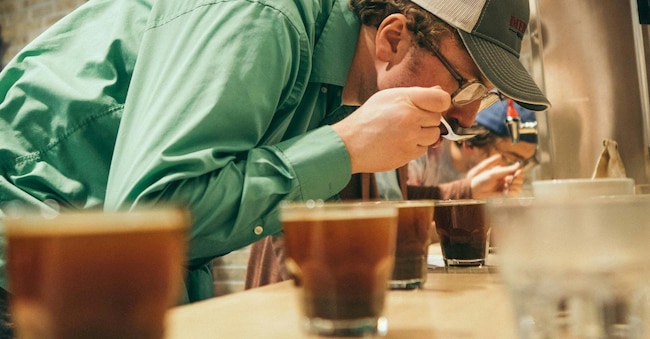
Would you ever drink coffee with spaghetti alle vongole, risotto Milanese or pizza Margherita? They are unusual pairings, of course, but they could give great satisfaction to the most adventurous tasters. This is assured by Mauro Illiano, with Andrej Godina one of the greatest coffee connoisseurs in Italia and founder of a coffee academy in Naples. Illiano and Godina belong to the ranks of the so-called atypical sommeliers, who over the years have joined the traditional wine professionals. Over time, the frontier of taste has moved into other territories that, if at first sight seem usual, are in fact explored with surprisingly sophisticated techniques and methods: they taste different types of coffee, for example, but also oil, honey, cheese, chocolate and even water. This has given rise to a new generation of sommeliers who, just like traditional, in-depth wine connoisseurs, are super-focused on every detail and sensitive interpreters of the individual peculiarities of products.
"For coffee, we prefer to speak of caffesperts," explains Godina, the first to use this term, and famous for his investigations on Rai3 dedicated to the quality of capsules. 'They are professionals capable of interpreting the raw material, describing and narrating it'. In Italia, the official training course is offered by Sca, the national division of the Specialty Coffee Association, which promotes technical tasting (the so-called cupping) and the mastery of the various extraction methods, from the mocha to the French press up to the pour-over, which means by percolation, i.e. hot water is poured slowly in circular movements onto the ground coffee contained in a cone with a filter.

Loading...

"As with wine, the important thing is to taste as much as possible, one should never stop. I tasted at least 1,300 references last year,' says Godina.

But if the professional outlets so far have been rather traditional - coffee roasters, quality control laboratories, R&D for companies producing pods and capsules, imports of virgin coffee - today new and unexpected directions are opening up. Many fine dining restaurants offer real coffee charters, and even in Italia the philosophy of specialty coffees is beginning to spread, which indulge in extraction methods and raw material origins. And finally, people are starting to talk about food pairings. Illiano says: 'I decided to write a book on this and defined a method, a systematic study of combinations based on sensory analysis and the principles of concordance, contrast and emphasis, to understand the interactions between the organoleptic characteristics of coffee and those of food, whether sweet or savoury'. In his very recent book Coffee & Food Pairing, in fact, he outlines nine tasting rules through the analysis of the fundamental parameters for the ideal pairing: temperature, recipe and food preparation, coffee extraction technique, geographical origin of the varieties. "A few examples: a pizza Margherita will be perfect in the company of a single-origin 100 per cent Arabica from Ethiopia, Guatemala or Colombia, medium roasted, extracted in a moka or AeroPress (portable coffee maker that allows you to prepare an espresso anywhere): the notes of red fruits, honey and flowers, combined with a lively but balanced acidity, marry perfectly with the sweetness of the tomato, the creaminess of the mozzarella and the fragrance of the dough". And a spaghetti with clams? The answer is a washed Ethiopia, extracted in American, with citrus and white flower notes. A 100 per cent Arabica, preferably from Brazil or El Salvador, characterised by sweetness and round body, in mocha or even espresso, is ideal for a risotto. Fish tartare or butter and anchovy crostini, on the other hand, call for a cold brew, the 2.0 version of good old cold coffee.

The basis of every good cup, we know, is water. And here is even a German gentleman who dared to compare it to wine, demonstrating that it too should be tasted, matched, told, because it speaks of territories and ecosystems. There was a time when ordering water in a restaurant was simple: all you had to do was define whether it was natural or sparkling, cold or room temperature. Then came Martin Riese: born in Germany, raised professionally between luxury hotels and fine dining, he is a sommelier, but realises that the most neglected element of the gastronomic experience is the purest, water. So he began to study it almost obsessively: he read treatises on hydrogeology, visited springs, tasted hundreds of springs from all over the world. In 2008, he decided to make a career out of it and became a water-sommelier.
Today Riese lives in Los Angeles and works with starred restaurants, iconic hotels and luxury brands. His job is to select, classify and narrate natural mineral waters, constructing charts as structured as those of wines: origin, fixed residue, mineral composition, pH, palate sensation. Water can be crisp or velvety, saline or sweet, metallic or neutral. The differences arise from the underground path it takes: the longer and deeper it is, the greater the presence of minerals. A water low in salts, light, with low fixed residue, is ideal with delicate dishes, raw fish, vegetables. One rich in calcium and magnesium, more structured, holds its own with meats, mature cheeses, and intense cooking. The bubbles, then, are not all the same: natural or added, large or very fine, aggressive or creamy.

Inside Riese's signature papers there are often rare waters, from Icelandic or Japanese microsources. Hawaii's Waiākea, filtered through the volcanic rocks of Hilo, with low mineral residue, is light and crisp: ideal alongside sushi or delicate dishes, where you don't want to overpower the taste. The Texan Crazy Water has different aptitudes: No.3, with a slightly saline aftertaste, is excellent with barbecue or smoked meats, No.4, with very high residue, is rich in electrolytes, perfect after physical activity. Iskilde, on the other hand, comes from Denmark and has an earthy note and natural oxygenation, perceptible in the glass: a surprising profile that can accompany umami-rich dishes such as truffles or mature cheeses.

In Italia, the point of reference for hydrosommeliers is the Associazione Degustatori Acque Minerali (Adam), founded in Bologna in 2002.

Tra i più preziosi al mondo, il miele ELVISH arriva dai monti Arhavi, a nord del mar Nero, ed è ricco in antiossidanti e polifenoli (5.000 € al chilogrammo).

On the other hand, there are no established addresses for new tasting figures dealing with honey, chocolate or cheese. However, the Scuola Italiana Sommelier operates in Milan, which organises tailor-made didactic courses and is open to professionals and amateurs alike. Velleda Manassi, owner of the course dedicated to honey, explains: 'For the nectar of bees in Italia there is already a register of tasters. They are experts in sensory analysis who also collaborate with official control bodies such as the Nas; the honey sommelier focuses on the organoleptic characteristics of the product, the link with the territory, the narrative. Sometimes he is confronted with chefs, who increasingly value this ingredient and in some cases draw up actual charters. You need an in-depth knowledge of the world of bees, flower and tree essences and also some expertise on processing'.

How to tell if a honey is good? The characteristics vary greatly, the colour can be very light or very dark, and the consistency is also changeable. 'Do not be wary of crystallised honeys: this is not a defect, honey is an oversaturated solution of sugars and therefore does not remain stable, while it is right to be alarmed if you notice indicators of a fermentation process taking place, such as a musty smell,' warns Manassi.

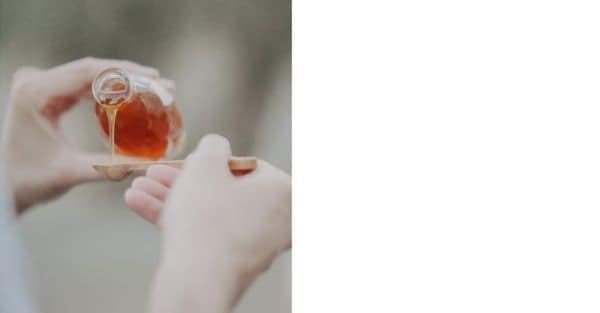
A honey sommelier can tell the degree of intensity and the spectrum of aromas of the product in the spoon. He might recommend a eucalyptus honey to go with risotto with mushrooms, or sunflower honey if the rice is with asparagus, while if you are going to barbecue, the secret is a vinaigrette where the egg is replaced by a millefiori in the mayonnaise. "Of course, the main pairing remains that with cheese. The most suitable are honeys of citrus fruits, thyme and thistle, or chestnut for the more mature cheeses, but if you want to surprise, suggest ailanthus honey, the tree of Paradise, which is reminiscent of peach tea,' adds Manassi. For those who like to be daring: extra-mature Parmesan cheese and coriander honey, with its spicy and slightly citrus notes.

Remaining in the world of cheese, here too we find an atypical sommelier, who by the way would immediately have something to object to: even if honey and cheese is a well-established pairing, the experts invite us to broaden our gaze. Sometimes a dry cider, smoked black tea, mead or kombucha is better alongside dairy products. "Cheese charts are a map of the territory and lend themselves to unexpected encounters, such as with beer jelly," emphasises Gemma Cruciani, lecturer at the Scuola Italiana Sommelier. The American Max McCalman was one of the first to give cheese tasting an international language: books, courses, monumental trolleys and the audacity to explain Cheddar so thoroughly that it reads like a Russian novel. However, the elite of sommeliers, tasters and refiners is, of course, in France. Hervé Mons is revered for his ability to 'read' maturation (even cheeses have memorable vintages), while Bernard Antony is the mentor of those who love lively, powerful, often angular cheeses: his Comté matured to the point of stubbornness are considered by many to be the dairy equivalent of a great Barolo.

And finally, chocolate. A natural anti-depressant thanks to theobromine, satisfying, rich, versatile, deep in taste and persistent, it has long attracted legions of enthusiasts who are increasingly turning into experts de tasters. The best known is Elvia Gregorace, scholar, historian and food writer: 'Unfortunately, there are still no chocolate charters, but specialised chocolate shops and tasting workshops are on the rise. Chocolate has a centuries-old history, it started out as an ingredient in the sacred ceremonies of pre-Hispanic civilisations in Latin America, landed in Europe as a drink, where it became a status symbol; even Manzoni speaks of it, when he recounts that a bowl of chocolate was offered to the nun of Monza to comfort her as she entered the convent'.

What do chocolate sommeliers do? They taste in silence, they break the bar to listen to the snap, they let it melt slowly on the palate, they assess aromatic cleanliness and taste-olfactory persistence. They register the range of scents released, ranging from barley to tobacco, pepper, banana, dried fruit and sometimes even cigar. As with wine, here terroir and cru make the difference: origin, botanical variety (Criollo, Forastero, Trinitario), fermentation, drying, roasting are analysed. And then you give the go-ahead to pairings. Whether it be with a Recioto or a mint tea, or, moving on to the kitchen, a millefeuille with aubergines or a dolceforte wild boar, in which cocoa marries sultanas and pine nuts.


Copyright reserved ©
Loading...
Loading...

Newsletter

Notizie e approfondimenti sugli avvenimenti politici, economici e finanziari.

Iscriviti