PREVIEWS

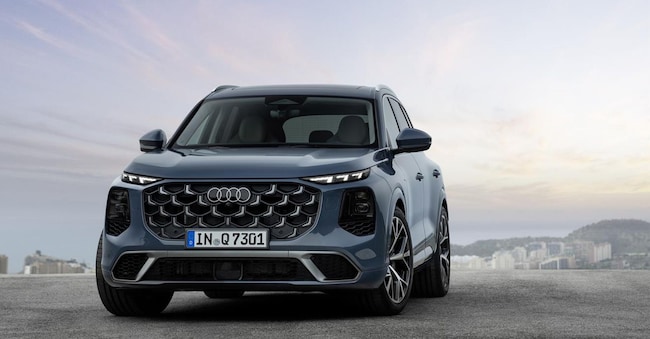
The new third-generation Audi Q7: a new look and more technology. The V6 engine is confirmed

Coming to the roads in September, it is based on the A6 and A6 S platform and features a brand-new interior
by Simonluca Pini

6' min read

Translated by AI
Versione italiana

6' min read

Translated by AI
Versione italiana

The third generation of the Audi Q7 has been completely redesigned, based on the PPC platform – the same one used for the A6 and Q5 – whilst retaining a length of over 5 metres and introducing an interior that can be configured with five, six or seven seats. At launch, the engine range will consist of two 3.0 V6 TDI mild hybrid plus 48-volt engines producing 245 and 299 horsepower, both featuring twin-turbocharging, quattro all-wheel drive and an eight-speed Tiptronic gearbox.

Dimensions of the new Audi Q7

Loading...


The new Audi Q7 has different proportions to its predecessor. It is 5.06 metres long, whilst the wheelbase measures 3 metres. The most striking difference compared to the previous generation is the 5-centimetre increase in overall height. The waistline rises towards the rear, the D-pillar becomes more vertical and the roof maintains an almost horizontal line, a design choice primarily aimed at enhancing interior space. The front end features a taller single-frame grille than the outgoing model, with a three-dimensional honeycomb structure. The wheel arches are more pronounced and echo the ‘blister quattro’ theme, a historic element of Audi’s design language associated with all-wheel drive. The bumpers and air intakes have also been redesigned. At the rear, a continuous light strip connecting the light clusters makes its debut. New features include illuminated single-frame grilles, illuminated rear rings and automatic doors with electric opening and closing, which can also be controlled remotely via the myAudi app. The third generation also confirms production at the Bratislava plant in Slovakia.


Nuova Audi Q7, le foto della terza generazione

Photogallery12 foto


Audi Q7 2027 interior

The interior is one of the key updates compared to the previous generation. The dashboard features the Audi Digital Stage. The system combines the 11.9-inch Audi virtual cockpit, the 14.5-inch curved OLED display of the MMI system and the passenger screen, which comes as standard. The new E3 1.2 electronic architecture uses five computing platforms to manage vehicle functions and enables integration between the voice assistant and ChatGPT-based artificial intelligence. The operating system is Android Automotive OS.

The reorganisation of the controls also extends to the steering wheel. The steering column incorporates a new control pod with the gear selector on the right-hand side and the lights and windscreen wiper controls on the left. Moving the selector from the centre console frees up space in the central area. This is where a cooled wireless charging system is located, with two 25-watt charging points. For passengers, there are 60-watt USB-C sockets in the second row and 100-watt sockets in the third row.

The five-seat configuration comes as standard, whilst the six- and seven-seat versions are available as options. The six-seat variant features two individual seats in the second row, a first for the Q7. The five- and seven-seat versions, on the other hand, allow for three child seats to be fitted side-by-side in the second row, with a further two Isofix anchor points in the third row.

Access to the third row is controlled by the comfort entry function, which can be activated via the MMI or the controls on the C-pillar. The second row can be folded forward in a 65:35 split, and the seats are individually adjustable lengthways and in the backrest in a 35:30:35 split. The boot of the five-seater version offers a capacity of between 670 and 2,075 litres. The maximum capacity has increased by over 80 litres compared to the previous generation. The seven-seater Q7, on the other hand, offers 581 litres in the standard configuration and 1,980 litres with the seats folded down.


The dash cam is here


Notable features include the optional dash cam integrated into the base of the rear-view mirror, with 4K video recording, electrically adjustable air vents, and the IAL dynamic interactive light, which incorporates welcome, signal and dynamic indicator functions. The panoramic sunroof is thinner than in the previous generation and features an electrochromic surface with adaptive transparency. It can darken to limit sunlight and UV rays. It is illuminated by 78 micro LEDs integrated into the glass surface, with 30 selectable colours.

The exterior lighting package includes advanced digital Matrix LED headlamps featuring micro-LED technology and OLED 3.0 rear light clusters. The lane lighting and guidance lighting functions work in conjunction with the driver assistance systems. On the motorway, when changing lanes, the lane light illuminates both lanes involved. Dynamic direction indicators with ground projection also make their debut, synchronised with the flashing of the light clusters.

The OLED rear light clusters also serve as a means of communication with the outside world. In critical situations, they can display triangular warning symbols, in conjunction with systems such as Emergency Assist, Automatic Emergency Braking and Lane Departure Warning. If a vehicle approaches too closely from behind, the OLED panels activate to alert the driver behind.


New Audi Q7 Hybrid

The third-generation Audi Q7 will not be available with plug-in hybrid powertrains at launch. The plug-in variants will be introduced at a later date and will be based on the 3.0 TFSI V6 engine, with two power output levels. Audi does not specify the technical specifications of the plug-in models in its press release, nor does it provide details on electric range, battery capacity or charging times.

The initial range will focus on diesel engines, with two 3.0-litre V6 TDI M-Hybrid Plus 48-volt twin-turbo engines available. The first delivers 245 hp and 500 Nm. The second delivers 299 hp and 630 Nm. Both are paired with the eight-speed Tiptronic automatic gearbox and quattro permanent all-wheel drive.

The MHEV Plus system uses a powertrain generator comprising an electric motor, power electronics and a dedicated cooling system. It is paired with a 1.7 kWh lithium iron phosphate battery and can assist driving with a maximum output of 24 horsepower and 370 Nm. During deceleration, it recovers up to 25 kW of energy and enables electro-hydraulic braking.

Four-wheel steering


From a technical point of view, the new Q7 retains the characteristics of a large SUV, making it suitable for towing with a stated capacity of up to 3.5 tonnes. The quattro permanent all-wheel drive system uses a pre-loaded self-locking centre differential, designed to speed up torque transfer between the axles. The driving dynamics benefit from adaptive air suspension, also available in a sport configuration. In the latter case, the ride height is lowered by 30 millimetres compared to the standard setting. Via Audi drive select, the ground clearance can vary by up to 90 millimetres. On the motorway, the car lowers progressively by up to 30 millimetres compared to the comfort and efficiency programmes, whilst in lift mode it can raise by up to 60 millimetres. To facilitate loading and access, the rear axle can lower by 47 millimetres. All-wheel steering is available as an option. Up to 60 km/h, the rear wheels steer in the opposite direction to the front wheels by up to 5 degrees, improving manoeuvrability and turning in tight spaces. At higher speeds, they turn in the same direction, with the aim of increasing stability and steering precision. Wheel sizes range from 20 inches to 22 inches, with 23-inch Audi Sport wheels available for the first time on the Q7. The braking system uses 400-millimetre self-ventilating front discs with six-piston calipers and 350-millimetre rear discs.


Audi Q7 V6 Diesel


The 3.0 TDI V6 engines can also run on HVO fuel (so-called biodiesel) that complies with the European standard EN 15940. According to Audi, hydrotreated vegetable oil enables a reduction in CO2 emissions of between 70 and 95 per cent compared to fossil diesel. It can be blended with conventional diesel or used 100 per cent pure. The declared WLTP fuel consumption figures range from 7.1 to 7.8 litres per 100 km for the 245-horsepower Q7 TDI quattro, with CO2 emissions between 186 and 204 g/km. The 299 hp version has a claimed fuel consumption of between 7.2 and 8.0 litres per 100 km and CO2 emissions of between 188 and 207 g/km.


New Audi Q7 prices


The third generation of the Audi Q7 will be available to order from the end of June and will arrive in Italian showrooms from September 2026. Prices will start at €87,150 for the 245-horsepower 3.0 TDI quattro. The 299-horsepower 3.0 TDI quattro will start at €89,850.

Copyright reserved ©
Loading...

Brand connect

Loading...

Newsletter

Notizie e approfondimenti sugli avvenimenti politici, economici e finanziari.

Iscriviti