
China and the budget: the main challenges on the agenda at the European Council
For the 2028–23 budget, the EU-27 are aiming to step up efforts on new own resources, whilst positions are converging among countries that have traditionally held differing views on how to respond to Chinese competition
from our correspondent Beda Romano
 Aggiungi Il Sole 24 Ore
ai preferiti su Google
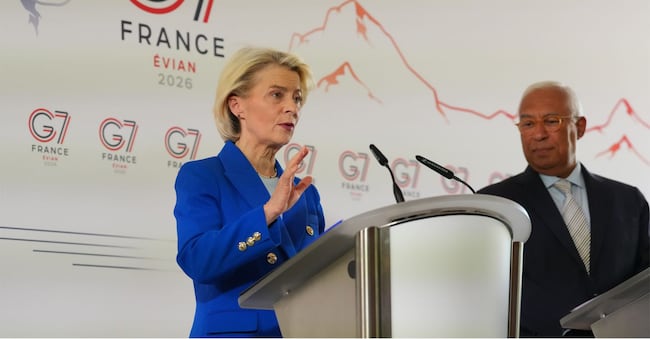
BRUSSELS – Between tomorrow and the day after tomorrow, the heads of state and government of the European Union, meeting for their traditional summit before the summer recess, will attempt to chart a new course in an increasingly fragile and uncertain world. In this regard, two issues of particular importance are on the leaders’ agenda: the forthcoming EU budget for 2028–2034 and relations with China, a country with which all Member States now have a trade deficit.
On the one hand, we are aware of the issues at stake. Last Thursday, the Cypriot Presidency of the European Union presented a draft budget that reduces the amount set out in the proposal put forward by the European Commission last July by 2 per cent. Many countries have voiced their concerns. This includes both those who want a more generous budget and those who consider the Cypriot draft to be still too costly.
There are clear contradictions. All countries are fully aware that the current historical moment calls for a more efficient and more generous budget. Yet, for the time being, the debate remains between those Member States advocating cohesion and agriculture and those calling for a budget more focused on competitiveness and research. The proposal put forward by the Cypriot Presidency, with figures itemised line by line, will be the subject of an initial debate at leader level.
An EU official explained yesterday: “Our aim during the summit will be to make progress towards squaring the circle from a financial point of view. In particular, we want to step up efforts on the issue of new own resources.’ Both the Commission and the Parliament have put forward a series of proposals ranging from a tax on online gambling to a financial contribution from the largest companies.
Meanwhile, in Luxembourg, the ministers for European Affairs reached a preliminary agreement on the three implementing regulations for the budget, relating to the new national and regional partnership plans, which are intended to channelling EU funds to the local level; the new Competitiveness Fund; and, finally, the instrument intended to finance the European Union’s international presence (known by the English term ‘Global Europe’).


