The Next Earth at Diedo Palace
The exhibition-reflexion The Next Earth. Computation, Crisis, Cosmology can be visited in Venice until 23 November
4' min read
4' min read
In the Cannaregio district, between the railway station and Campo Santi Apostoli, there is Palazzo Diedo, built in the early 18th century for the family of the same name by Andrea Tirali, author of works that are a mix of Palladian forms and Venetian classicism, forerunners of what would later be defined as European neo-classicism. In 1888 the palazzo became the property of the municipality, which used it as a primary school and as the seat of the Court of Surveillance (from 1993 to 2012), then nothing more, until after the pandemic, when the philanthropist Nicolas Berggruen decided to buy it, restore it (the architect Silvio Fassi coordinated the whole thing) and transform it into what is now the Berggruen Arts & Culture building.
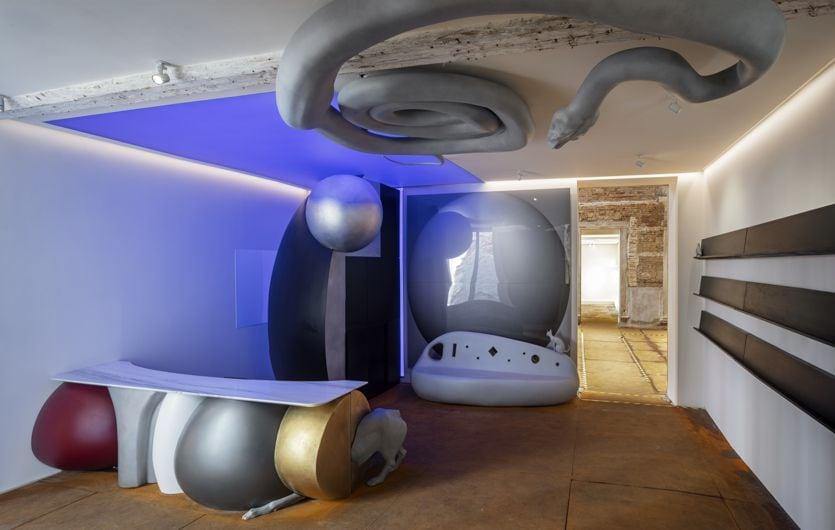
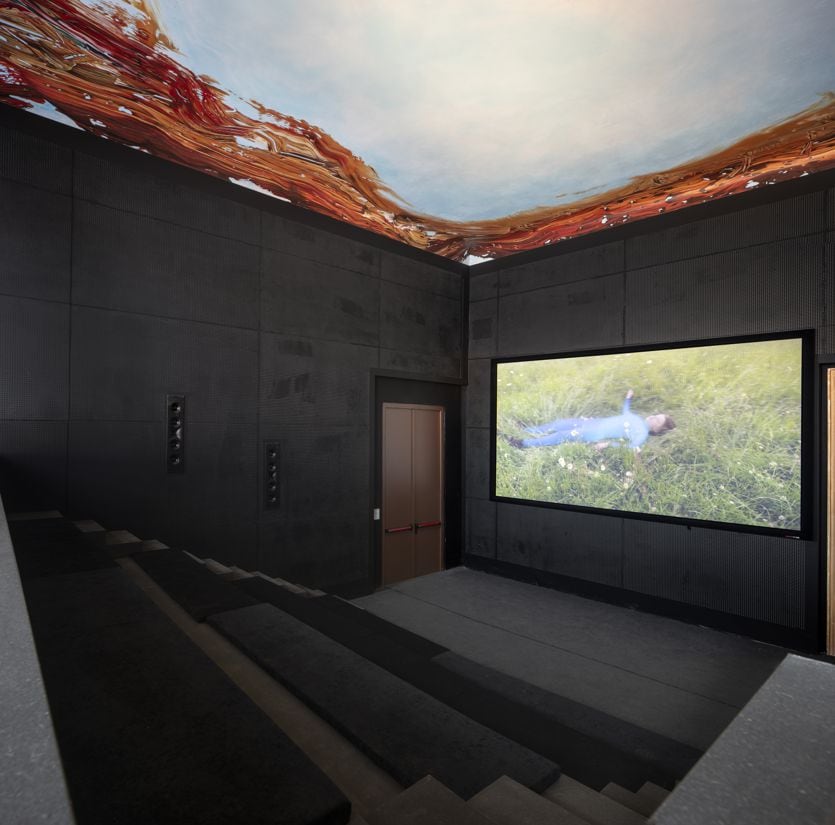
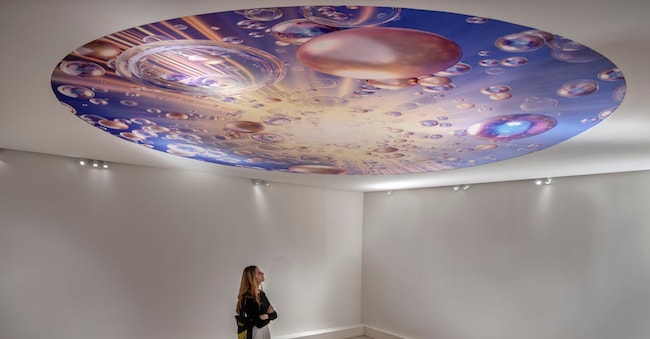
Born in 1961, Berggruen thus continues to bet on the future of Venice, as he already owns the scenic Casa dei Tre Oci on the Giudecca, the European headquarters of the Berggruen Institute. During the hectic opening days of the 60th Art Biennale last year, he took us on a preview visit, when everything was still a building site with hundreds of workers moving around, machinery and authentic 'surprises', such as the two important 18th-century fresco cycles brought back to light (they are by Francesco Fontebasso and Costantino Cedini, you can find them on the first floor) with the six Roman capriccios. And then, of course, the many works of art created by contemporary artists, still packed or just arranged on the floor, on a large wall or hanging from the ceiling, from Jim Shaw's Split Fountain to Hiroshi Sugimoto's colourful paintings to Urs Fisher's silver-plated 'raindrops' (Oman), to whom we also owe the work for one of the ceilings that makes the whole thing even more impressive.
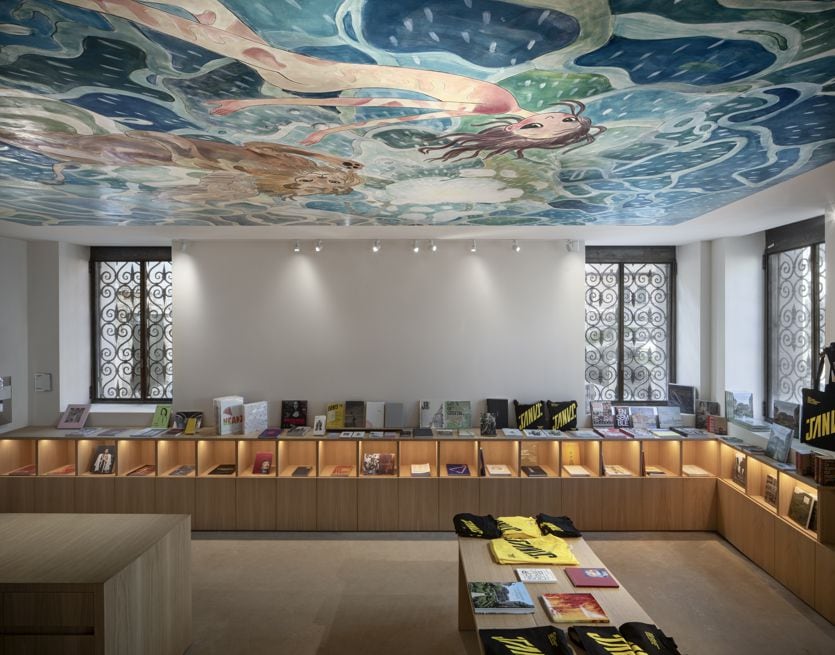
We went back there recently, during the 19th International Architecture Biennale, because The Next Earth was inaugurated in its halls, an exhibition that requires time and concentration to be fully understood and appreciated, as it stages a dialogue between two important research projects: The Noocene: Computation and Cosmology from Antikythera to AI by Antikythera and Climate Work: Un/Worlding the Planet by MIT Architecture. Curated by Benjamin Bratton, Nicholas de Monchaux and Ana Miljacki, it is a special interweaving of two perspectives that address some of the most pressing issues of our time, in particular what role philosophy, technology and architecture can play in the face of global crises that redefine our past, our present and our shared future.
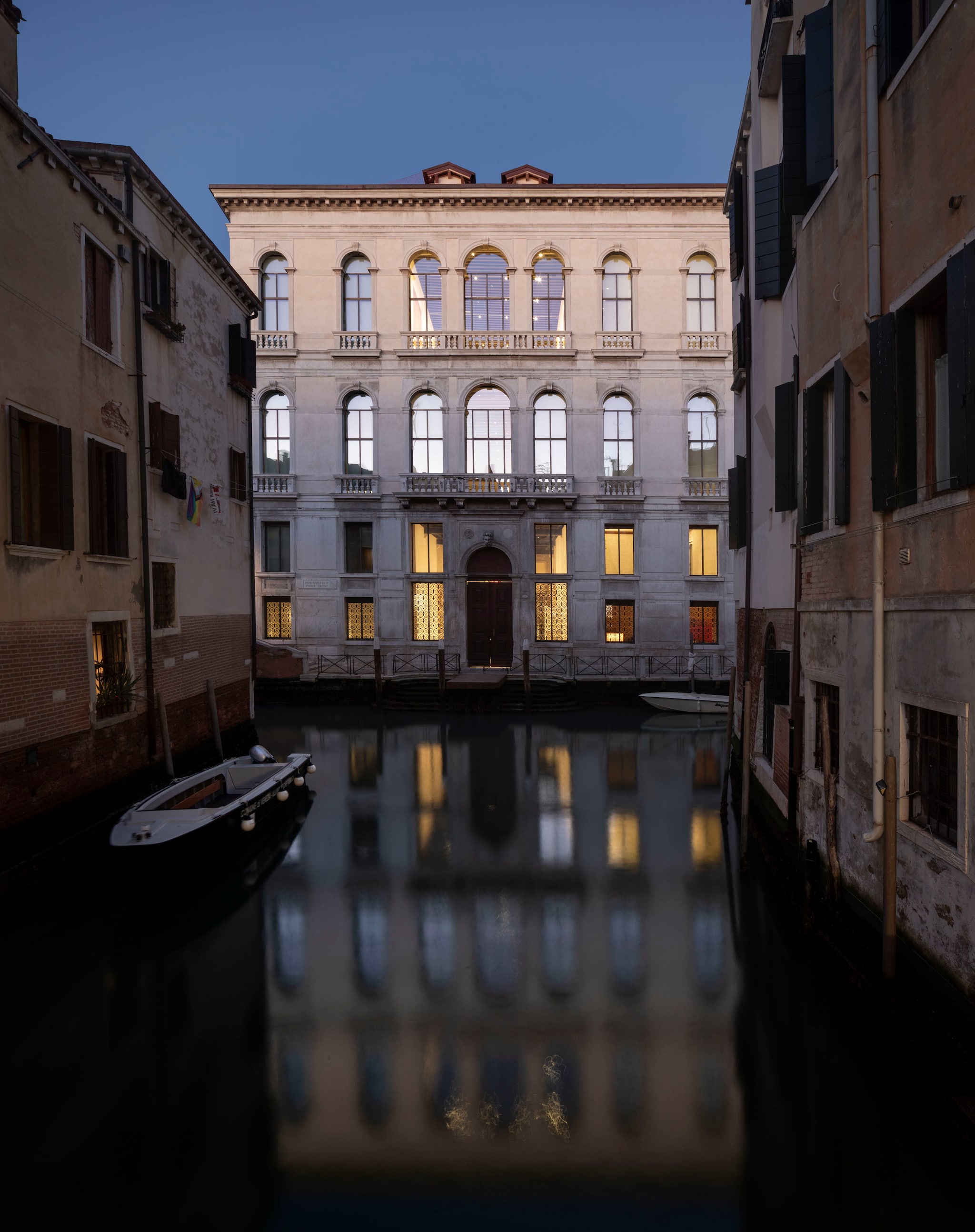
Developed on two levels, The Next Earth thus succeeds in creating a dialogue between the current research of Antikythera - an international think tank named after the first known computer (an ancient device designed to calculate and orientate in time and space) and dedicated to rethinking the role of planetary computation as a technological, philosophical and geopolitical force - and MIT Architecture - the world's leading research institute in science, engineering and design - in the fields of climate, cosmology and computational computing. On the one hand, we are presented with the Earth as an ever-evolving megastructure through objects that narrate the complex development of modern philosophy, and on the other hand, we are offered a kaleidoscopic view through thirty-seven different perspectives on what it has meant and what it could mean to design considering the planetary implications of architecture and design.
Among the works presented, we find Drawing time by Adriana Giorgis, a way to make known and not forget the reality of L'Aquila and its buildings destroyed by the earthquake in 2009, rebuilt and strengthened with tie rods, corner stones and thickened walls, generating implications that go beyond aesthetics, because they also invest the spatial dimension. A city where maintaining means remaking, where building means preserving and where caring for others means creating. L'Aquila thus joins other cities in the larger project entitled Climate Work: Un/Worlding the Planet, a reflection on the impact of architecture and the need for creative and cognitive rethinking to imagine a sustainable future.