
The 'no women no panel' research and Italy's delays
It is a survey answered by 61 subjects including universities, institutions, regional and national bodies. It collects data from 2024 and shows the involvement of Italian women in public events: there is still much to be done

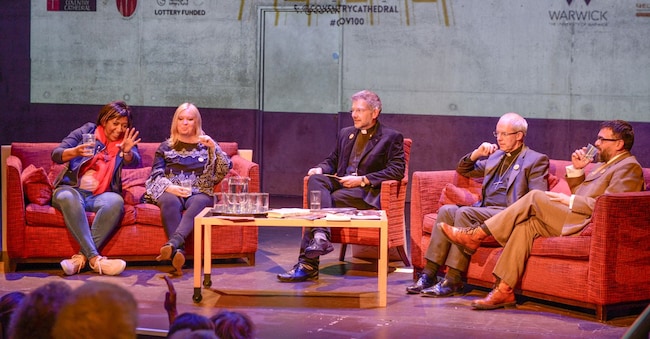
The photograph offered by the volume La parità non è un opinione (Equality is not an opinion), which contains the results of the research 'No Women No Panel' promoted by the European Community and espoused in Italy by RAI, reveals the progress made in our country while showing how far behind it still is on the road to gender equality.
Not a novelty, one might think at first glance, but two significant elements stand out here: the ramification and extension of the survey, which involves universities, bodies, local and national institutions for a total of 61 signatories; the update to 2024 of the results, which makes the research more current and reliable than ever. The essay - edited by RAI journalist Arianna Voto, in charge of the project - opens with contributions from various authors who take stock of the unimplemented Constitution, the situation in the Public Administration, legislative interventions for equality, and ISTAT analyses. After testimonies such as that of Amalia Ercoli Finzi and Dacia Maraini, we get to the heart of the monitoring of the participation of the two genders in public meetings, with details on the professionalism and activities of the subjects involved.
A terrain in which 'the competence and authority of the experts to be invited are still strongly connoted by their being men or women. The so-called manel, as well as meetings composed only of women womanel, are a clear expression that our society reproduces the stereotypes to which Italians are atavistically condemned,' reads the presentation of the research, which examined more than 5,370 events.
Admittedly, progress is undoubtedly being made: 40% of the panels - which refer to seminars, conferences, festivals, celebrations and more - are balanced, but this is due to the fact that many female protagonists are present in the role of moderators rather than experts. In fields still perceived as 'masculine' (economics, politics, science) a strong imbalance persists and, although the manel and womanel are only 16% in total, the former are three times more than the latter: prejudices and barriers are therefore still entrenched. The data worsens when considering institutional and academic realities of national importance: a balanced composition is only reached in 33.6 per cent of cases, and male-dominated meetings even reach 35.9 per cent.
The value of this work also lies in its being an operational outline: a valuable data map showing how and where to act, and with what urgency. In the hope that we will already be able to see different percentages in the next surveys.


