Third Factor

Against educational poverty, the non-profit, business and community alliance wins out

With Sport Never Stop, the Tree of Life Foundation has reached 1,500 minors working on care and prevention

by Alessia Mazza

Con i corsi sportivi il progetto della Fondazione Albero della Vita in collaborazione con Fondazione Conad offre occasioni di relazione e sociali

5' min read

5' min read

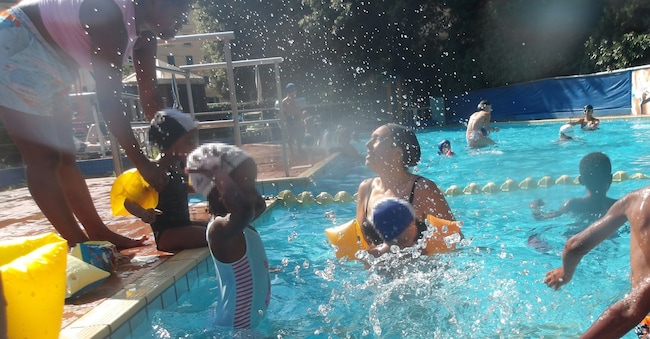
Emanuela had never swum before. Today she has a medal around her neck and a very clear idea: she is only 12 years old, but has already learned to win. She faced her first competition with determination, challenging older girls and arriving first at the finish line. "The coach thought I wouldn't make it. Instead I won." For her, swimming was discovery, freedom and confidence: "Shyness is overcome when you find something that makes you feel confident. Anxiety is always there, but then it disappears". Her dream is to continue swimming, perhaps at a competitive level.

Emanuela is one of the more than 1,500 children involved in Sport Never Stop, a project promoted by Fondazione L'Albero della Vita Ets in collaboration with Fondazione Conad Ets to bring sport to disadvantaged neighbourhoods in large Italian cities. "One mother was moved. It was the first time her son found a place where he could really feel at ease," says one of the educators who collaborated on the project. Thanks to Sport Never Stop, in fact, this mother was able to enrol both her children in a swimming course, an opportunity she would not have been able to afford otherwise. One of the two children, diagnosed with Asperger's, found the swimming pool to be a serene and inclusive environment that finally made him feel at home.

Loading...

Educational Poverty and New Fragilities

In Italy, educational poverty remains a pervasive but too often underestimated phenomenon, intertwined with material poverty and capable of deeply compromising the future of the new generations. According to the most recent Istat data, in 2023 more than 70 per cent of children and young people between the ages of 3 and 19 had never visited a library, and almost 40 per cent had not played sports during the year.

Numbers that tell of the lack of cultural, relational and educational stimuli, fundamental for building transversal skills and a positive view of oneself. A poverty that does not just take away books and activities, but deprives the youngest of the chance to experiment, to make mistakes, to try again. "In a world where educational poverty is still a significant challenge, it is crucial to adopt innovative and inclusive approaches to support children and young people living in the most disadvantaged neighbourhoods of our cities. This project responds to this need, providing a positive and constructive alternative for those who might otherwise be exposed to the risks of crime and delinquency," says Ivano Ferrarini, CEO of Conad Centro Nord.

Projects like Sport Never Stop represent much more than just a sports course for these children: they offer a concrete alternative, the chance to feel part of a group, to discover new passions and develop values such as respect, discipline, teamwork. Movement, sport, and relationships with significant adults thus become a real antidote to the risk of exclusion and marginalisation, giving children a space of freedom and dreams where they can grow.

An educational and inclusion tool

Born from the alliance between Fondazione L'Albero della Vita Ets and Fondazione Conad Ets, Sport Never Stop uses sport as an educational lever and inclusion tool for children living in the most fragile urban contexts. Active in eight cities - Milan, Bergamo, Genoa, Venice, Perugia, Naples, Catanzaro and Brindisi - the project has already reached more than 1,500 minors, more than 200 of whom have received a sports dowry that covers registration, kit, sports medical examination and transport, thus breaking down the economic barriers that often prevent access to sport.

The real value of Sport Never Stop goes beyond the mere practice of sport: it builds an educational environment that helps develop respect for rules, self-esteem, and the ability to cooperate. Thanks to the active involvement of schools, families and sports associations, sport becomes an engine of change, recognised as a space for inclusion and personal and social growth. As Chiara Paratico, Corporate Partnership Manager of Fondazione L'Albero della Vita Es recalls, 'sport is and must be for everyone, because it is a metaphor for life and a gym for life. It develops relational skills, teaches how to get involved together with others, united by the same goals'. Behind every basketball class, every pool or every dance lesson, a clear message remains: sport cannot be a privilege for a few, but a right for all, especially in those contexts where children risk growing up without reference points.

How does it work in schools?

Alongside sporting activities, Sport Never Stop proposes a broader educational approach, which takes the form of workshops in schools.

Over the past year, more than 1,300 children in 14 institutions have participated in workshops on healthy eating, psychophysical wellbeing, managing emotions and the values of sport. The method relies on practical activities, games, discussions and digital tools, with the aim of stimulating children's awareness of their own life choices.

The goal is not just to get children moving, but to make them more aware of their own life choices. An educational investment that goes beyond the confines of the gymnasium and builds healthier and stronger relationships, inside and outside school.

Alliance between the third sector, business and the community

Sport Never Stop is an example of how the synergy between the Third Sector, the corporate world, educational institutions and local communities can generate structured and sustainable educational paths.

The project is promoted by Fondazione L'Albero della Vita ETS, which has been active for years in combating educational poverty and supporting vulnerable families. Alongside it, Fondazione Conad ETS has chosen to support the initiative with resources, expertise and organisational support also guaranteed by the network of local cooperatives. Collaboration with schools remains fundamental to intercept the real needs of the territories and involve children, families and teachers in a shared pathway.

"We are proud to support a social project that was created by networking with other actors, thus collaborating with schools, institutions, Third Sector organisations and families, with the aim of joining forces to improve the well-being of an entire community," said Maria Cristina Alfieri, general secretary and director of Fondazione Conad Ets.

A strategic role, therefore, that links public and private in a valuable alliance, capable of providing answers to an increasingly widespread social fragility.

Gratteri: 'A commitment to prevention'

The social and educational significance of Sport Never Stop was also underlined by authoritative voices. Prosecutor Nicola Gratteri, who spoke at the presentation event in Milan, highlighted how initiatives of this kind can make a concrete contribution to the prevention of juvenile crime: 'There are neighbourhoods that experience extremely difficult situations, and projects like this represent a concrete commitment to give young people an alternative. It also helps us magistrates, because it reduces juvenile crime and helps to build a better future'.

In the same vein were Michelin-starred chef Davide Oldani, who referred to the educational value of healthy eating, and cycling champion Ivan Basso, who described sport as 'a gymnasium of life', capable of strengthening self-esteem and promoting solid relationships.

The message that emerges is clear: when schools, the Third Sector, businesses and communities work together, it is possible to offer children concrete opportunities for growth and inclusion. Sport Never Stop shows that sport, if made accessible to all, can become an effective tool to strengthen skills, create positive relationships and open new perspectives, even in the most fragile contexts.

Alessia Mazza participates in 'Terzo Fattore', a partnership between Il Sole 24 Ore and the Catholic University with the support of TechSoup. The initiative aims to promote knowledge of the third sector. Students carry out internships in non-profit organisations and talk about the most significant aspects of their experiences.

Copyright reserved ©
Loading...

Brand connect

Loading...

Newsletter

Notizie e approfondimenti sugli avvenimenti politici, economici e finanziari.

Iscriviti