
The Del Vecchio case and the succession that does not end with the inheritance
The Del Vecchio case shows that a succession plan can be well-structured and financially sound, yet remain organisationally unstable if it fails to define how the family, the business and the management should reinterpret the founder’s legacy

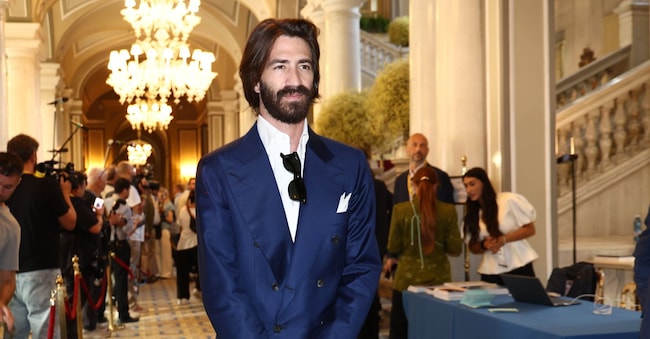
The Del Vecchio case shows that a succession plan can be well-structured and financially sound, yet remain organisationally unstable if it fails to define how the family, the business and the management should reinterpret the founder’s legacy.
Leonardo Maria Del Vecchio’s resignation from EssilorLuxottica has been seen primarily as a new chapter in the saga of the Del Vecchio legacy. However, given the ongoing tensions in relations between family members and with management, the case raises a deeper question: following the death of a founder, who inherits the right to interpret the corporate vision? Generational succession is generally defined as a transfer of shares and roles. However, in large family-run groups, at least three types of legacy are transferred: the ownership legacy, distributed in the case of Delfin amongst eight family members; managerial inheritance, entrusted to a professional structure led by Francesco Milleri; and symbolic or identity-based inheritance, that is, the ability to determine which values and meanings instilled by the founder should be upheld over time. The first two are managed through wills, articles of association and appointments. The third is far more complex.
On this very point, in the letter in which he explained the reasons for his departure, Leonardo Maria Del Vecchio referred to a distant and impersonal management style, in contrast to the focus on people and the sense of belonging instilled in Luxottica by his father. The group, however, emphasised the continuity of the strategic vision envisaged by the founder. This clash of values highlights two aspects of continuity: the preservation of identity and the importance of relationships with people, on the one hand; and the realisation of the corporate vision through professional management, on the other.
This dynamic centres on a concept well known in the literature on family businesses: ‘founder imprinting’. This refers to the mark that the founder leaves on the organisation’s structures, values and organisational culture, and can be regarded as a very powerful intangible asset. By helping to guide decision-making processes, foster cohesion and make the business recognisable and unique, it can serve as a lever on which to build a competitive advantage. However, when the founder passes away, this imprint must be interpreted and preserved over time. At the same time, if it is not translated into shared values and processes, it risks becoming a double-edged sword, turning into a source of conflict rather than a source of unity.
And this is where another concept from academic literature comes into play: that of organisational identity, which, in the case of family businesses, is by definition constructed at the intersection between the business and family systems. This distinctive feature gives such organisations the ability to evolve without losing their connection to the past. EssilorLuxottica is no longer the Luxottica of twenty years ago. It is a global group, born of an international merger, operating in increasingly technology-driven sectors and equipped with complex governance structures. To expect it to remain anchored to the past would be utopian. But severing ties with the history and the people who first defined its distinctive characteristics could weaken an identity-defining asset that is difficult to replicate. The question is therefore not whether to change, but which elements to make more flexible and which to consider indispensable.

