
The Data Protection Authority: “Organisational requirements must not restrict the rights of pupils with disabilities”
More support hours, an Individual Education Plan (IEP) that can be updated at any time, families who are genuinely involved, and no compulsory change of school for those with a disability: these are the demands put forward today – in the Senate’s Seventh Committee – by the National Authority for the Rights of Persons with Disabilities

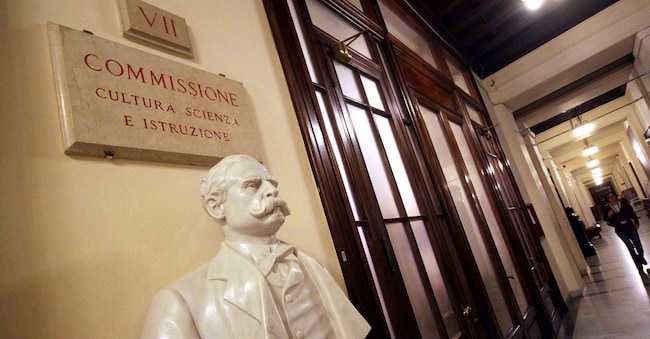
The National Authority for the Rights of Persons with Disabilities appeared before the Senate’s 7th Committee this morning as part of the examination of Bill 2053, which would convert Decree-Law No. 170 of 30 September 2026 into law, the so-called ‘school decree’. Mr Antonio Pelagatti, a member of the Authority’s Board, spoke on behalf of the Authority.
The hearing followed the written submission that the Authority sent to the Committee yesterday, setting out its proposals for amendments. The Authority’s assessment of the measure is critical. According to the Authority, certain provisions designed to make school organisation more efficient risk making educational planning more rigid, reducing family participation and making support dependent on available resources. Furthermore, the decree is not aligned with the disability reform or the Life Plan.
Programming requirements
“The decree addresses planning requirements that we understand, but in several respects it turns the relationship between individuals and the organisation on its head,” stated the Board of the Data Protection Authority, comprising Chairman Maurizio Borgo, Deputy Member Francesco Vaia and Member Antonio Pelagatti. “It is the pupil’s needs, and not the available staff, that must determine the support required. Similarly, the Individualised Education Plan (PEI) must support the individual’s development rather than chasing administrative deadlines, and it can only do so if families and health services are genuinely involved in its development, without their involvement becoming a step to be skipped when time is short. For the same reason, no pupil with a disability should be forced to change schools simply to meet a quota. The school’s role is to open up possibilities, not to set limits on a child in advance. We call on Parliament to amend the text during the conversion process.”

Brand connect


Newsletter Scuola+
La newsletter premium dedicata al mondo della scuola con approfondimenti normativi, analisi e guide operative
Abbonati