
The only way to remember is to forget
The latest, highly intense novel by Sinocanadian writer Madeleine Thien tells the story of someone trapped between the torment of a past that does not want to pass and a future so longed for that the present is impossible to live

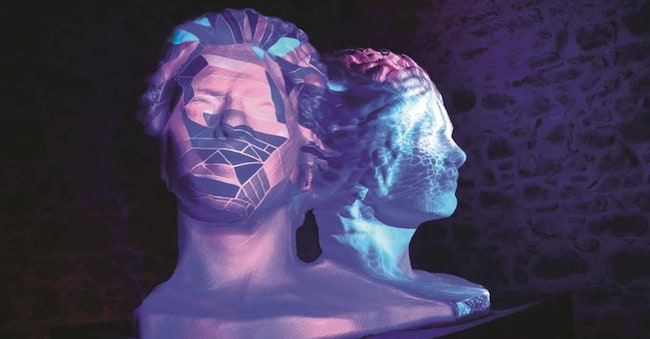
'The only way to remember is to forget, to let time fill history and recreate it anew'. So says a dying man to his daughter Lina, convinced that she can imprint in her memory what her father Wui had lived through and only now told her: the only true legacy he left her, the legacy that cannot be refused.
For years the two of them had been stranded in an enigmatic place called the Sea, a city of ruins, a hive that changed daily on the edge of an ocean where, without warning, boats appeared on the horizon and all, or almost all, of the people passing through that ephemeral outpost poured onto the beach to be taken to other places, places whose names they did not even know when they left. "They were terrified of being left behind. Many nights I lay awake following the lights of the lanterns swinging in eternity as people were ferried to the larger ships'.
It is Lina who is the narrator of the Book of Memories, a masterpiece by the Canadian writer of Chinese, Malaysian and Hong Kong origin Madeleine Thien. Now in her fifties, she recounts when, at the age of seven, she had landed at that port with Wui, but without the rest of her family: her mother, brother and aunt who had brought up her father, who had been orphaned following what has long been described as a tragic mistake. He recounts it in minute detail, reconstructing a place and a story with fluctuating, jagged contours, which could be set in this century as in the past century or even earlier. The only clue to anchor us to the present or the near future is the past profession of his father, who had managed cyberspace facilities in China: "He had worked as an engineer for the government and later against it. He never talked about my mother, my aunt or my brother. Instead, he told me that exile was fortunate because we had freed ourselves from a ruined empire, a hall of mirrors where decent people could betray themselves without even knowing it. "From now on," he was fond of saying, "not an hour will be wasted. We belong to a new world'".
Instead, they had been there for years, in that in-between world, blocked by their father's illness or perhaps - like many refugees - by the yearning for a past that does not want to pass and a future that is so dreamed of that the present is impossible to live in. "Lina, don't fret. You will never be satisfied if you cannot distinguish what you want from what it actually is. This world is not as you would like it to be, this world is more than we can remotely imagine, and sometimes I think it is more than we deserve,' her omissive father tells her in one of the enigmatic phrases often uttered by the characters of a very intense, highly symbolic and polysemous book, and which seem to suggest that many of the facts narrated are exaggerated metaphors for existence.
'While waiting for our return, we were not yet ready for a new beginning,' Lina observed. She was then impatient to leave and at the same time to know what had become of her mother and brother. When she became a teenager, 'every evening at dusk she would take refuge in a half-hidden corner, where there was a breeze between the buildings. Before all the contours of things turned black, the mountains were edged in gold. For a few moments even the barbed wire would dissolve. The noises of the road came up. Bicycle bells, singing, snippets of conversation. Outside the camp, the routine continued while inside, time stretched to breaking point'.


