
The opposing worldviews of Harris and Trump

4' min read
4' min read
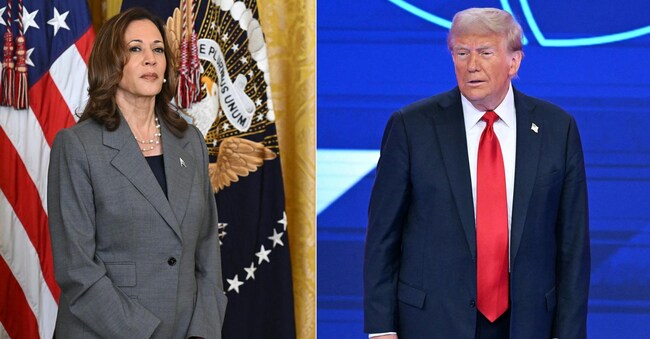
We are at the end of our tether. In America, the election campaign is drawing to a close. Domestic political issues continue to dominate. However, foreign policy is also playing an important role, as it hasn't in a long time. For Jeffrey Friedman and Andrew Payne (in Foreign Affairs) it could not be otherwise, given that the election campaign is taking place with two wars underway and in the context of a redefinition of international powers. Redefinition promoted by an aggressive 'revisionist' coalition (China, Russia, Iran and North Korea) and an increasingly assertive 'global south' (such as Brazil and India). The orientations of the two presidential candidates derive from the traditional division between the isolationist and internationalist orientation of foreign policy. However, with not a few adaptations. Kamala Harris is a neo-internationalist who thinks within the multilateral tradition, while Donald Trump is a neo-isolationist with a strongly unilateralist instinct. Let us take a closer look.
Harris is the heir to the internationalist orientation conceptualised after World War II in the State Department's Policy Planning Staff document (NSC-68 of 1950), then headed by Paul Nitze. That document, drafted in the context of a Cold War that had now taken hold, argued that America should pursue its hegemony by endowing itself with unequalled military might, itself justified by its democratic values. Contrary to what George Kennan had argued (in the long telegram he sent from Moscow in 1948 where he was ambassador), that the Soviet Union should be 'contained', for Nitze this was not enough to make the world 'safe for democracy'. Since then, a hegemonic vision of America has developed, benign towards its allies (particularly Western Europe) and much less so towards countries (in Latin America and South-East Asia) exposed to Soviet aims. It created a multilateral liberal international order, congruent with the domestic multilateralism of the American system of government. Through no small number of mistakes, that hegemony led to the internal implosion of the Soviet Union and the end of the Cold War.
The post-Cold War era witnessed the triumph of the internationalist vision but also its defeat with the fallacious decision to invade Afghanistan and then Iraq as a response to the terrorist attack of 11 September 2001. Despite that defeat, the internationalist vision continued to characterise the presidencies of George W. Bush, Barack Obama and Joe Biden. The latter interpreted it as 'leadership without hegemony' (in the words of Jessica Mathews, also in Foreign Affairs), building a formidable system of alliances, without renouncing the country's international role. A role that has seen successes and failures. Among the former, the management of the response to the Russian invasion of Ukraine, due to a clear knowledge of the Putin system. Among the latter, the inability to influence the major players in the Middle East crisis, starting with the Israeli government of Benjamin Netanyahu, due to a non-recognition of the latter's illiberal involution. Harris will continue the internationalist approach, rebalancing America's role (in the Middle East) and reducing commitments to Europe.
If Europe counts for less in Harris's vision, it will count for little or nothing in Trump's. The latter has isolationist instincts that he translates as unilateralism (as shown by his 2017-2020 presidency). For Trump, America should no longer take on the governance of the world (as Paul Nitze argued), but rather deal with the world on the basis of its own interests. For him, any government (democratic or authoritarian) is simply a negotiating opponent. Trump makes no secret of his admiration for authoritarian leaders (as Josh Rudolph wrote in Foreign Policy), but especially for their governments that can negotiate without the internal constraints (the checks and balances) that condition the American presidency. Trump's approach is transactional, the consequence of which is an anarchic, conflictual world, like that created by the nationalisms of the past. The policy of undifferentiated tariffs against China is designed to eliminate interdependencies with that country, thus reducing the obstacles to a direct confrontation with it. The policy of military self-sufficiency vis-à-vis Europe is bound to divide the latter, thus reopening old divisions on our continent. It is an international replica of 'homo homini lupus', in which each state pursues its own interests outside of international rules and conventions. An international system that will push towards the likely disintegration of Europe.
In short, given America's role, the elections next 5 November will decide what kind of world we will have after them. The president is not the sole actor in the country's foreign policy, having to act in a system of separation of powers in which the Senate (for military and diplomatic matters) and the House of Representatives (for financial matters) exert significant influence. Nevertheless, it will be up to the future president to determine the direction in which America should march. And the world with it.


