Turkey

The other side of Istanbul: three places not to be missed on the Asian side of the megalopolis

Far from mass tourism, the districts on the Asian side of the Bosphorus show a more authentic and less hectic side of the metropolis

by Gabriele Meoni

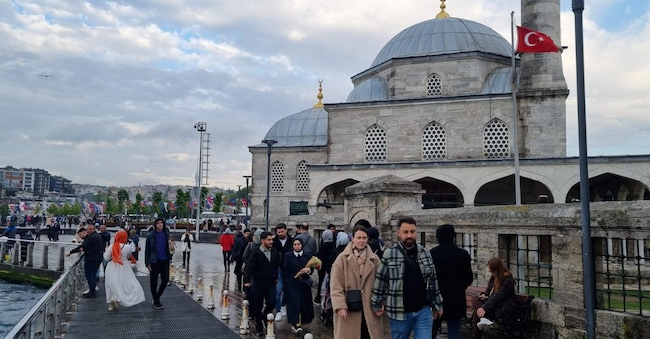
La passeggiata lungo il Bosforo a Üsküdar (foto di Gabriele Meoni)

5' min read

5' min read

A quarter of Italy crammed into one of the world's 20 most populous megacities. Istanbul is a gigantic tangle of 15 million inhabitants and 39 districts, a veritable city within a city, yet visitors almost always linger on a tiny handkerchief of this extraordinary metropolis that acts as a hinge between Europe and Asia.

There is good reason for this: the most famous tourist sites are concentrated in a very small space. The Hagia (or Aya) Sophia and the Blue Mosque face each other, the Topkapi Palace is just below, nestled in the greenery of Gülhane Park, the astonishing Byzantine-era Basilica Cistern is also just a few steps away, and a handful of minutes' walk away is the chaotic world of the Grand Bazaar, where you need only lift your gaze from the mock designer goods to discover wonderful glimpses of a market that oozes centuries of history, trade and intrigue.

Loading...

Discovering Asian Istanbul

.

The only diversions the European tourist allows himself outside the jewels of Sultanahmet are a boat ride on the Bosphorus and an evening on the other side of the Galata bridge, strolling along the ever-crowded Istiklal Caddesi - Istanbul's busiest pedestrian street - to Taksim Square, the scene of demonstrations that often result in violence, and then plunging into the Beyoglu nightlife, where the clubs never close and the voices of the young people only die down at dawn.

Yet Istanbul is so much more, each neighbourhood is a distinct community with its own strong personality, meeting places, mosques and even, more prosaically, its favourite football team. For a hypothetical second trip to the 'Rome of the East' after the one of the must-see destinations, an alternative itinerary then leads to Asian Istanbul.

Just take one of the many very efficient and inexpensive (about 70 euro cents a ride) ferries that run until late in the evening, cross the Bosphorus and stop at three of the many places you can visit on the other side of the Strait.
Üsküdar, between hammams and mosques

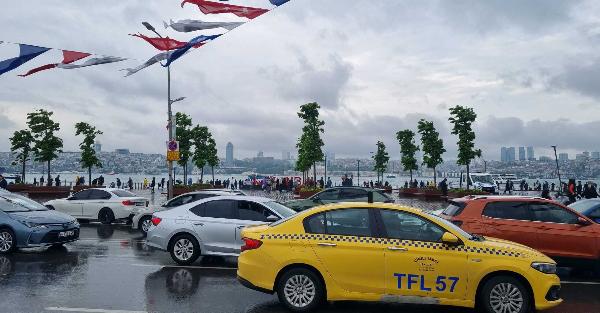
Il traffico nella piazza centrale di Üsküdar, sul lungo Bosforo (foto di Gabriele Meoni)

The first stop is the easiest to reach because it is located right in front of the wealthy Beskitas district, famous for the splendid palaces of the Sultans who moved here from Topkapi in the 19th century. Lying on the Bosphorus at the point where the Strait is narrowest, we are talking about Üsküdar, Scutari in Italian. The square where the boat lands is the best calling card: two splendid historical mosques tower above the traffic and the swarming of passers-by. The advice is to walk along the pedestrian street along the Bosphorus heading south, in what is one of the city's most beautiful promenades: very few tourists, the street runs along the Bosphorus up to the point where it faces the historic Leander Tower, a small island just a few metres from the coast, a vantage point where couples and families stop for a selfie.

Üsküdar is also an excellent destination to experience the hammams: here they are still authentic, frequented mainly by Turks, less opulent and noble than those in Sultanahmet but more 'real'. The premises are a little dated but precisely for this reason they exert a great charm, the staff - strictly separated into men and women - take care of the occasional guest as if he or she were a regular customer, and at the end of the hot bath in the vapours one can treat oneself to an invigorating massage. To finish off, a rejuvenating çay is served, the hot tea that the Turks sip in the classic small glass at any hour of the day or night and that is the national drink much more than coffee.

The largest mosque in Turkey

.

Camlica Camii, la moschea più grande della Turchia inaugurata nel 2019 (foto di Gabriele Meoni)

Just above the roofs of Üsküdar, going up the hill for a few kilometres, one comes across the Camlica Camii, Turkey's largest mosque, one of the symbols of Erdogan's grandeur, which inaugurated in 2019 after seven years of work and a cost of more than 100 million dollars. One of the many mega-projects desired by the president but which have arisen amidst controversy over the enormous expenditure of public resources in a fragile economy that is too often at the mercy of currency crises and hyper-inflation. Designed by two female architects, calling it a mosque is reductive: it houses a museum, a library, an art gallery, a conference hall and much more.

Arranged on several levels, one could spend a whole day wandering through its meanders. It can accommodate over 60,000 people (100,000 in the event of an earthquake emergency, it was built to earthquake-proof criteria) and indeed, the first feeling you get upon entering is of immense emptiness. The outsized dimensions - the 72-metre high dome, the six minarets that only the Blue Mosque in Istanbul can boast - the pillars, the carpets, the windows: everything is gigantic. Even here, tourists can be counted on the fingers of one hand. It is a place of the Turks, of prayer and recollection but also of gathering and community, where children can play freely away from the infernal traffic of the city.

Kadiköy, the westernmost Asian district

.

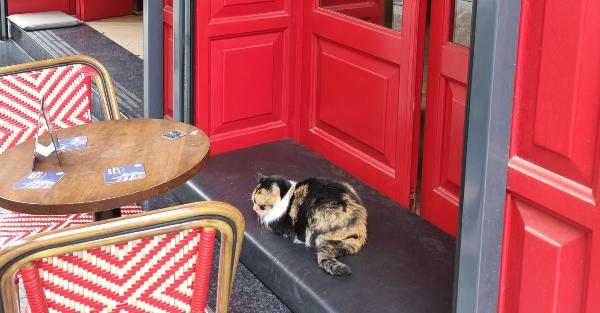
Un bar di Kadiköy con uno dei tantissimi gatti che popolano Istanbul (foto di Gabriele Meoni)

Ironically, the westernmost district of Istanbul is in the East. At Kadiköy, just opposite the Sultanahmet of Constantinople's eternal monuments, one enters another planet, again without hordes of tourists, which is striking at first sight for its resemblance to our world.

In Kadiköy, the ancient Calchedon, the 'blind city' for having risen there and not opposite, in that Golden Horn natural landing place for the future Byzantium, almost nothing remains of its millennial history. In return, it offers a relaxed and lively atmosphere, dotted with clubs where crowds of young people sip beer - alcoholic beverages in Istanbul can be found without problem in supermarkets but are off limits in traditional establishments - and stroll among the thousands of shops of all kinds. It really does feel like being in Europe, and it is no coincidence that Kadiköy ranks first in Turkey in the Human Development Index, the index that measures quality of life and civil rights.

During Fenerbahce's home games, the streets of the district are coloured yellow-blue and masses of cheering fans make their way to the Şükrü Saraçoğlu stadium and then spill out into the thousands of bars in the area to have a beer after the match. Football in Istanbul is a 'disease' and this year as many as eight clubs from the metropolitan area are playing in the Süper Lig, the top league of Turkish football.

To end your stay on a high note, you can take the ferry from the Kadiköy pier at sunset time to Eminonu. This is the best way to capture the Topkapi and Hagia Sophia from the Bosphorus and return to bustling European Istanbul, amidst guides armed with flags and battalions of tourists in tow.

Copyright reserved ©
Loading...

Brand connect

Loading...

Newsletter

Notizie e approfondimenti sugli avvenimenti politici, economici e finanziari.

Iscriviti