
The paradox of too much: Italy's real problem is too much beauty
Too many works of art, too much talent, too many noteworthy monuments, palaces, museums and cities. For Maurizio di Robilant, we need to stop living anaesthetised and take aesthetic, craft and artistic wealth for granted.
In Italy, beauty is so omnipresent that it is sometimes imperceptible. It is an atmospheric element, a superabundance that anaesthetises, and what would be an epiphany elsewhere becomes a mere context. Maurizio di Robilant, founder of the Fondazione Italia Patria della Bellezza, has built his action around this paradoxical invisibility: beauty as heritage dissipated by excess, as wealth that cannot be read. "That very word, beauty, is the first that foreigners associate with our country. The world knows it, we don't,' he observes in a dry, almost anthropological tone. In that us lies the key to the project: a people who live with grace without feeling its weight and who need tools to recognise and value it. The Foundation was created precisely to bridge this gap between reality and consciousness, between widespread talent and the narrative that should support it.
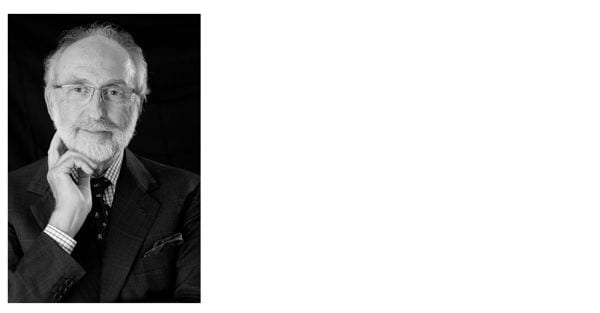
It is not an aestheticising institution, but a civic literacy body that offers communication tools to those who generate beauty without having the language to tell it. "Those who produce beauty almost never have the means - economic or cultural - to communicate it," di Robilant emphasises. The project's figures speak of constancy: annual calls for tenders, pro bono consultations and targeted interventions for a total value of EUR 3.6 million spread over five years and more than 660 projects examined. Not a spectacular gesture, but a slow and methodical, almost monastic weaving. This constancy also translates into theoretical research. At the recent Forum della Bellezza in Turin (the first time it has left Milan), the Foundation presented its collaboration with the Alta Scuola Politecnica, an international multidisciplinary programme of the Milan and Turin Polytechnics that measures the social, emotional and territorial impact of beauty. The objective is not abstract: sustainability, cohesion, cultural development and sense of local identity become variables of an applied aesthetics that no longer wants to be mere decoration, but civic infrastructure. "Art is not contemplation," the president points out, "but transformation, a bridge between individual and community.
Loading...
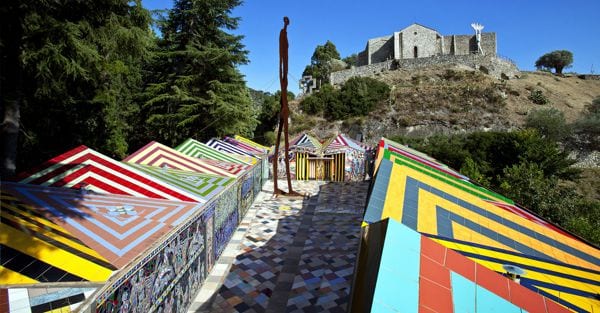
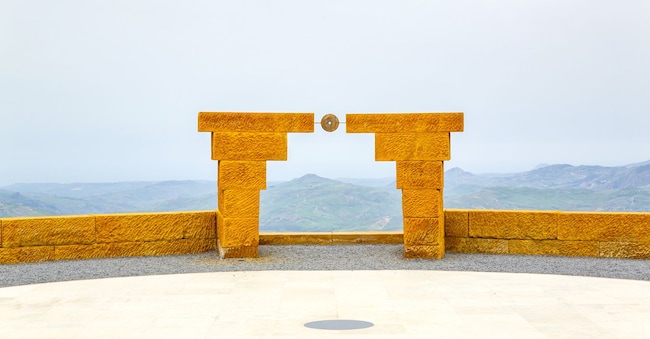
And so it is that the places supported form a map of the improbable, an Italy where talent - 'fundamental and at the basis of everything' - is not ornamentation, but action. In Sicily, for example, the Teatro Andromeda in Santo Stefano Quisquina (Ag) was born from the obsession of a poet-pastor with the constellations, translating the sky into stone and stage space. In Calabria, the MuSaBa in Mammola realises the dream of Nik Spatari and Hiske Maas with mosaics, architecture and Mediterranean myths merged in a park-museum that is a realised utopia. In Sardinia, the Museo Organica brings sculpture and nature together along paths immersed in the Mediterranean maquis, while the former mining village of Argentiera, reactivated by LandWorks, shows how an industrial landscape can be transformed into a place of cultural production.
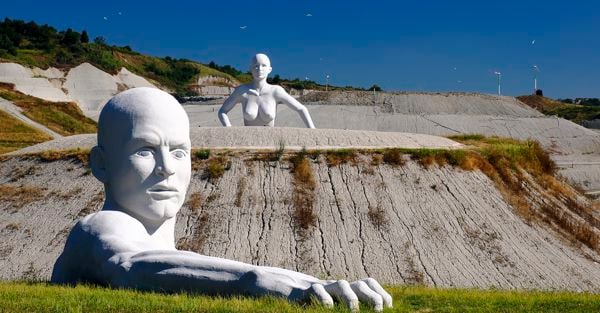
Moving further north," di Robilant points out, "the Horti del Collegio Borromeo in Pavia reinvents 35,000 square metres as a public space where contemporary art, social inclusion and biodiversity become a secular liturgy of care, while in Tuscany, the Peccioli landfill is transformed into an open-air museum with amphitheatres, monumental installations and artistic performances, "an operation that overturns the hierarchies of decorum and value". Other examples are the Salgemma Lungro Festival, "little known but waiting to be discovered", which brings a mine closed for decades back to life, and Va' Sentiero, the 8,000-kilometre trek "that maps not only the geography, but the social experience of marginal territories". These places form a constellation of active beauty, a geography of contemporary talent where creativity is not passive aesthetics, but civic practice and social responsibility. "Beauty," he goes on to explain, "is a process made up of ethics, heritage, imagination, possibility, ingenuity, creativity, territory, community, talent, dedication, inspiration and the future, a real tool for civil progress."
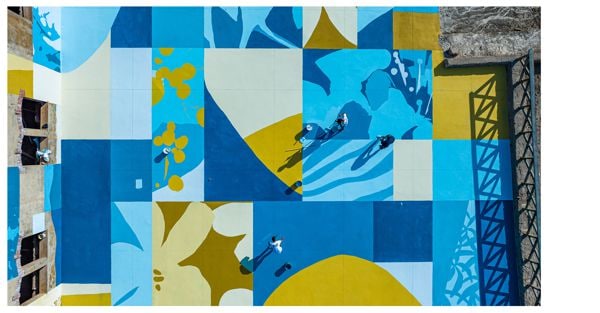
If the Foundation has a true ambition, it is this: to restore beauty to its original gravity, not as a contemplative privilege, but as a transformative force capable of redefining territories, communities and knowledge. In this sense, the Italy that Robilant and his group promote, narrate and safeguard is not that of postcards or tourist guides, but an infinite workshop suspended between memory and invention, between individual gesture and common good, where true talent has its strength and weight. After all, visiting a theatre or walking through a forest that is an open-air museum, or walking among the geometries of a disused mine is not an aesthetic exercise, but an encounter with what Italy could become if it decided to measure its future on the wavelength of talent and not on the nostalgia of the past. In these experiences, beauty stops being an ornament and becomes a moral tension, a civic exercise and continuous experimentation. Maurizio di Robilant's challenge is radical: to transform Italy from a country of beauty into a country of aesthetic intelligence, "where talent is not latent, but visible, measurable, capable of impacting society". This is how that idea - both fragile and powerful - takes shape, revealing a simple but dangerously necessary principle: "Italian beauty is not an inherited gift, but a promise to be realised"
Copyright reserved ©


Loading...
