
The departure of the last Del Vecchio from EssilorLuxottica is very bad news

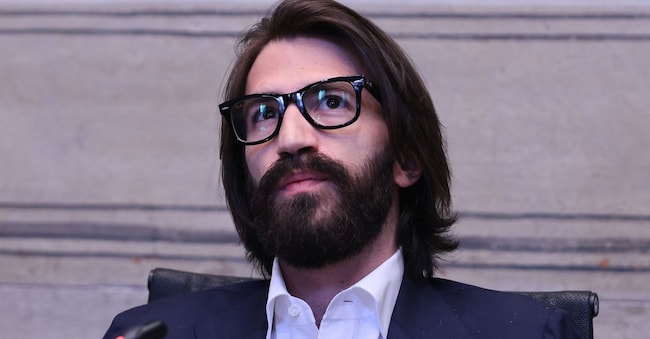
In an immediate interview, Familyandtrends described Leonardo Maria Del Vecchio’s resignation from Luxottica as “terrible news”. Many have asked: why? The last family member has stepped down from operational roles, and the governance structure has finally been established: family members act as shareholders, whilst managers act as professionals. This is not the case: for companies to be successful in the long term, they need vision, wisdom in interpreting the sector, credibility in key decisions and courage; this is the role of the entrepreneur, which can only be fulfilled if one is also, at least in part, an owner.
Returning to what happened: on 25 August, LMDV resigned from his positions at EssilorLuxottica in a letter to the Board of Directors, the gist of which is summarised in this passage: “I do not wish to become the founder’s son used to symbolise a continuity with which, on certain fundamental principles, I no longer identify. People must be put back at the centre… Because my father did not merely build one of Italy’s largest companies. He built a place where hundreds of thousands of people believed they could build something together with him. Losing that would be far more serious than missing a budget.” A direct attack on Francesco Milleri, the manager chosen by the founder to lead EssilorLuxottica, of which he is chairman and chief executive, as well as chairman of the holding company Delfin.
Meanwhile, the shareholder base has not become any more united. In early September, a Luxembourg court approved the transfer of Delfin shares from individual shareholders to corporate vehicles. This will enable family members, by leveraging their indirect ownership through a company, to take on debt by pledging Delfin shares as collateral and, probably, also to sell them without triggering other family members’ right of first refusal. The shareholders have differing views on the future. One scenario could be to sell Delfin’s more liquid and minority shareholdings in order to distribute the proceeds or allocate them to individual shareholders, thereby leaving them free to sell them on the market or hold on to them. It should be borne in mind that these are shareholdings (approximately 17 per cent of MPS, 10 per cent of Generali, 2.7 per cent of Unicredit) which, by the end of the year, will determine the fate of Italy’s banking and insurance sector – holdings that are by no means insignificant or easily placed on the market. A second scenario could involve a complete break-up of Delfin, with the allocation of eight shares in EssilorLuxottica which, bound by a shareholders’ agreement, would ensure control of the company. It remains to be considered that moving from a statutory restriction to a shareholders’ agreement would weaken the stability of the shareholding structure. A third scenario, the one pursued in June by LMDV, envisages a family member taking on debt (with Delfin’s backing) to buy shares from other family members and, thanks to a greater weighting in the shareholding structure, gaining greater influence.
It is worth noting that none of these scenarios is easily achievable under the current governance structure. Even a family member who were to acquire an absolute majority stake in Delfin could not automatically influence the composition of the current Board of Directors or exercise the normal rights associated with control (and, as the new majority shareholder, would also be required to launch a takeover bid for EssilorLuxottica). In July 2022, familyandtrends had highlighted the risk posed by this rigidity: “… Del Vecchio achieved this by establishing a governance structure that requires near-unanimity amongst current shareholders for certain decisions. It is a common mistake amongst the current generation, which seeks family harmony but underestimates the fact that unanimity grants excessive veto power to a single shareholder and can stifle – even severely – a constructive discussion and the resulting better decision.” One of the aims of this rigidity was to make the Delfin Board of Directors the true pivot of control, but within this rigid governance structure, a serious rift emerged following a disagreement amongst the directors which, in essence, led to the rejection of the increase in LMDV’s shareholding and contributed – by placing Milleri in a minority position – to the breakdown in relations between him and LMDV.
Having clarified the context, LMDV’s resignation is extremely bad news because it weakens both the ownership structure and the company. It weakens the company because the EssilorLuxottica Board of Directors is due to be renewed in the spring. How credible will Milleri’s reappointment as Chairman and Chief Executive be? The proposal for his reappointment will come from a divided Delfin Board of Directors, which in turn represents a divided ownership base, with differing views on EssilorLuxottica (and beyond) and even further removed from the company itself. How will the major international funds – which collectively hold between 30 per cent and 50 per cent – react? How will the employees, who hold around 5 per cent, react? How will the French state, which holds a strategic stake of around 5 per cent, react? And how will Meta, which holds 3 per cent and is a key partner for certain future developments, react?


