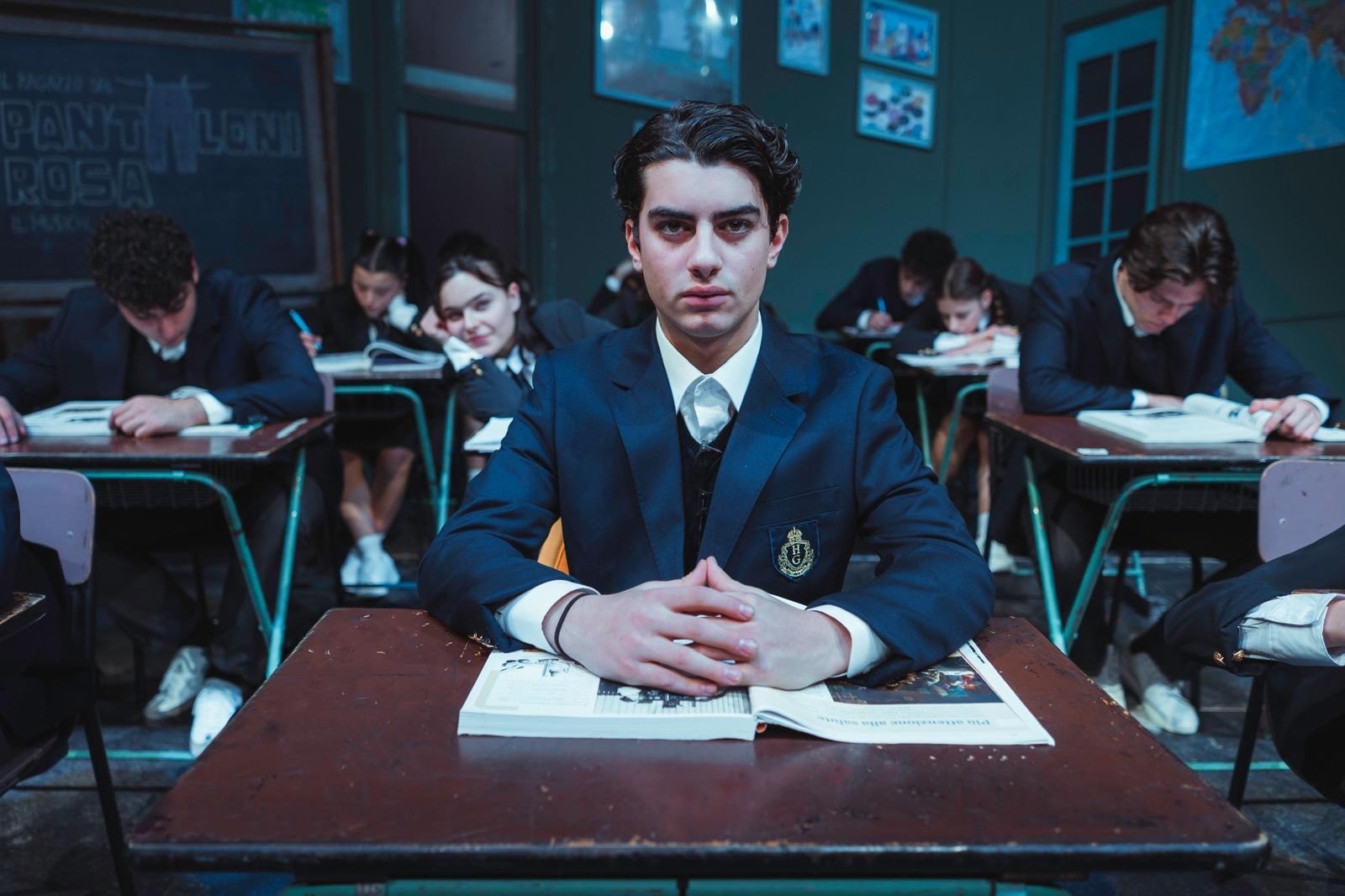
The boy in the pink trousers becomes a jukebox musical at the Sistina
The story of Andrea Spezzacatena, the 15-year-old who took his own life because he was a victim of bullying and cyberbullying, comes to the theatre for the first time

Key points
The story of Andrea Spezzacatena, the 15-year-old who took his own life because he was a victim of bullying and cyberbullying, comes to the theatre for the first time. From Friday 20 February on the stage of the Sistina Theatre the musical 'The Boy with the Pink Pants', directed by Massimo Romeo Piparo, who has signed the adaptation with Roberto Proia, scriptwriter of the blockbuster film of the same name, will be premiered. The show was presented on the eve of the National Day against Bullying and Cyberbullying. The event was attended by over 100 children from the Bramante Middle School in Rome and the young students of the Il Sistina Academy: all together they sang the song Canta ancora by Arisa, creating an evocative choral moment.
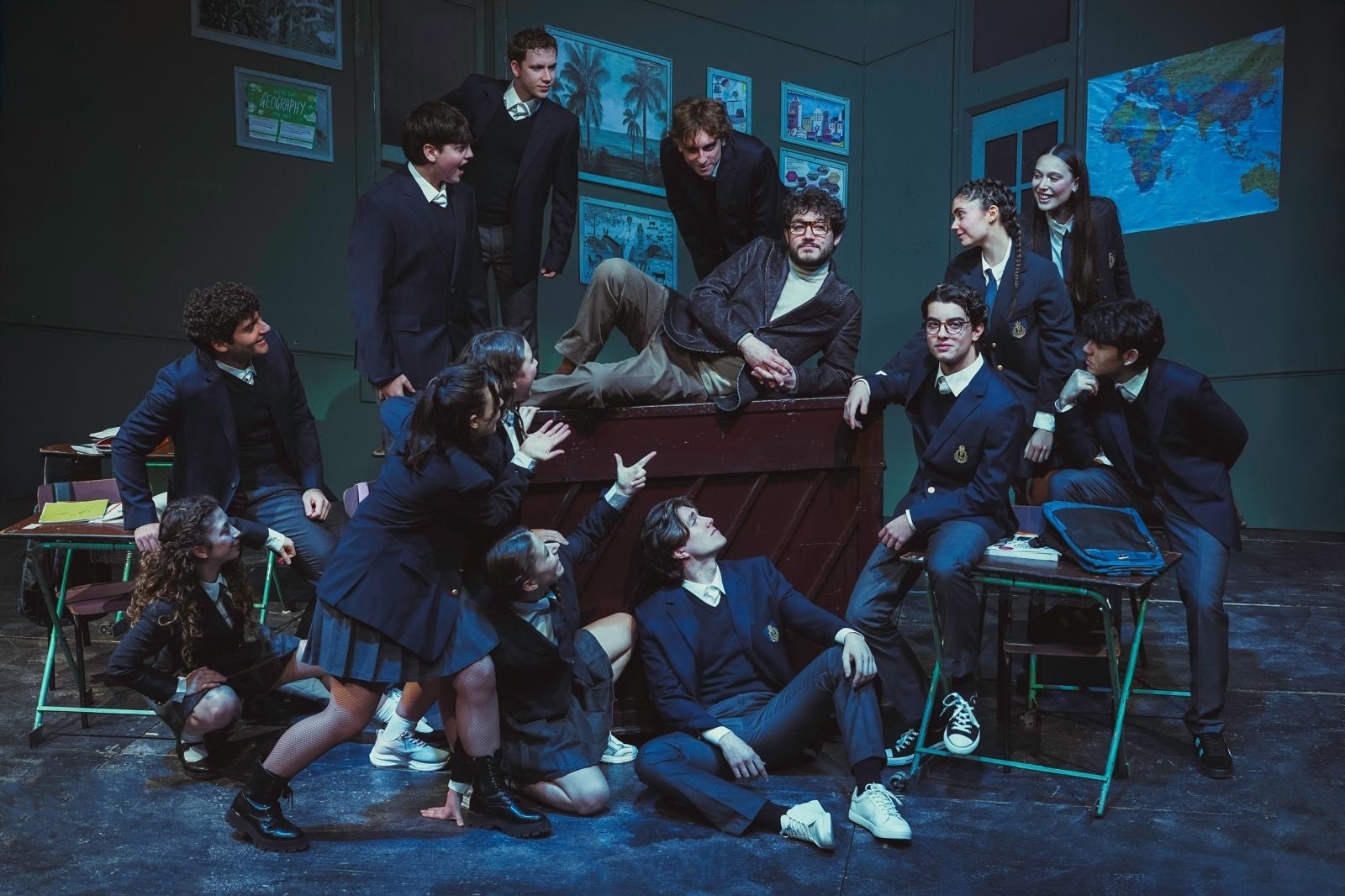
A juke box musical
The film on the Sistina stage is transformed into a juke box musical, with a playlist of popular Italian pop-rock songs chosen as part of the story, in a kaleidoscope of big hits that seem to have been written especially for this story. The playlist, curated by Piparo, features Arisa's song "Canta ancora", made famous by the film and awarded the Nastri d'Argento as best original song, and includes real hits to be sung, such as 100 messaggi, A modo tuo, Gigante, Il filo rosso, La fine, Sogna ragazzo sogna Sanremo, Una musica può fare, Volevo essere un duro and others, all arranged for the musical by maestro Emanuele Friello, who will also conduct the theatre's live orchestra.
Andrea's mother: grief could not be confined to the heart
Also at the press presentation of the show on video was Teresa Manes, mother of Andrea Spezzacatena, the 15-year-old who took his own life because he was bullied and on whose story 'The Boy with the Pink Trousers' is based. A pain, said Mrs. Manes, that 'could not be confined to the heart', but 'once educated could restore something of value to civil society'. Andrea's mother recalled that 'preventive education is needed in schools, a long process of inclusion that must be built between the family and the school. If discomfort is recognised, it is possible to deal with it in the best possible way'. Rossella Brescia, who portrays her in the stage adaptation, said she was moved by how Manes had 'educated this pain, transforming it into hope'. And, she said, "I can't wait to hug her at the premiere". "I greatly appreciated the disruptive force with which Teresa Manes, the mother of the boy from whom our story is inspired, strongly wanted to give us her very painful experience: as a parent, I believe that there is no pain more devastating than this," Piparo stressed.
Piparo: theatre's greatest value is mirroring society
"This is an experimental project, with no precedent behind it in Italia. Every night we expect a verdict from Rome to see how to move forward,' Piparo said. 'Often the work of us creatives and communicators,' Piparo said, 'clashes with adherence to the reality that surrounds us. But the greatest value that theatre has is that of acting as a mirror to society to make spectators reflect in their virtues and weaknesses'. For Roberto Proia, 'finding the lightness in such a story to make a film and, therefore, a vital musical was not easy. But making it proved that this is a story that cried out to be told and heard'.