Test ride

The joy of travelling on two wheels: when the ride is sporty yet comfortable

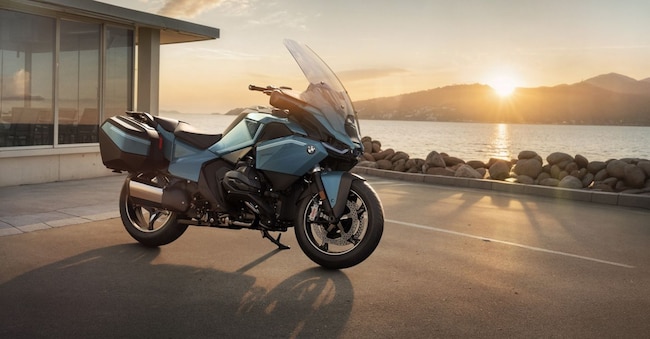
It is probably the most fun RT ever built: the queen of German touring, the BMW R 1300 RT, put through its paces on mountain bends and motorway straights

4' min read

Translated by AI
Versione italiana

4' min read

Translated by AI
Versione italiana

For almost 50 years, the ‘Rt’ designation has been a benchmark in the grand touring sector: the BMW Rt is a motorbike that has accompanied generations of travellers, law enforcement officers and long-distance riders thanks to a combination of comfort, aerodynamic protection and reliability. With the new R 1300 RT (from €24,400), the Munich-based manufacturer has not merely updated the model, but has completely reimagined it, making it sportier.

Same engine, automatic gearbox

Loading...

At the heart of the new Rt is the 1,300 cc twin-cylinder boxer engine that made its debut on the GS: capable of producing 145 cv with 149 Nm of maximum torque, it is the most powerful production boxer engine ever produced by BMW. The new engine is more compact thanks to the revised gearbox layout and new internal architecture. The ShiftCam system continues to manage variable valve timing, delivering an extremely smooth power delivery: the bike accelerates seamlessly from 40 km/h in sixth gear. As standard, the R 1300 RT features three riding modes: ‘Rain’ and ‘Road’ allow you to adapt the riding characteristics to most road conditions, whilst ‘Eco’ optimises the use of ShiftCam to save fuel. Optional ‘Riding Modes Pro’ – namely ‘Dynamic’ and ‘Dynamic Pro’ – are designed for a sportier riding style and adjust various bike parameters (engine, gearbox, suspension).
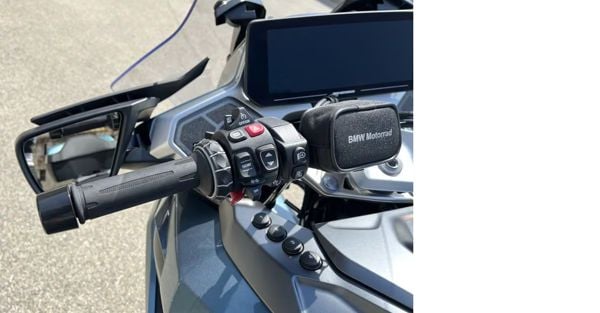
The test vehicle was fitted with the Asa gearbox (Automated Shift Assistant, 900 euros), which deserves an article of its own: it features fully automated clutch control with either manual or automatic gear changes, based on two electromechanical actuators. In practice, it is no longer necessary to operate the clutch lever manually, not even when stationary: starting off, stopping and manoeuvring are simplified. In automatic mode, the gear changes – unlike other dual-clutch systems which are smoother between gears – are clearly noticeable with a slight hesitation during the shift; whilst this may come as a surprise at first, it does not detract from the driving pleasure. And there is always ‘M’ (Manual) mode, in which the rider retains the option to change gear using the left-hand pedal (there are no buttons on the handlebars). During our test, we didn’t experience any hesitation, whether during smooth gear changes at low engine revs or during more sporty riding.
Cycling without straining your wrists and back
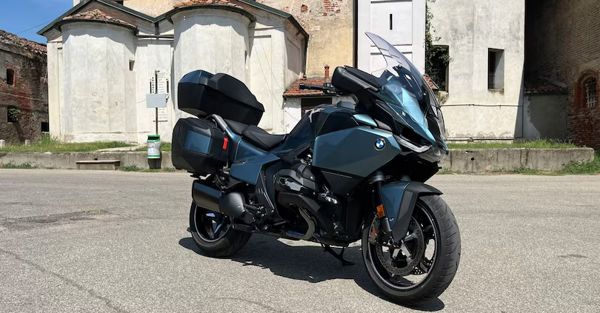
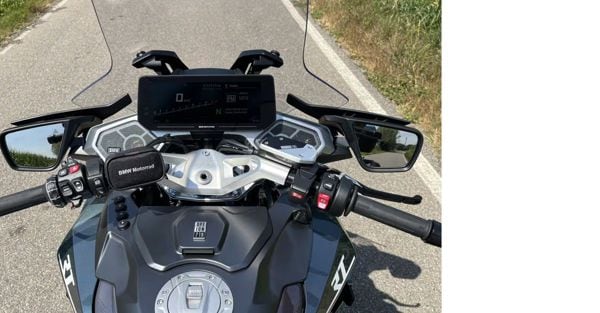
The new Rt has a sportier riding set-up, in that the triangle formed by the handlebars, footpegs and seat positions the rider further forward than before; this results in greater feedback from the front end, and therefore even better control during dynamic riding. The riding position remains comfortable, however, even on longer journeys, without straining the wrists or back. In front of the rider is a proper command centre, featuring a 10.25-inch display that is fairly intuitive. The RT has always stood out for its unexpected agility, despite weighing in at almost 300 kg: the new 1300 is no exception. In city traffic, in fact, you can make the most of the engine’s smooth performance at very low revs, aided by the cardan shaft, which remains one of the RT’s strong points: quiet, clean and virtually maintenance-free.

The biggest surprise comes as soon as you hit the bends on the mountain passes. BMW has completely overhauled the chassis, introducing a new steel frame combined with an aluminium subframe at the rear. The familiar Telelever system at the front and the Paralever at the rear remain, but now bear the ‘Evo’ designation, signifying a significant evolution of the system; in short: the entire chassis has been stiffened and refined. The result is clear: entering a bend requires less effort than with the previous 1250 RT; furthermore, the bike changes direction with a speed that is unexpected for a tourer of this size. 

Stability and responsiveness, handling and braking system

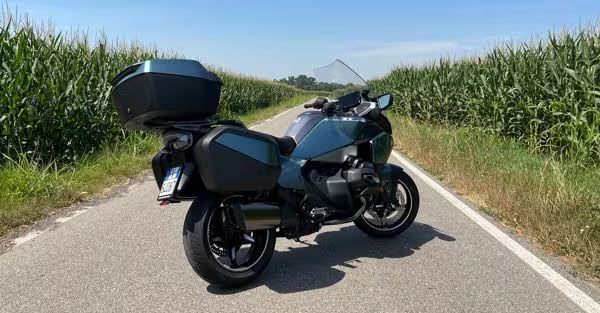
On the straights, it almost seems to forget its weight of over 280 kg, maintaining impeccable stability even as the pace increases. This is also thanks to the Dynamic ESA electronic suspension, which absorbs road irregularities superbly without compromising control and continuously adapts to the rider’s style. The braking system is well suited to the bike’s size and allows for substantial deceleration without the bike losing its composure; the ABS is also well tuned (the Pro integral system comes as standard): after all, BMW was the first to fit it to a motorbike back in 1988. The result is that on mixed roads, the bike encourages you to ride at a pace that, until a few years ago, would have been unthinkable for a grand tourer of this weight: the new RT is certainly no sports bike, but it is probably the most enjoyable RT ever built.

Finally, on the motorway, the Rt is in its natural element: absolute protection (even excessive on the test day when it was 36°C), stability, a responsive engine for overtaking, an engine that runs at low revs at 130 km/h with no vibrations, and adaptive cruise control all make motorway journeys a real pleasure. In short, the designers had the German autobahns in mind when they conceived the Rt. And the 1300, with a 24-litre fuel tank and average fuel consumption of around 20 km/l, offers a range of over 450 kilometres.

Copyright reserved ©
Loading...
Loading...
Loading...

Newsletter

Notizie e approfondimenti sugli avvenimenti politici, economici e finanziari.

Iscriviti