
The Pope: ‘Let us find diplomatic solutions to conflicts’
Pope Leo XIV once again calls for peace in the ongoing conflicts, commemorates the 800th anniversary of the death of St Francis, and issues an appeal regarding the situation in Ceuta.

Key points
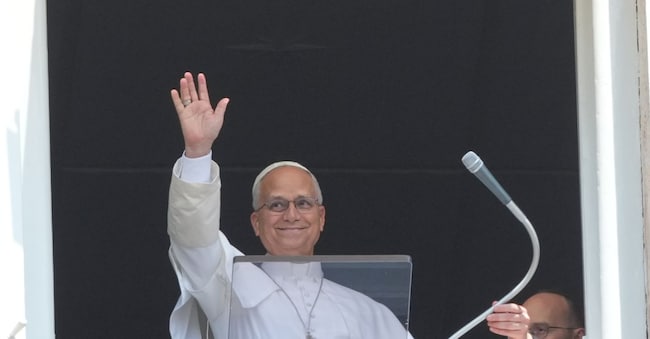
During his Sunday prayer, the Pope renewed his call to “pray for peace so that wars may cease throughout the world and diplomatic solutions may be found to conflicts”, asking people to remember the victims of hostilities, “especially the weakest and most defenceless: children, the elderly and the sick”. Pope Leo XIV expressed his hope for comfort for those who are suffering and blessed “the work of those who bring aid and consolation”.
The Forgiveness of Assisi
The Pope then linked current events to a historic anniversary: the Pardon of Assisi, the indulgence granted to St Francis by Pope Honorius III in 1216, following a vision he had whilst praying at the Porziuncola. This reference takes on particular significance this year, the eighth centenary of the death of the ‘Poor Man of Assisi’, who died at the Porziuncola on 3 October 1226.
Before the Angelus, the Pope had reflected on the Gospel account of the multiplication of the loaves, interpreting it as the key to understanding the signs performed by Jesus: not merely miraculous acts, but manifestations of the nearness of the Kingdom of God. To the deaf man who regains his hearing and the blind man who regains his sight, the Pope explained, the Lord restores not merely a sensory function, but a meaning: the proclamation of redemption. Similarly, for those who are hungry, the encounter with Christ is “a nourishing experience”: in the Gospel episode, the crowd eats their fill and twelve baskets of leftovers remain, a number which, for the Pope, signifies the universality of the divine gift and the constancy of providence.
Hoarding and discarding: two sides of the same coin
Hence the most direct point of the catechesis: “Christ truly satisfies humanity’s hunger – our hunger for truth and for life. At the same time, his gesture teaches us that nothing is wasted when it is shared”. The Pope described hoarding and waste as “two sides of the same evil: greed”, a state of mind that leads us to forget those who are starving whilst resources are being squandered elsewhere. The contrast was made explicit: on the one hand, “the opulence of things that rot”; on the other, “the outstretched hands of those who have no food” and “the burnt-out homes of those who have no peace”.
The Pope identified the Last Supper as the culmination of Jesus’ acts of sharing, inviting the faithful to put the Eucharist into practice in their daily lives, beginning with the blessing of the family meal. He concluded his reflection with an invitation relevant to the summer months: to experience the holidays as a “time of fraternal serenity”, reaching out to those in need, and a prayer to the Virgin Mary that charity may grow “so that no one may lack their daily bread”.

