
The Pope in Latin America following Trump’s defeat: the continent’s political agenda is beginning to be rewritten
From 6 to 17 November: an apostolic journey to Uruguay, Argentina and Peru

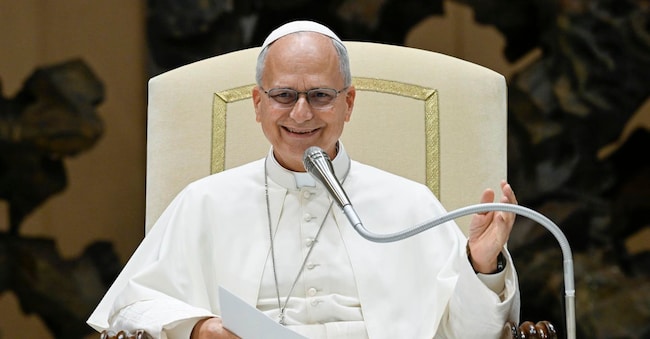
Key points
- Twelve days, three countries, 36 speeches (in Spanish)
- In Argentina, in memory of his predecessor Francesco, who never returned to his homeland
- In her book *Peru, a Homecoming*: the focus is on inequality and the exploitation of the land
- During his visit, the Pope will meet with some victims of abuse by members of the clergy
- Tornielli: returns to his second home, Peru, where he served as a missionary bishop
The longest journey of his pontificate (to date) for Leo XIV begins just a few weeks after his surgery to remove a tumour and just a few days before the US mid-term elections, which have unleashed a perfect storm in US politics and, by extension, across much of the globe. This includes Latin America, a region which the US has always regarded, albeit in different ways, as its own backyard. Robert Prevost voted in his home county, an area that has always been staunchly Democratic (even though, as a young man, he had also registered for the Republican primaries), and this gesture certainly made a strong impression on the American Catholic electorate, which this time seems to have turned its back on Donald Trump, who had instead enjoyed broad support in the presidential election. Leone is travelling to Uruguay, Argentina and Peru: whilst Montevideo – the capital of a highly stable country, perhaps considered the most European on the continent – has a progressive president, Buenos Aires and Lima have two presidents who were, and perhaps still are to some extent, fans of Trump, and they were the outposts of the ‘long arm’ of foreign policy known as the ‘Donroe Doctrine’ – the Trumpian evolution of the now-outdated Monroe Doctrine of 1823, according to which, south of the border, only Washington can wield power and influence (after all, one of Trump’s first acts was to have the dictator Maduro arrested in Venezuela). This is the political context for the start of Leo’s sixth apostolic journey – from 6 to 17 November – during which he will avoid passing judgement (Cardinal Pietro Parolin, the Secretary of State, has said that certainly something will change and that he hopes for peace and cooperation) but may perhaps comment on what has happened in America, particularly in relation to wars – both those that have been unleashed and those that remain unresolved despite the bombastic and ridiculous announcements. For some observers, this trip could mark the start of a new political phase for the Latin American continent.
Twelve days, three countries, 36 speeches (in Spanish)
A return for Prevost to the places in Peru where he served as a missionary and bishop: over the course of the twelve days, Leo XIV will deliver 36 speeches, all in Spanish, the language that will be used during his meetings with communities and authorities in the three countries. The last Pope to visit Uruguay and Argentina was John Paul II. He travelled to Argentina in 1982 and 1987, on the occasion of World Youth Day. He visited Uruguay in 1987 and returned there in 1988. The Polish Pontiff also visited Peru in 1985 and 1988, whilst Francis travelled there in 2018. For Leo XIV, who spent a significant part of his priestly and episcopal life in the Andean country, this return holds both personal and pastoral significance.
The trip will begin on Friday 6 November in Uruguay, a country with a strong secular identity but deep Christian roots, as Vatican News reports. In Montevideo, the meeting with the authorities in Plaza Independencia – a symbolic site in the nation’s history – will provide an opportunity to reflect on coexistence, social cohesion and the responsibility to build a community capable of recognising the dignity of every individual. The Uruguayan capital, home to Mercosur, also highlights the challenges shared by the countries of the region, ranging from environmental protection to arms and drug trafficking.
In Argentina, in memory of his predecessor Francis, who never returned to his homeland
On Sunday 8 November, the Argentine leg of the tour will begin, where he will meet President Javier Milei, who had repeatedly insulted Pope Bergoglio during the election campaign that saw him elected, although the Pope received him at the Vatican a few months after the election. The Argentine leader has been, and remains, one of the key figures in Trump-style politics, much like the Bolsonaro regime in Brazil. A tribute to the memory of Pope Francis – who, in twelve years as Pope, has never visited his country of origin, despite vague promises – is also planned in the capital’s cathedral, a place that bears witness to his connection with the Argentine Church. The country, marked by a painful history but also by its capacity for hospitality and democratic reconstruction, will offer the Pope an opportunity to address the relationship between faith, social responsibility and the common good.
In her book *Peru: A Homecoming*, the focus is on inequality and the exploitation of the land
The final leg of the pilgrimage will be in Peru: here too there is a tough, Trump-like president, Keiko Fujimori Higuchi, daughter of former president Alberto Fujimori, who served years in prison for staging a coup against himself. But for Leone, this is a true homecoming: from Lima to Chiclayo, from Cusco to Pucallpa, Leone XIV will rediscover places and communities he knows intimately. It will also be a journey through the history of the continent’s evangelisation, marked by the witness of figures such as Saint Rose of Lima, Saint Martín de Porres and Saint Toribio de Mogrovejo, who promoted the spread of the catechism in the indigenous Quechua and Aymara languages. But Peru will also be the place where some of the major contemporary issues may come to the fore with particular force: social inequalities, the protection of peoples and the environment, the exploitation of natural resources, and the consequences of technological change on people’s lives. These themes, as outlined during the briefing, will find a point of reference in the encyclical *Magnifica humanitas*, particularly in the relationship between faith and science, charity and technology.


