
The post-smartphone future is not what you expect
Between flops and promises, here's what's happening in the labs working on wearable devices enhanced with artificial intelligence

3' min read
3' min read
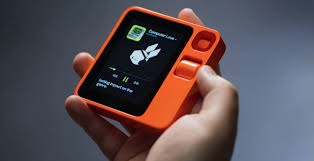
The universal virtual assistant. Convenient, discreet, always with us and useful thanks to its built-in artificial intelligence. Many companies see it as the post-smartphone future: their heir or at least an essential complement. The 'next computing platform', in the words of Meta chief Mark Zuckerberg, who increasingly believes in it. After the billions spent in the Metaverse, he now stuffs artificial intelligence into spectacles that he says will replace smartphones in the future. Other examples are Snap's (Snapchat's company) glasses, also based on AI and augmented reality (AR). Or small wearable or pocket-sized objects, which have already been a flop, released in recent months: Humane AI Pin, Rabbit R1. The next to put in the heavy lifting could be OpenAI, the start-up of record, creator of Chatgpt. It is working on a physical product, still mysterious, based on its artificial intelligence, which would then go beyond the narrow confines of smartphones and computers. To go where? Who knows. And who knows also whether the attempts will be successful: it is still unclear whether these products will give users a real advantage over the simple use of smartphones, which as we know are already being enhanced with AI.
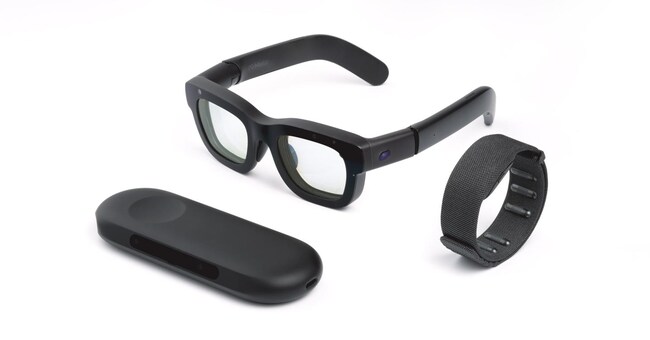
At the moment, the most innovative product seems to be Meta's Ar Orion goggles, still a prototype, shown in September. In the lenses we can see the world with superimposed information ('augmented reality'), e.g. instructions for a recipe with the ingredients seen on the table. There are also holographic functions, so we could see the hologram of a colleague sitting in our armchair at home during a video call.
They work with voice commands, eye-tracking and hand movement control, and the AI provides the information we ask for. At the moment, the production cost per unit seems to be around $10,000. They may never reach the market.
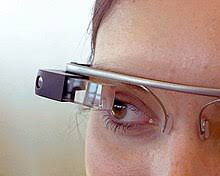
Simpler but already available are Meta's Ray-Ban smart glasses (from €300), which are also being enriched with AI functions. By voice we can ask the glasses to tell us things about what we are seeing at that moment or to remind us where we parked. Soon, Meta says, they will also allow real-time translation. A competitor are Snap's Spectacles, which reached their fifth generation in September. With AR, they can display visual information and apps on transparent lenses, making objects appear as if they were in the real world. The integrated AI chatbot responds to questions posed in natural language. Some interactions require a phone, but for the most part the Spectacles are a standalone device. Snap does not sell the Spectacles directly to consumers, but requires them to pay at least $99 per month for a Spectacles Developer Program account for at least one year.
Nice functions, but already available with smartphones, after all. The difference, according to Zuckerberg, is that with these products we no longer need to take the smartphone out of our pocket. Is that enough to justify the purchase? Then consider the disadvantages of having to wear a device, which we will also need to recharge every day. The RayBan Meta is currently successful among infuencers who can thus create videos with more comfort, but there is no need for AI and AR for that purpose.

