
The potential of sport as a tool for integration
The talents of immigrants and other categories of ‘New Citizens’ can be nurtured and can contribute to the country’s development

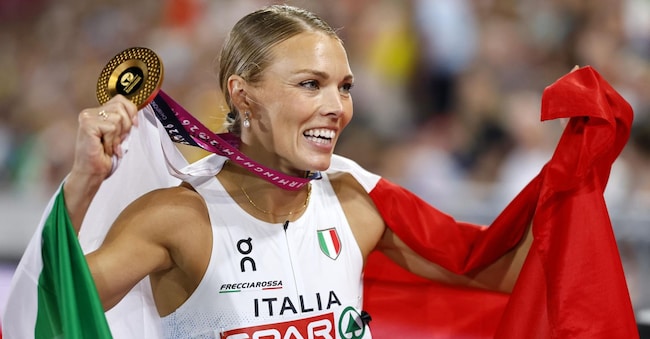
Italia finished top of the medal table at the recent European Athletics Championships and second at the European Swimming Championships. These are exceptional results, as are those of the women’s volleyball team, who have added the title of European runners-up to their already impressive list of honours. These results have rightly been the subject of much discussion, particularly when compared with the far from impressive performances in football. It is also worth examining them from the perspective of the economic and social integration – as well as, of course, the sporting integration – of the ‘New Italians’.
Among the Italian athletes who won a total of 65 medals in Saint-Denis and Birmingham, there are in fact a great many first-generation Italians. They range from those born in Italia to foreign parents, such as the veteran (aged 32) Eseosa Fostine “Fausto” Desalu and the newcomer (aged 19) Mohamed Soudassi, to those born abroad and raised in Italia who later became Italian citizens, such as Dariya Derkach and Alexandrina Mihai. Not to mention Andy Diaz, a political exile.
Although, strictly speaking, they are not ‘New Italians’, there are also athletes born in Italia to one Italian and one foreign parent, such as Sara Curtis, Carlos D’Ambrosio and Dalia Kaddari; a further distinct category comprises those whose Italian parents or grandparents emigrated but, having retained their citizenship, were able to pass it on, such as the Canadian Sarah Jodoin di Maria and the South African Zane Weir. A common reason for naturalisation is marriage: there are no such cases this year, although Larissa Iapichino is the daughter of Fiona May, who became Italian when she married Gianni Iapichino.
In short, there is ample evidence that, in Italia too, the talents of immigrants and other types of New Cittadini can be nurtured and can, in turn, benefit the country. The role of sport in the broader context of the challenges facing the integration of the second generation is particularly interesting. Successes in sport help to shape a different image of immigrant communities (the Financial Times often cites the example of the Egyptian Liverpool footballer Mohammed Salah) and to strengthen national pride and soft power – it is no coincidence that there is increasing talk of sports diplomacy, including at the Farnesina on 14 September.
Without detracting in any way from the contribution made by top-class athletes, the potential of sport as a tool for integration begins with amateur participation – and is certainly not limited to the hackneyed rhetoric of sport as an antidote to bad company. Ernesto Galli della Loggia, writing in the *Corriere della Sera* on 29 May, sparked a debate on the role of schools and teachers in the inclusion of pupils from different cultural backgrounds. Training teachers in this field is certainly difficult, and their enormous commitment is often not rewarded with success. Sport offers an alternative and complementary route to integration, one that is less dependent on language skills but effective in conveying the culture of the host country, characterised by trust, cooperation and discipline. In technical terms, this refers to the creation of ‘social capital’ (Putnam 2000), which is perhaps more important than achieving sporting excellence. Various studies carried out in Italia and elsewhere indicate that sport, as a universal language for all those who take part and commit themselves, could and should be used more widely in primary schools and in social integration activities. The lessons it imparts begin with recognition, inclusion within a group, socialisation and, above all, respect for others and discipline, and bring people closer together.


