Prada's formula: continuity and consistency as an antidote to difficult times
"We want to enhance the work, the garment, the object; things that leave their mark," says Miuccia Prada. At Etro, Marco De Vincenzo rummages through the archive with freshness and effectiveness
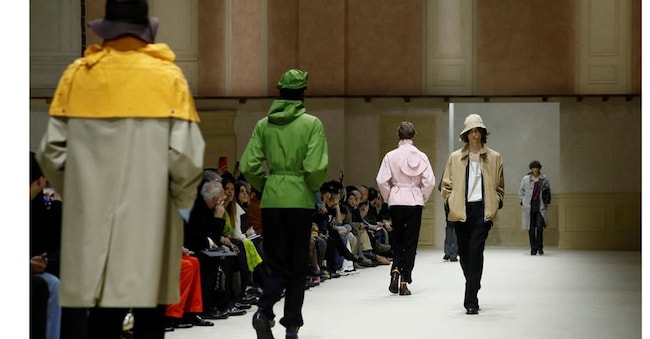
Uncomfortable and confusing times call for clarity and security: this is the real theme of the very short Milan Fashion Week. The answer to this quest is natural; obvious one might say, but also effective: to look at the known, the already made, in short the classics - shared or one's own, and therefore archetypes or archives - and remake them, creating continuity where everywhere there are only ruptures.
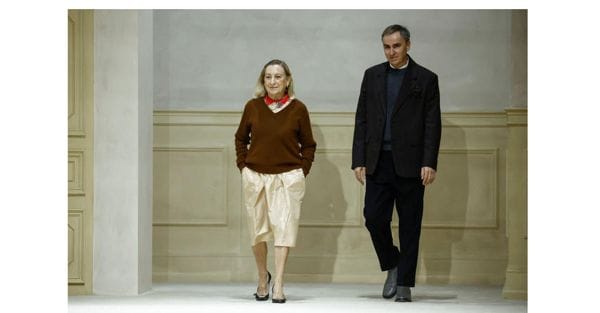
At Prada, clarity is first and foremost an abrasive statement on the silhouette: irredeemably dry, vertical, close to the body if not crushed by it. "Like an embrace, or something that comforts," says co-creative director Raf Simons, adding with the awareness of someone who, while working in concept, makes fashion. "After years of oversize, it was time for us to change. The fashion show takes place, as always, in the Fondazione Prada warehouse, which this time is transformed into a demolition: all around is a section of a three-storey patrician palace, fireplaces, stucco and woodwork stripped bare. No, it is not a bombardment, but the ambiguity would seem intentional. Says Miuccia Prada: 'There is thought in this collection. There is care, work, seriousness, dress culture. The point of view is very specific and precise. We want to enhance the work, the garment, the object; things that leave their mark'.
The signs are many, and come from the language of classic clothing, but they are as if passed through a steamroller, or the - mechanised - caudine forks of time passing, distorting and above all lightening, removing weight and patriarchal classicism: hats are reduced to circular scowls resting on the shoulders; double cuffs are no less scowling, and dangle in contrast; bags are squashed.
The slits disappear, and the hems are long and frayed, making the verticality even more irremissible; some exteriors resemble worn linings; the prints are collages of various archaeologies. But it is the tight-shouldered walk with hands in jacket or coat pockets that says it all.
Making oneself small as a resistance to rampant demolition? Certainly. Clarity, translated into concentration on a line, risks monotony - on the theme of lanky dryness, Simons has expressed himself several times with his line, in years past - but the richness of detail brings one closer and empathises, because care requires close looks.