Cars

The Quail 2026, Monterey Car Week’s secret gathering, crowns Ferrari

Amidst immaculate lawns, champagne, haute cuisine and classic cars, The Quail reaffirms its status as the most exclusive event of Monterey Car Week. The 23rd edition honours a 1957 Ferrari 625/250 Testarossa, celebrates the F40 and Lamborghini Diablo, and transforms Carmel Valley into a showcase for the hypercars of tomorrow, from the new Lamborghini Revuelto SV to the Zenvo Aurora

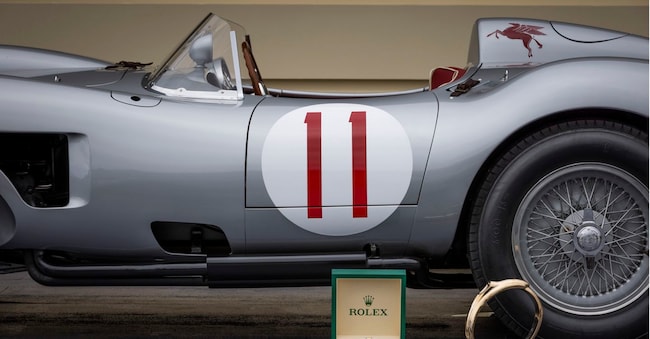
Vincitore del premio Rolex Best in Show Bruce Meyer Ferrari 625/250 Testarossa del 1957

10' min read

Translated by AI
Versione italiana

10' min read

Translated by AI
Versione italiana

More of a garden party than a motor show

There’s Pebble Beach, of course, with the ritual of the grand Concours d’Elegance. Then there’s Laguna Seca, where classic cars return to do what they were built for: racing. But if you’re looking for the place where Monterey Car Week distils its most exclusive essence, you need to head to Carmel Valley and step through the gates of The Quail Golf Club.

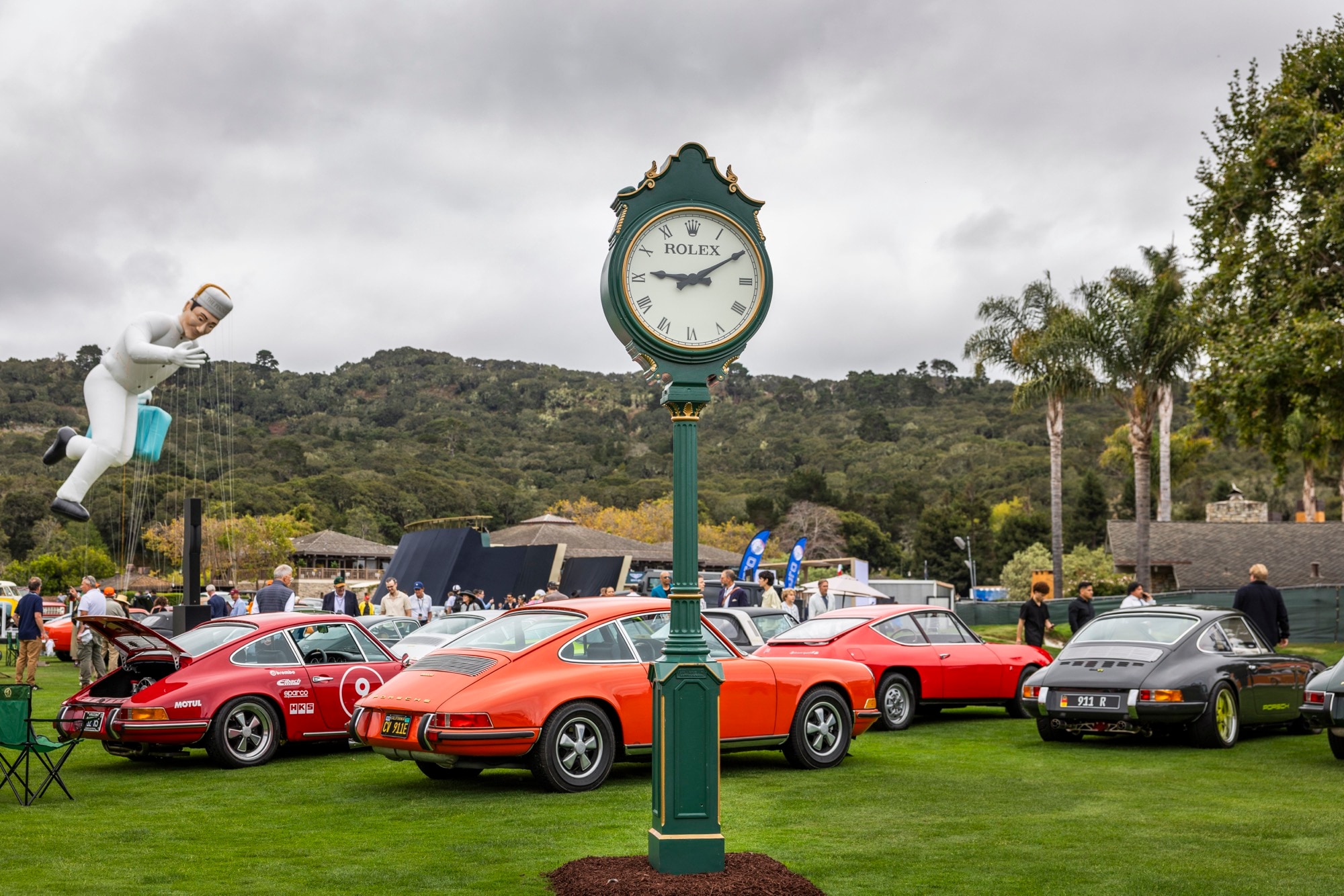
‘The Quail by The Peninsula, A Motorsports Gathering’ is something quite different from a motor show and a far cry from the traditional concept of a car exhibition. It is a motoring garden party where collecting, luxury, the automotive industry and haute cuisine come together for a few hours. The 23rd edition, held on Friday 14 August, brought together over 200 cars and no fewer than 22 debuts from manufacturers and specialist firms. Here, the cars are not confined behind barriers, and the line between past and future is deliberately blurred. The special classes for 2026 celebrated the centenary of Route 66, the Ferrari F40, the great Japanese GTs, Bruce Meyer’s collection and, above all, the Lamborghini Diablo, the star of the largest gathering ever dedicated to the model, with 30 examples gathered on the lawn.

Loading...

The Quail 2026, auto da sogno alla Monterey Car Week

Photogallery22 foto

Ferrari: an all-Italian ‘Best of Show’

In the end, however, the Prancing Horse once again stole the limelight. The Rolex Circle of Champions Best of Show award went to the 1957 Ferrari 625/250 Testarossa owned by the American collector Bruce Meyer. A silver barchetta with Scaglietti bodywork, originally commissioned by the distributor and racing driver John von Neumann, it racked up 11 victories during the 1957 season and was subsequently fitted with the three-litre V12 engine from the Ferrari 250 Testa Rossa. Meyer also received an engraved Oyster Perpetual Datejust 36, and the car has been inducted into the Rolex Circle of Champions.

And Italia’s success didn’t stop at the overall prize. In the Ferrari F40 category, Greg Whitten’s 1991 model took the honours, whilst in ‘The Great Ferraris’ category, Larry Titchner’s 1964 250 GT Lusso came out on top. Even more interesting for Italian enthusiasts is the success of John Burnham’s 1971 Fiat Dino Spyder in the Post-War Sports 1961–1975 class.

Lamborghini played a significant role. The category dedicated to the Diablo was won by Curated’s 1994 Diablo SE30 Prototype, whilst a 1994 Diablo VT JOTA from the Caretakers Collection won the Magneto Editor’s Choice Award.
Signage

Twenty-two press conferences: The Quail takes a leaf out of Geneva’s book

There is one aspect of the 2026 edition that is worth reflecting on. The Quail has always been fascinating precisely because it is different from a motor show: no exhibition halls, no carpeting and no endless press conferences, but rather an extremely elegant garden party where one can meet collectors, designers and top executives from the car manufacturers whilst admiring a Ferrari racing car or sipping a glass of champagne. This year, however, The Quail ended up taking on the air of a motor show, with 22 events labelled ‘Press Conferences’, starting at 8.20 am and at a pace which, at times, amounted to essentially one presentation every seven minutes. A ritual reminiscent of the now-defunct Geneva Motor Show in its busiest years, when journalists would rush from one stand to another chasing a flurry of press conferences. With one key difference: at the Quail, the press certainly do not make up the majority of the audience.

The real stars of the show are collectors, customers and potential buyers – people who can actually write a six- or seven-figure cheque for one of the newly unveiled cars. To give you an idea of the scale, the Italian media contingent was limited to three or four journalists. It would therefore perhaps be more accurate — and also more elegant — to refer to these events for what they really are: world premieres, reveals or presentations, rather than press conferences. A lexical nuance, certainly, but not an insignificant one for an event that has always made style its hallmark.

McLaren McL 6GT: even the manual gearbox is back

The sheer number of new models, after all, justifies the idea of a genuine open-air motor show. Among the most interesting is the McLaren McL 6GT, a concept very close to production that pays homage to Bruce McLaren’s M6GT and, above all, brings back to Woking something that seemed consigned to history: the manual gearbox, which has been absent from road-going McLarens since the days of Formula 1. The engine is a V8, and the final production version is due in 2028. More than mere nostalgia, it’s a statement: in the age of electrification and lightning-fast gearboxes, luxury can also lie in the deliberately inefficient pleasure of choosing which gear to select yourself – as Ferrari has so aptly demonstrated with the 12 Cilindri Manuale.

Jaguar Type 01: electric luxury tries to break free from screens

The Jaguar Type 01 is a completely different story, with its interior unveiled at Monterey. Following the British brand’s controversial stylistic revolution, we are finally beginning to understand how that vision might be translated into a car. The cabin is organised around a sort of central spine, with four individual seating areas, low-set seats and finishes reminiscent of brass. But perhaps the most significant element is what is missing: the usual television screen positioned in the centre of the dashboard. Jaguar is seeking its own interpretation of digital luxury, one that is less reliant on a proliferation of displays and more focused on space, materials and theatrics.

Lucid Gravity

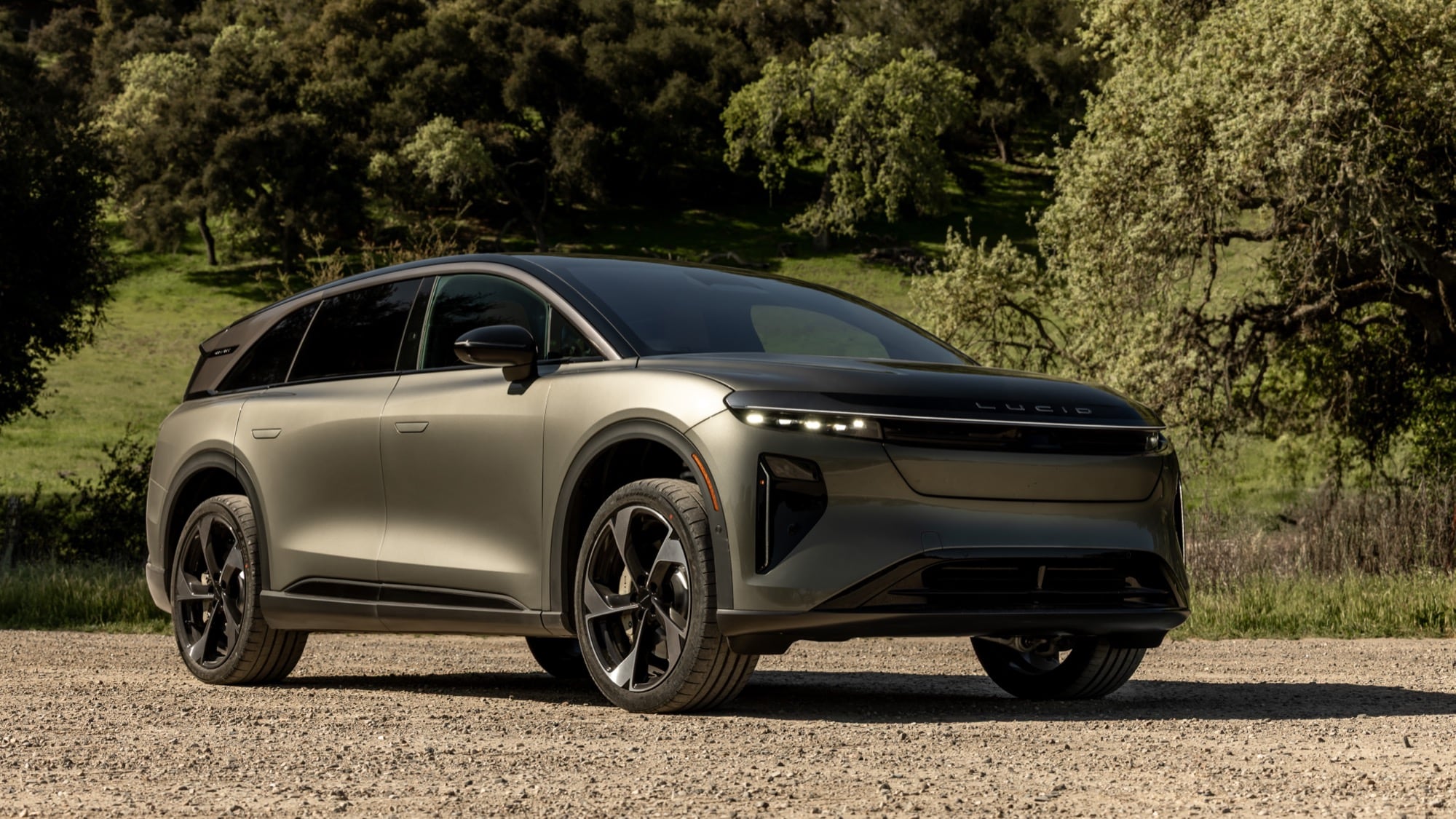
Lucid Gravity GT-S, seven-seater with 1,070 cavalli

At the other end of the spectrum is the Lucid Gravity GT-S, an almost surreal demonstration of just how much electrification has blurred the lines between traditional car categories. It is a seven-seater SUV – theoretically a family car – but it boasts 1,070 CV and accelerates from 0 to 60 miles per hour in 3.1 seconds. The GT-S features a sportier suspension set-up and rear-wheel steering, with a US price tag of $127,750. These are figures that would have been typical of a supercar just a few years ago, in a vehicle capable of carrying parents, children, grandparents and luggage.

Loading...

Acura Nexera: a vision of the future

The Acura Nexera Vision also looks to the future, but through design. The concept car, with its coupé-like proportions and striking doors, is not presented as a mere motor show exercise: it foreshadows design themes set to feature on the premium Honda brand’s forthcoming models. Following its appearance at The Quail – and not by chance – the Nexera has also made its way to the Concept Lawn at Pebble Beach, where the cars of the future seek a kind of cultural legitimacy alongside the masterpieces of the past.

Porsche 911 Flachbau RS: uniqueness goes into mass production

The spectacular Porsche 911 Flachbau RS, on the other hand, lives on in the memory; it was created by the Sonderwunsch programme based on a 911 GT2 RS. The flat nose is a clear nod to the Porsche 935/78 ‘Moby Dick’, but what makes it interesting goes beyond its aesthetics. Porsche is transforming extreme customisation into a structured business: it is no longer simply a matter of choosing colours, leathers and stitching, but of building virtually unique cars with the parent company’s blessing. In short, uniqueness is becoming an industrial product.

RUF Ehra

RUF Ehra: when memories flew at 340 per hour

For RUF, the past has a specific name: Ehra-Lessien. The new Ehra, a GT with around 650 CV, celebrates the feat of the CTR Yellowbird, which in 1987 set one of the records on that very German test track that helped forge the legend of the small Pfaffenhausen-based manufacturer. Here too, Monterey highlights one of the dominant trends in contemporary automotive luxury: it is not enough to sell performance; you have to sell a story. And, if possible, an authentic one.

Marsien GT: from the sand to the road

Following the Marsien, inspired by the Porsche Paris-Dakar rally cars, Marc Philipp Gemballa brought the new Marsien GT to The Quail – a road-going evolution based on the 992.1-generation Porsche 911 Turbo S. The conversion comprises around 1,500 bespoke components, a full carbon-fibre body, active aerodynamics and a brand-new double-wishbone front suspension developed in collaboration with KW Automotive. The 3.7-litre twin-turbo flat-six, tuned by RUF, delivers 830 CV and 930 Nm — with a variant producing over 900 CV currently in development — and enables a top speed of 330 km/h and acceleration from 0 to 100 km/h in 2.4 seconds. Just 30 units will be built, with the first deliveries scheduled for late 2027.

Czinger 21C Spyder,

Czinger 21C Spyder, 1,250 cavalli with no roof

The Californian firm Czinger was on home turf with the 21C Spyder, the open-top version of the high-tech hypercar built using extensive computational design and advanced manufacturing techniques. The Spyder delivers 1,250 CV, has a top speed of 330 km/h, will be produced in a limited run of just 30 units and costs 2.75 million dollars. Figures that seem almost abstract, but are perfectly normal in the microcosm of the Quail, where rarity is now at least as important as performance.

Bugatti Destrier, the ultimate aristocracy of the W16

Even more exclusive is the Bugatti Destrier, the third creation from the Molsheim-based manufacturer’s Programme Solitaire. Built on the technical platform of the Bolide, it retains the monumental 1,600 CV W16 engine and a height of around one metre, but – at least visually – moves away from a track-focused obsession to seek the elegance of the great historic Bugattis, with a clear nod to the Type 57SC Atlantic. This is 21st-century coachbuilding: cutting-edge contemporary technology clad in the language of haute couture motoring.

Aston Martin Valen: the V12 needs no apologising

And then there’s the Aston Martin Valen, perhaps one of the most proudly unconventional statements seen at Carmel. Derived from the Vanquish, it takes the concept of the front-engined hyper-GT into even more exclusive territory: a twin-turbo V12 producing around 850 CV, weight reduction, a more pronounced engine note and a planned production run of just 150 units. The indicative price starts at 1.5 million pounds. Whilst much of the industry is discussing batteries, software and artificial intelligence, Aston Martin responds with a non-electrified twelve-cylinder engine and a production process that is almost bespoke.

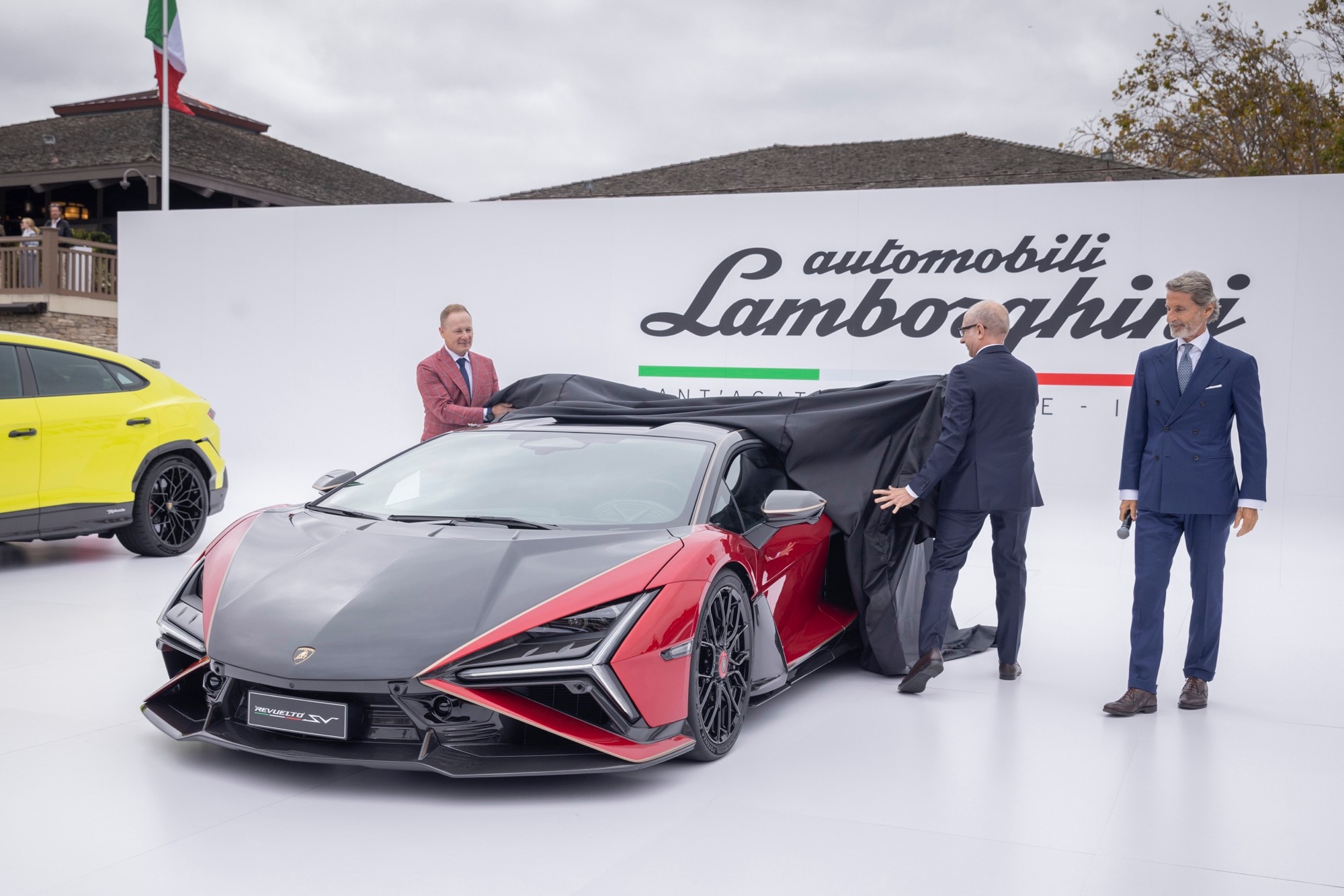
Lamborghini Revuelto SV

Lamborghini and Eccentrica: Sant’Agata between the future and the Diablo

For Italia, however, the most spectacular theme remains Lamborghini. On the one hand, there is the new Revuelto SV, which pushes the hybrid V12’s output to around 1,065 CV and treats electrification as a means to enhance performance; on the other, there are the thirty Diablos gathered on the lawn, the largest display dedicated to the model in the history of The Quail. Curata’s 1994 Diablo SE30 Prototype won its dedicated category, whilst a Diablo VT Jota from the Caretakers Collection was awarded the Magneto Editor’s Choice Award.
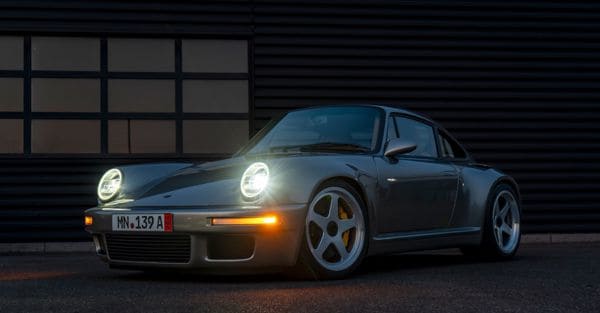
Following its debut at The Quail in 2024 with the Coupé version, the presence of the Eccentrica V12 Roadster – an Italian reinterpretation of the Diablo featuring an open-top carbon-fibre body, a V12 engine producing around 550 CV and an H-pattern manual gearbox. This project demonstrates just how much the restomod sector has now become an independent industry in its own right, one in which Italia can play a significant role by combining style, craftsmanship and mechanical expertise.

BMW Alpina: a new era begins

Following its world premiere at Villa d’Este in May, the BMW Alpina Vision makes its North American debut at The Quail. The vision with which BMW is beginning to outline the future of one of the most fascinating names in German motoring retains the philosophy that for decades has distinguished Buchloe’s cars from the BMW M models: exceptional performance, yet without an obsession with the racetrack, combined with the comfort of a grand tourer, handcrafted attention to detail in the interior and a certain aristocratic discretion. A formula for connoisseurs rather than show-offs, in which speed and luxury must coexist without necessarily shouting it from the rooftops. A sort of German-style Grand Touring, now called upon to survive the transition from a small independent manufacturer to a brand integrated into the BMW galaxy. The challenge will be precisely this: to harness Munich’s technological and industrial resources without losing that subtle eccentricity that made an Alpina instantly recognisable to those who knew what they were looking at.

BMW M Concept Neue Klasse: four engines for the M of the future

BMW also brought the M Concept Neue Klasse to Monterey, perhaps the most significant glimpse yet of how Munich’s most famous marque will evolve in the electric era. Following its world premiere at the 24 Hours of Le Mans, the concept made its US debut during California’s Car Week: four electric motors and an M-specific version of the Neue Klasse architecture, controlled by the new ‘Heart of Joy’ supercomputer, designed to coordinate the vehicle’s propulsion and dynamics with a speed hitherto impossible for traditional systems. More important than the figures – which BMW has prudently not yet disclosed – is the message: the future electric M model does not simply aim to add horsepower to a battery-powered BMW, but to rebuild, around the software, that precision of response and that chassis control which have defined the Motorsport brand for half a century.

Zenvo Aurora, the Danish 1,850 cavalli V12

And, of course, there is Zenvo, one of the names that best epitomises this new landscape of hypercars. The Aurora, in its Agil and Tur variants, centres on a 6.6-litre quad-turbo V12 developed with Mahle Powertrain, capable of 1,250 CV on its own and up to 1,850 CV with electric assistance. The Agil embodies the more radical and aerodynamic side of the project, whilst the Tur is geared towards road use and grand touring. It is not merely a battle of numbers. Zenvo belongs to that generation of small manufacturers that uses Monterey to speak directly to a global clientele without needing the industrial scale of the major groups. And this is precisely why The Quail has become so important.

Luxury motoring is changing, but The Quail isn’t

Ultimately, the appeal of The Quail lies precisely in its apparent contradiction. It is an event deeply rooted in the preservation of classic cars and, at the same time, a prime showcase for a multi-million-euro car market that seems immune to economic downturns. Ultimately, this could well be the real story of the 2026 edition. The Quail is no longer merely one of the events during Monterey Car Week: it has, in fact, become one of the world’s most important luxury motor shows. Except that it has no exhibition halls, does not measure its success in terms of hundreds of thousands of visitors, and does not seek to attract the general public. Here, a manual McLaren, a 1,600 CV Bugatti, a one-off Porsche, a Lamborghini SV or an unknown three-million-dollar hypercar are not shown to a random crowd, but to a few thousand carefully selected people. And many of them might actually buy them.

That is why the 22 ‘Press Conferences’ sound almost like a relic of the past. The Quail has no need to imitate Geneva, Frankfurt or Paris, especially as those motor shows, at least in the form we have come to know them, have all but disappeared. Its strength lies precisely in the opposite: transforming every unveiling into an encounter between those who build extraordinary cars and those who can afford to own them. Perhaps this is precisely what the new Motor Show is all about: no grandstanding, no crowds. Just exceptional cars, collectors, designers, captains of industry and very fortunate enthusiasts. And in a motoring world that is changing at what might be considered an excessive pace, for one day Carmel Valley still manages to bring together, without any awkwardness, carburettors and batteries, V12s and electric motors, heritage and innovation. With a Ferrari, once again, on the top step of the podium.

Copyright reserved ©
Loading...

Brand connect

Loading...

Newsletter

Notizie e approfondimenti sugli avvenimenti politici, economici e finanziari.

Iscriviti