
Quantum computing: principles, applications and challenges of the new technological revolution presented at the Turin Book Fair
From theory to practice, the quantum computer promises to push the limits of classical computing with revolutionary potential in cryptography, artificial intelligence and scientific research.

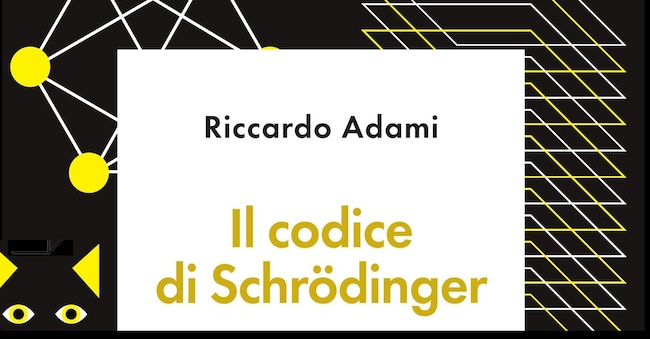
Those who believe that artificial intelligence represents the great revolution of our time, do not yet know what is coming. The quantum computer, which only ten to fifteen years ago was talked about as a possible but futuristic hypothesis, is now a reality and its commercial and military application may only be a few years away. In Italia, the University of Naples has one, and the Politecnico di Torino, where Riccardo Adami teaches Mathematics for Quantum Engineering, has another. 'On 22 May 2025 a happy event cheered my university: a quantum computer arrived,' writes Adami in Schrödinger's Code. Come la meccanica quantistica ha rivoluzionato la fisica, la filosofia e la tecnologia (Daedalus, pp. 220, euro 18), an exciting narrative essay that succeeds in making such an anti-intuitive subject seem not overwhelming, even accessible -. The new acquisition does not resemble the 'classical' computers we already had: it uses different physical principles and operates at very low temperatures. In short, it is an enormous refrigerator. Only a small portion of its volume is dedicated to running programmes. Now we want to make it grow until it has outclassed the computers of the world's major computing centres, achieving 'quantum supremacy', as John Preskill called it. The most famous demonstration of quantum supremacy was achieved in 2019 in Google's laboratories, when the Sycamore quantum processor performed in just over three minutes a calculation that on the classical Summit supercomputer would have taken 10000 years (according to Google's announcement) or two and a half days (according to Ibm's response). In any case, an impressive gain'.
What is Schrödinger's code about?
The book talks about what is called the second quantum technological revolution: tencologies are emerging with a completely new conception that are based on what happens to elementary particles but taken one by one, no longer all together. We talk about this mainly in relation to the quantum computer, but there are also other important realisations that are already much more present than the quantum computer, which are cryptography, teleportation - there is something called teleportation - and sensor technology. I thought of writing a book on these things because these new technologies use what I call in the book the arcans of quantum mechanics, that is, those effects that are so strange that scientists had always given up understanding them, so much so that Richard Feynman said a famous phrase ":nobody understands quantum mechanics". Since he was one of the greatest theoretical physicists of the second half of the 20th century, it is a phrase that has also somewhat blocked research in the direction of a deeper understanding of these phenomena.
You talk about it from different aspects: now you have told us about the applications, but in the book you also talk about it from a mathematical, scientific and philosophical point of view...
Yes, because I found myself having to do this, the initial intention was to write a book on quantum cryptography, but as I went along precisely because cryptography required going further into the conceptual foundations of the theory I found myself reading about philosophy, discussing with philosophers and also extracting a view that I felt was more modern than the one I had studied at university.


