
'The Queen Bee', a photo book celebrating human ingenuity and labour

2' min read
Key points
2' min read
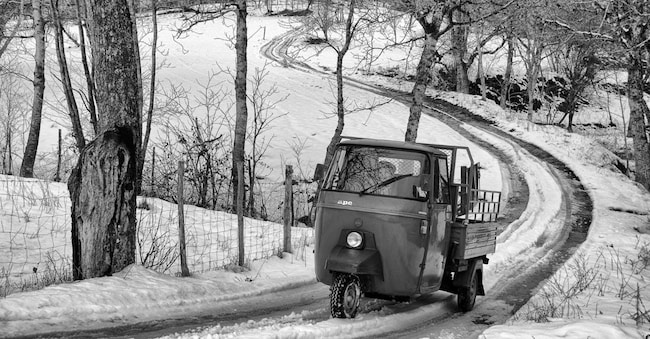
A celebration of human ingenuity and work, of peasant frugality and inland areas, along the Apennines and beyond. This is 'L'Ape regina', the photographic collection realised by Mario Greco and published by Rubbettino - by a random as well as fortunate coincidence - in the very weeks in which the decision was taken in Pontedera to stop production of the historic Piaggio model. Now inadequate for the safety standards of the European market, after three quarters of a century of honourable service, the Ape will continue to be produced but only in the group's Indian factories.
The metamorphosis of peasant societies
.Mario Greco's black and white images retrace the history of a means of transport that, in its various declinations, has often induced and accelerated the evolution of artisan and commercial production activities, favouring the metamorphosis of the rural economy and peasant societies.
Thanks to the 125 cc engine, the first versions produced between 1948 and 1950 reached a top speed of 40 km/h and were capable of carrying loads of up to 200 kg: an effective and modern alternative to mules and donkeys, a revolution for farmers, craftsmen and tradesmen.
The story in pictures of 'The Queen Bee' documents the decades-long link between a frugal but in its own way legendary means of transport and the rural communities in the faces and glimpses of the Presila of Catanzaro, in Calabria, where the author lives and works. A small journey into the past, conscious and without nostalgia.
'The bee car that Mario Greco has made immortal,' writes Felice Foresta in the book's opening pages, 'is a chapter in a novel. Ethics and elegy of an era. Raffaella Carrà's blond helmet. The Sunday with alternate plates'. An icon that accompanied 'a nation trudging and reawakening'.

