
The post-holiday exodus is underway, with traffic at its heaviest on Saturday and Sunday: over 27 million vehicles on the roads
Traffic volumes are on the rise, particularly on the main tourist routes. Anas chief executive Claudio Gemme has urged caution: “Safety must remain the top priority.”

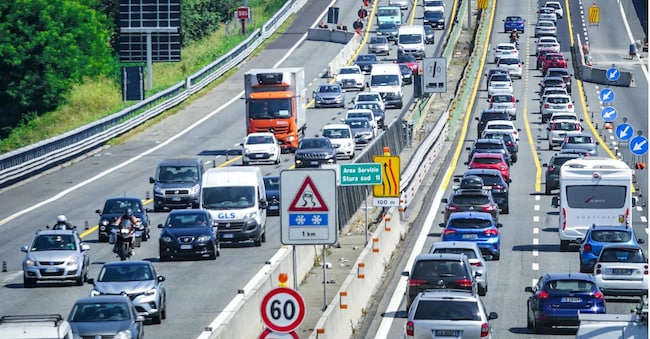
With the arrival of September, summer is now drawing to a close. Although many Italians have chosen to postpone their holidays to avoid the excessive crowds and record-breaking heat, the summer exodus officially comes to an end with the first weekend of the month: the Anas Road Mobility Observatory forecasts over 27 million journeys between Friday 4th and Sunday 6th on the roads and motorways managed by the FS Group company. Traffic is set to be particularly heavy over the weekend, so much so that Viabilità Italia has issued a ‘red alert’ for Saturday and Sunday afternoons.
The reverse exodus
“This weekend marks the end of the summer travel season,” announced Anas’s chief executive, Claudio Andrea Gemme. The first weekend in September will, in fact, see a massive return journey. Millions of vehicles will flood onto the roads as people return from their holiday destinations to major urban centres across the country.
Although traffic will increase across the entire peninsula, the main flows will be concentrated on the major routes linking tourist resorts and large urban centres, from the Autostrada del Mediterraneo (the A2, which runs through Campania, Basilicata and Calabria) to the SS 106 Jonica and SS 18 Tirrena Inferiore, two of Calabria’s main coastal routes. Exceptionally heavy traffic is also expected in Sicily, on the A19 Palermo–Catania and A29 Palermo–Mazara del Vallo motorways, and in Sardinia, along the SS 131 Carlo Felice.
But traffic will also increase significantly in central and northern Italia, particularly on the SS148 Pontina in Lazio, which, together with the SS7 Appia, provides links between Rome and the tourist resorts of southern Lazio. The E45 route, which links the north-east with central Italia, and the SS1 Aurelia (Lazio, Tuscany and Liguria) and SS16 Adriatica (Puglia, Molise, Abruzzo, Emilia-Romagna and Veneto) roads will also be affected by the post-holiday traffic.
In the north, the junctions where the most serious problems are expected are the RA13 and RA14 motorway slip roads in Friuli-Venezia Giulia leading from the border crossings, the SS36 around Lake Como and Spluga in Lombardy, the SS45 in Val Trebbia in Liguria, the SS26 in the Aosta Valley and the SS309 Romea between Emilia-Romagna and Veneto, and the SS51 in Alemagna, Veneto.

