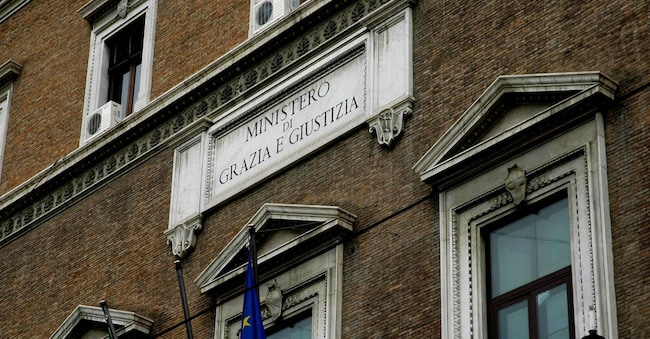
The social system is in crisis: companies cannot pay their employees enough wages to guarantee a decent living, as wages are gradually losing purchasing power; entrepreneurs need to be encouraged to take risks in their business in Italy, rather than in countries with a less justicialist culture. Only in Italy do those who have invested in a company run the risk of being implicated as hidden directors, perhaps even for having given simple managerial indications to the administrative body, within the limits of the prerogatives of the bearer of capital, which has its own specific role different from that of the economic governing body. The claim that the shareholder, who sees his company go into crisis, cannot give any operational indications so as not to lose the
its own capital, if it does not want to risk being considered a hidden administrator, is a uniquely Italian specificity.
What everyone is asking for is certainly not a sort of pass, for predatory acts, from which the system must be protected, but the reasonable certainty of being able to act freely, to save one's own company, assuming the risks proper to the entrepreneur, who can also make mistakes. The wrongdoer must be given the chance to find a compensatory settlement, without him and his creditors always having to wait for the years of criminal justice, which, by its very nature, is not meant to produce value, but to punish malicious behaviour. The ex-entrepreneur, who has been trapped in proceedings lasting years, is often acquitted when it is too late to start producing value for the system again, or, even if he is convicted, even if, as a result of an old seizure, there is something to distribute to creditors, the advantage for the latter is too far removed from the achievement of the loss, for him to be able to determine effective compensation. It would be much more advantageous, for everyone, if, in the pre-trial stages, there were partial redress mechanisms, at this time so necessary for the economic community.
It is to be hoped that the lengthening of the Commission's timeframe is aimed at an in-depth analysis of the system's development needs, which can lead to real reform, with a view to producing prosperity for the country as a whole.