
The Region of Sardinia sells disused facilities of its heritage to municipalities and industrial consortia for 1 euro
Local government councillor Francesco Spanedda: 'With this resolution we transform the regional heritage into an operational tool for local growth'

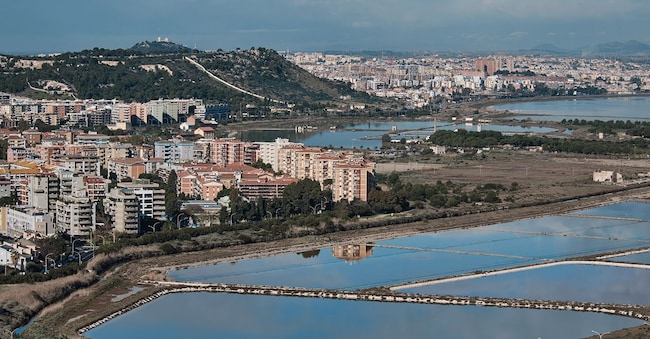
From the former barracks to the disused hotel, continuing with closed schools and land. The Region is disposing of part of its assets and selling them to the municipalities and industrial consortia at a cost of EUR 1, with the aim of 'reinvigorating the actions of Sardinian municipalities through the direct management of real estate'. It consists of 100 units, and also includes land and other assets that, in most cases, are not used. An operation that aims to give a new course to a real estate heritage that, in another situation, would have had a much higher value.
The new course of real estate
The measure, approved by the regional executive, identifies the first assets of the available heritage to be sold to municipalities and consortia at the symbolic price of one euro. "With this resolution we are transforming the region's assets into an operational tool for local growth," says local authority councillor Francesco Spanedda, "Our intention is to put local authorities in a position to act as effectively as possible. We are handing over these assets, which are often already used by administrations, so that spaces that are not currently used by the Region become the centre of new proximity policies'.
The largest divestments in Cagliari
The most significant number of houses, plots of land and structures is in Cagliari, where the accommodation of the former Caserma Vittorio Emanuele II barracks is to be disused. In Tempio, the former Esit hotel, a largely unused structure, will be disposed of. Other structures are to be disposed of in Oniferi, Ottana and Siniscola where old schools, the former clinic and other facilities will be sold.
From conservation to valorisation
'With this operation,' emphasises the councillor, 'we overcome a static management of public assets. We move from the logic of pure conservation to that of active valorisation: what for the central administration may represent an unused asset or a cost, for a mayor it becomes an opportunity to create a new service centre, an association headquarters or the hub of an urban regeneration project".
The measure provides for the possibility of requesting an early provisional handover, speeding up the start of local projects without waiting for the bureaucratic time of the final stipulation. Finally, a principle of responsibility is maintained: should the municipality decide in the future to sell the property, the net proceeds must be reinvested to enhance other regional properties in the same area.

