The Blue Front

The rebuilding of Italian football: youth academies, stadiums and the allocation of 1 per cent of TV rights revenue

The debate on reforms: Lega Pro is calling for 1 per cent of TV rights revenue to be allocated to the division’s youth academies; Minister Abodi offers reassurances regarding funding, whilst FIGC President Malagò is pushing for new stadiums and training centres

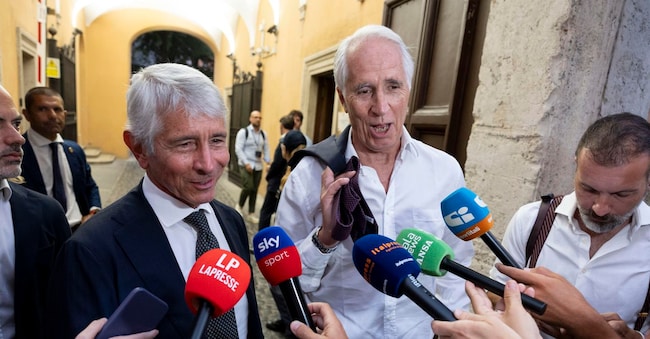
Il ministro per lo Sport Andrea Abodi e il nuovo presidente della Figc Giovanni Malagò. (Ansa)

4' min read

Translated by AI
Versione italiana

4' min read

Translated by AI
Versione italiana

The Italia football world is still searching for a new head coach and sporting director for the national team, yet the real issue on the table does not concern the Azzurri’s dugout. The coaching crisis that has emerged in recent years is, in fact, a reflection of deeper-rooted problems: the fragility of the youth academies, the lack of infrastructure and an economic model that struggles to redistribute resources throughout the entire football ecosystem.

The hearings before the Chamber of Deputies’ Culture Committee and the statements by the Minister for Sport, Andrea Abodi, and the President of the FIGC, Giovanni Malagò, provide a clear picture of this phase. Behind the dispute over the 1 per cent share of football’s mutuality lies, in reality, a strategic question: who will finance the future of Italian football?

Loading...

The significance of that 1%

The decision by the Government and the Minister for Sport and Youth, Andrea Abodi, to allocate – under the so-called ‘Sport Decree’ (Decree-Law 108), passed on 16 June – 1 per cent of the funds provided for under the Melandri Law on TV revenue to the professional women’s Serie A has sparked a dispute between the Government, the FIGC and Lega Pro. Although this share may appear marginal, it is worth millions of euros and, above all, represents a key driver for the development of young players.

Matteo Marani, president of Lega Pro, has called for that percentage to be allocated directly to Serie C, subject to one specific condition: supporting youth academies. It is hard to argue with this reasoning. If Serie A is the pinnacle of the pyramid, Serie C represents one of the main gateways to professional football for thousands of young Italian footballers.

It is no coincidence that Marani pointed out how a large part of these resources – around 8 million a year – has so far been used to fund the ‘Zola reform’, the project designed to encourage the recruitment and development of young players and the relevant facilities in third-tier clubs. In a system that imports talent from abroad and produces fewer and fewer players for the national team, investment in youth development cannot be regarded as a minor budget item.

Abodi’s compromise

Abodi has adopted a clear policy: to support women’s football without undermining the boys’ youth sector. The minister reiterated that the Women’s Serie A, after two years without specific funding, deserved recognition commensurate with its professional status. But at the same time, he gave assurances that other resources would be identified to compensate for the loss of the 1 per cent. “It’s not about taking away, but about adding,” Abodi summarised.

This message is important because it seeks to prevent a dangerous conflict between the underprivileged. Pitting women’s football against youth academies would, in fact, be a strategic mistake. Both represent investments in the future. The real problem is that the Italian football system continues to have an economic base that is insufficient to match its ambitions

The stadium issue

If youth academies represent the human capital, stadiums are the physical capital of Italian football. Abodi has announced a further meeting with Giovanni Malagò to speed up progress on the facilities, a key issue also in the run-up to Euro 2032. This is no minor matter. For at least twenty years, the infrastructure backlog has been one of the main obstacles to the economic development of the sport.

Italia continues to generate stadium revenues that are significantly lower than those of the Premier League, the Bundesliga and La Liga. The result is a system that is increasingly reliant on television rights and increasingly unable to capitalise on its direct relationship with fans and the local community.

In this context, Malagò’s proposal to extend the special powers envisaged for Euro 2032 to sports venues and centres with a capacity below UEFA’s parameters also appears significant. The aim is to enable medium-sized cities and regional centres to benefit from the European tournament, thereby generating a more widespread impact on infrastructure.

The challenge, therefore, is not just about the five stadiums that will host the matches, with the 31 July deadline for submitting bid dossiers to the FIGC approaching. It concerns the opportunity to use Euro 2032 as a catalyst to modernise a network of sports facilities that, in many cases, is decades behind the times.

The new financial governance

The parliamentary debate also touched on the issue of the new independent commission for the economic and financial oversight of professional sports clubs.

The measure stems from the now widely recognised need to strengthen supervisory systems following years characterised by corporate crises, bankruptcies and league registrations secured only just within the bounds of sustainability.

Malagò expressed his support for the initiative, whilst stressing that the new model must not end up placing undue costs or responsibilities on the federation. This is a crucial step because it touches on one of the long-standing issues in Italian football: the credibility of the controls.

A system that aims to attract investment must guarantee clear rules, transparency and economic sustainability. Without these elements, any growth project risks remaining unfinished.

Copyright reserved ©
Loading...

Brand connect

Loading...

Newsletter

Notizie e approfondimenti sugli avvenimenti politici, economici e finanziari.

Iscriviti

Tutto mercato WEB