
The 'rich existence' of Pillitteri, mayor of the Milan of drinking
by Dino Pesoli
3' min read
3' min read
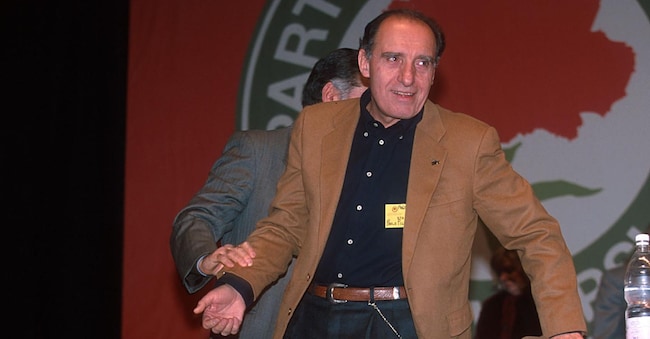
A sort of oblivion, a collective oblivion, has long since descended on him, as on many politicians of the so-called First Republic who were swept away by the Tangentopoli cyclone. Yet Paolo Pillitteri, who died yesterday in Milan on the day he would have been 84 years old, was certainly a leading figure, a true socialist in the years preceding and accompanying the impetuous advance of Bettino Craxi, leader of the Italian Socialist Party and Prime Minister from 1983 to 1986, who died in exile in Hammamet on 19 January 2000. Mayor of a Milan that no longer exists, the 'Milan to drink' of the 1980s, as his son Stefano wrote of him yesterday, 'he had a rich existence for better and for worse'. Born in Sesto Calende on 5 December 1940, the son of a Sicilian carabinieri marshal and brother-in-law of Bettino Craxi, Pillitteri was first citizen of the Lombard capital from December 1986 until 1 January 1992, succeeding his party colleague Carlo Tognoli. A political career that certainly ran in parallel with the rise of his brother-in-law Bettino, whose sister Rosilde he married in 1965 (he would become his widower in 2017 and then remarry two years ago with Cinzia Gelati). This is how the former mayor of Milan Giuliano Pisapia recalls him: 'He loved Milan. He was an authentic reformist socialist, first as town planning councillor, then as culture councillor and later as mayor after the experience of the councils led by Carlo Tognoli. In a boozy Milan he tried to find answers for the last. I only think of the arrival of the first foreign immigrants in Milan'. An amiable conversationalist, a great fan of cinema, and ready with a joke, he frequently entertained parliamentary reporters in the so-called 'corridor of lost steps' in Montecitorio, which he entered as an MP in the 9th legislature and in the 11th legislature, commenting on the political events of one of the most tormented seasons since the Second World War. It was 1992 and perfectly coinciding with the severe financial crisis that swept through the Italian economy and took the lira out of the European exchange rate system at the time, with the Amato government trying to put out the fire with the maxi-manoeuvre of 92,000 billion lire, the storm of Tangentopoli hit politics and institutions, marking a fracture, a line of demarcation with the entire political class that had governed the country for over forty years. An earthquake that began on 17 February 1992 with the arrest in Milan of Mario Chiesa, president of the Pio Albergo Trivulzio nursing home and exponent of the Socialist Party. At the beginning of May of that year, Pillitteri, together with his predecessor Carlo Tognoli, received a notice of indictment for the crime of receiving stolen goods amounting to 500 million lire, as part of the Mani pulite (Clean Hands) investigation. He was later convicted of the offence of receiving stolen goods, with a sentence set at 2 years and 6 months by the Court of Appeal in 1996. It was Bobo Craxi who recalled the ban imposed on Pillitteri from attending Craxi's funeral on 21 January 2000 in Hammamet. "On that occasion, Pillitteri declared that since he could not bring a flower to the grave in Tunisia, he would lay it on the monument dedicated to Filippo Turati". He had long kept himself out of political life. One of his last appearances was at the Umanitaria in Milan on 7 November, at the presentation of Stefania Craxi's book 'All'ombra della storia'. As a young journalist, film critic and cultural animator, he had started his political career in the PSI. Then from 1970 he was councillor for Culture in Milan, years of particular artistic and cultural vivacity. In 1975, he founded the Movimento unitario di iniziativa socialista (Unitary Socialist Initiative Movement), which merged with the PSI and then joined the Psdi. After his appointment as regional secretary of the PSI, he was elected to Parliament for the first time in 1983 and as mayor of Milan in 1986 he led a city council that saw a political alliance with the Christian Democrats, on the model of the national Pentapartite party. Then in 1987 he headed an unprecedented red-green junta with the PCI and the Greens. He was the 'brother-in-law mayor', as he was often described, actually with a somewhat ungenerous epithet. He caused quite a stir during his term in office when he clashed with the Atm tram drivers' union, which was close to the League and accused them - in a face-to-face meeting in the Via Palmanova depot - of being 'the shame of Milan' as well as being 'fascists, racists, Nazis, squadrists and ragamuffins'.

