The programme

The Rome Opera House presents its new season and continues its journey through the history of music

The 26–27 season will feature great classics from Verdi to Rossini (who will return to the reopened Teatro Valle), contemporary dance and special events. Superintendent Giambrone said: “We are closing our 12th financial year in the black.”

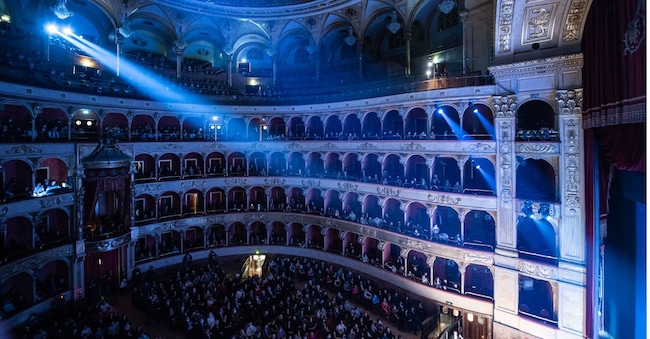
by Chiara Beghelli

5' min read

Translated by AI
Versione italiana

5' min read

Translated by AI
Versione italiana

It is “il dolce suono mi colpì” – sung in Gaetano Donizetti’s *Lucia di Lammermoor* – the line that gives its name to the Rome Opera House’s forthcoming season, which was unveiled today. ‘As is now our established and much-appreciated tradition, for the 2026–2027 season we will once again offer the public a journey and an experience through four centuries of music, from the Baroque to the contemporary,’ said Superintendent Francesco Giambrone. This journey will begin on 27 November with 12 new productions spanning opera and dance: 11 operas, 2 concert performances, seven ballets – including one by the dance school – and four special events.

2026, on 16 October to be precise, will also see the long-awaited reopening (it had been closed since 2010) of the Teatro Valle, which on 1 October 2027 will once again host an opera with Gioacchino Rossini’s *Cenerentola*, directed by Mario Martone. This opera premiered 210 years ago on this very stage and marks the return of the genre to one of the theatres that once played a leading role in its history.

Loading...

One of the highlights of the special events is the event entitled “It’s Still Too Soon” on 23 May 2027, marking the 35th anniversary of the Capaci massacre: in collaboration with the Accademia di Santa Cecilia, a reading accompanied by music will be held, beginning at 6 pm – the time of the explosion on the motorway on the outskirts of Palermo – to recount the painful and still obscure events that have marked the history of the Republic. The theatre’s musical director, Michele Mariotti – who has, incidentally, recently been appointed a full member of the Accademia di Santa Cecilia – will conduct Pergolesi’s “Stabat Mater” at Orvieto Cathedral on 3 March 2027, an Easter concert that will be broadcast by Rai.

The two evenings of “Opera in Concert” will feature two leading ladies: Anna Netrebko, who will take on the role of Judit for the first time in *Bluebeard’s Castle*, one of Béla Bartók’s most important operas (4 December), and Cecilia Bartoli, who, with *The Barber of Seville* on 27 May 2027, will mark exactly 40 years since her debut at the Costanzi Theatre in that very same Rossini opera.
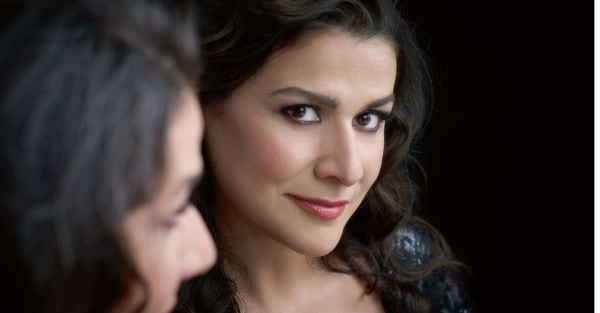
Cecilia Bartoli

The OperaCamion project will also continue, bringing opera to the streets and even the outskirts of Rome – an initiative that has proved hugely successful (“we’ve gone from a few hundred spectators in the early editions to thousands in the latest one”, said Giambrone), which also returns opera to its original and more popular form. In 2025, OperaCamion recorded a total attendance of over 10,000 for *The Barber of Seville* and a further 10,000 for *Tosca*. According to data collected via questionnaires and surveys distributed during the performances, around 40 per cent of the audience said they were attending an opera for the first time. Admission is free; no ticket is required – you simply need to bring a chair from home.

The season will open on 27 November with Igor Stravinsky’s *The Rake’s Progress* – which has not been performed in Rome for almost 60 years – and, as artistic director Alessandro Galoppini pointed out, will be enhanced by an exhibition of the eight original engravings by William Hogarth which, during Stravinsky’s visit to the Art Institute of Chicago in 1947, inspired him to compose the opera: For Michele Mariotti, this will mark a long-awaited debut, as it will also be the directorial debut of the Spanish director Rafael R. Villalobos.

Andrea Chénier

We return to one of our most beloved operas with Umberto Giordano’s *Andrea Chénier* (premiering on 17 January 2027), featuring a “star-studded cast”, conducted by Daniel Oren and directed by Marco Bellocchio, featuring Brian Jadge and Ludovic Tézier, both making their debuts in the dual roles of Chénier and Gérard, and Giuseppe Verdi’s *Il Trovatore* (22 June), which, incidentally, premiered in 1853 right here in Rome, at the former Apollo Theatre, a 19th-century gem demolished to make way for the construction of the Tiber embankments in the 1920s: the production will be directed by the talented young Daniele Menghini, making his debut at the Costanzi, with musical direction by Nicola Luisotti. Puccini is represented by *La Rondine*, the second version of which – the 1920 version – will be staged from 18 September.

““Lucia di Lammermoor” joins the programme from 21 February, presented in the Naples version, which sopranos Jessica Pratt and Gilda Fiume will bring to life, and featuring the choreographic debut of Karole Armitage, known for her style that blends classical ballet with postmodern and punk influences. There is also great anticipation for the debut of Verdi’s “I due Foscari” (from 13 March), featuring a cast largely making their debuts but led by the experienced director Pier Luigi Pizzi and musical director Riccardo Frizza; the 18th century will be represented by *Iphigénie en Tauride*, which returns to Rome after 40 years, directed by Robert Carsen, whilst the 20th-century opera making its Rome debut will be Dmitri Shostakovich’s *Lady Macbeth of the Mtsensk District* will make its Rome debut, directed by Barry Kosky and conducted by Juraj Valčuha, with the premiere scheduled for 14 May.

Una Lady Macbeth del distretto di Mzensk

Last but not least, the dance programme curated by Eleonora Abbagnato, who highlighted the central role of the dance school – which is set to celebrate its 100th anniversary in 2028 – and the importance of having it (a rarity) alongside the dance company. Great classics such as *Swan Lake*, during the Christmas season (which will also feature Paul Marque, étoile of the Paris Opera, in the role of Prince Siegfried), and Ludwig Minkus’s *Don Quixote*, will alternate with contemporary dance – a genre very close to the artistic director’s heart – featuring Nicolas Blanc, Alexander Ekman and Wayne McGregor.

Also on the programme is John Neumeier’s “Mahler’s Third Symphony”, one of the most spectacular and complex ballets, featuring 70 dancers on stage accompanied by a choir. ‘Raymonda’, choreographed by Jean-Guillaume Bart, is also making a comeback after many years. The dance school will be busy with the much-loved Christmas production of ‘The Nutcracker’.

Among the previews for the coming seasons, Mozart’s *La clemenza di Tito*, directed by Krzysztof Warlikowski, has been confirmed for 2027, as has Verdi’s *Don Carlos* in five acts in French, directed by Christof Loy, for 2028. Giambrone, who highlighted that the Teatro Costanzi has closed its 12th financial year in the black, also stated that the theatre is actively working with the relevant institutions to bring back summer performances at the Baths of Caracalla, and that the move to the Circus Maximus will be limited to this year.

Copyright reserved ©
Loading...

Brand connect

Loading...

Newsletter

Notizie e approfondimenti sugli avvenimenti politici, economici e finanziari.

Iscriviti