The Royal Palace of Caserta put to the test of modernity
Art, music, new ways of using spaces and food culture: Terrae Motus is the first testing ground

What should a royal palace do in the 21st century? Preserve itself – but what then? It should promote itself, attract visitors, educate, produce culture and perhaps generate income – ideally without turning into a duty-free shop. Caserta is a good place to look for an answer, because a monument does not die only when it is abandoned, but also when it becomes completely untouchable.
Terrae Motus, art in the wake of disaster
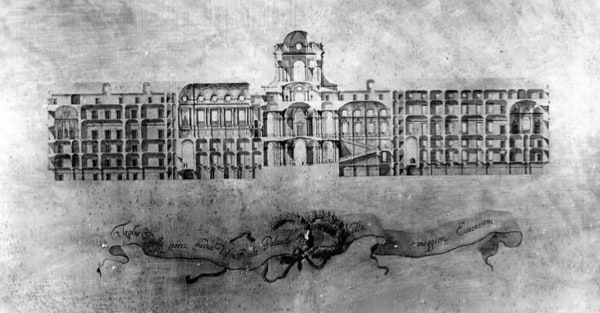
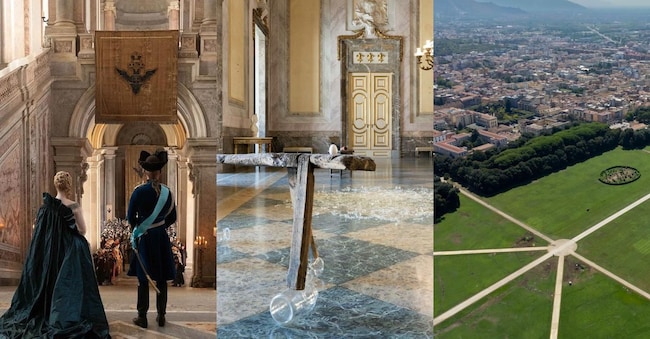
In Caserta, Vanvitelli conceived one of the most formidable symbolic structures of the 18th century, where architecture, landscape and power converge. Within this celebration of permanence, a foreign element has resided since 1993: ‘Terrae Motus’, a collection of 72 works gathered by the gallery owner Lucio Amelio following the 1980 Irpinia earthquake and bequeathed to the Royal Palace in accordance with his wishes. Beuys, Warhol, Kounellis, Pistoletto, Paladino, Mapplethorpe. Art born from what had collapsed in a matter of seconds.
T.S. Eliot argued that every new work changes the way we read previous ones.
This also applies to museums: preservation does not mean freezing things in time. *Terrae Motus* is the first test case. Antonio Tarasco, who has been acting director of the Reggia since July, has commissioned a committee to rethink the exhibition spaces and criteria for the collection, which, by the terms of the will, must remain within the Vanvitelli complex. It is not merely a matter of arranging 72 works, but of creating a dialogue between two opposing concepts of time.
The Lesson of Versailles
Jean-Jacques Aillagon, president of Versailles from 2007 to 2011, threw open the palace’s doors to contemporary art with Jeff Koons, Xavier Veilhan, Takashi Murakami and a trail of scandal that contributed even more than the artworks themselves to the site’s revival. Must a palace represent the past, or can it once again give rise to new forms and conflicts? Aillagon, who was also behind the French law on patronage that transformed the relationship between business and culture, left behind a lesson more significant than the exhibitions themselves. Versailles continues to experiment. Today, you can dine at Alain Ducasse’s restaurant and attend an electronic music rave at the Orangerie. Before becoming museums, royal palaces were anything but quiet; they were machines of representation, consumption, spectacle and socialising.