Museums

The Royal Palace of Caserta opens the race for a new directorate

Maffei's term is expiring and Russo is acting as interim director pending the appointment of a new director. At stake is the continuity of a model that in recent years has attracted over 130 million in investments and redefined the role of the Reggia in the international museum scene

by Roberta Capozucca

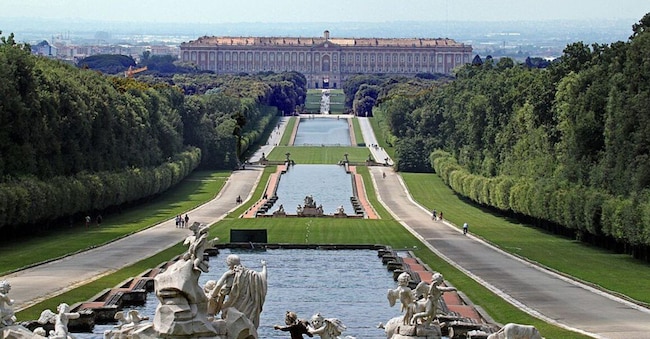
La Reggia di Caserta (foto Marco Ferraro)

7' min read

Translated by AI
Versione italiana

7' min read

Translated by AI
Versione italiana

The Reggia di Caserta is preparing for the changing of the guard. While waiting for the Ministry of Culture to lift its reservations on the appointment of the new director of the Vanvitellian complex, the leadership of the institute will pass to Alfonsina Russo. The Mic director will take over ad interim as of 5 June, the date on which director Tiziana Maffei's term of office expires. A far from simple succession, especially in light of the wealth of results achieved under the direction of Maffei, in office since 2019. In these seven years the Reggia di Caserta has undergone a profound transformation, which has involved both the recovery and enhancement of the monumental complex and its repositioning in the international cultural system as a laboratory of museum innovation. A path that makes the choice of the new director a junction that goes beyond the normal administrative alternation. It now remains to be seen whether the Ministry intends to continue along the line of innovation traced in recent years or whether a return to more traditional management models is in the offing.

The Royal Palace of Caserta: a European ambition

In 1752 Carlo di Borbone entrusted the architect Luigi Vanvitelli with the design of a new royal residence with the aim of endowing the Bourbon monarchy with a representative device consistent with a broader reorganisation of the government of the territory. With over 130,000 square metres distributed over five floors and four courtyards, a monumental park of 120 hectares and a hydraulic axis over three kilometres long, the Royal Palace of Caserta remains one of the largest monumental complexes in the world. The approximately 1,200 rooms, 1,742 windows, 1,026 fireplaces and 34 staircases convey the scale of a project that still defines the parameters of architectural grandeur today. Added to the complex is the imposing water infrastructure of the Acquedotto Carolino, which the Royal Palace of Caserta administers as an integral part of its monumental system. The route, over 38.5 kilometres long, connects the Fizzo springs in Airola, in the Benevento area, crossing two provinces and six municipalities until it reaches the Royal Palace. The largely underground infrastructure includes the famous monumental bridge of over 500 metres with 86 arches, as well as a network of bridges, towers and conduits connecting the Fizzo springs to the Reggia. Recognised as a UNESCO World Heritage Site in 1997, the Royal Palace of Caserta has gone through alternating phases of splendour and profound decay since its completion. The turning point came in 2014, when the Ministry of Culture granted it scientific, financial, accounting and administrative autonomy under Prime Ministerial Decree no. 171 of 2014. Until then, the complex was marked by significant critical issues, with squatting by families in some structures of the Royal Garden and the phenomenon of selling counterfeit goods inside the Park. Since then, first Mauro Felicori, then ad interim Antonio Lampis in 2018 and, from 2019, Tiziana Maffei, who launched a wide-ranging programme of interventions to return the Reggia to its full public function.

Loading...

Ricavi provenienti dalla bigliettazione 2016-2025

In euro

Loading...

From cost centre to production institution

Decisive in this path has been the consolidation of a management model based, on the one hand, on the ability to manage and intercept external financing, and, on the other, on the experimentation of innovative administrative tools. Between 2019 and 30 April 2026, approximately 130 million euro were committed and paid out, of which more than 113 million were earmarked for investments in restoration, refurbishment, security and valorisation. More than 84% of these resources come from European funds and extraordinary programmes.

SERVIZI, CONCESSIONI D’USO E ALTRE ENTRATE

Confronto 2024-2025. In euro

Loading...


The main funding lines include the 2014-2020 Development and Cohesion Fund - Culture and Tourism Stralcio Plan, which has allocated approximately 40 million euro for work on the Royal Palace and Monumental Park, including roofs, facades, historic flats and new spaces for exhibition and reception functions. The PON Culture and Development and the Complementary Operational Programme are responsible for a further EUR 15 million, earmarked for the renovation of the facades, the improvement of the museum's offerings, and the construction of the Gran Galleria as a temporary exhibition space in the premises that were once used as the Air Force's cinema. On the security and technological infrastructure front, the PON Legality 2014-2020 has financed interventions amounting to approximately EUR 7.9 million, dedicated to video surveillance, control, and integrated site management. To these are added the resources of the PNRR, amounting to 25 million euro, for a programme on Sorgenti del Fizzo, Acquedotto Carolino, Parco Reale, Giardino Inglese, Via d'Acqua and Tenuta di San Silvestro. Further interventions concern the renovation, for 3.7 million euro, of the Court Theatre, energy efficiency, the securing of the Royal Palace, and projects on accessibility, digitisation, and valorisation of the storerooms.

In addition to the extraordinary funding and ordinary contributions from the Ministry of Culture for operations, amounting to around 8 million euros in the same period, between 2019 and 2026 the Reggia recorded more than 37 million euros in income from museum activities, of which around 80% is attributable to ticketing. Particularly significant also from an economic point of view is the gradual formation of a stable audience of recurring visitors: in 2025 there will be more than 7,000 subscribers, with an average of 17 accesses per year and an incidence of more than 10% of total admissions.

The process of returning the complex

In the logic of a governance model based on planning, economic sustainability was functional to the main objective of Maffei's mandate, i.e. the redevelopment of the spaces of the Royal Palace and the recovery of their original spatiality. The path was also made possible by the regulatory framework introduced in 2014 with the "Urgent measures for the protection and enhancement of the Reggia di Caserta complex" (Decree-Law no. 83 of 31 May 2014, converted into Law no. 106 of 29 July 2014, and implemented with Prime Minister's Decree of 21 May 2015), which started a process of reallocating the spaces of the complex with the aim of returning them to their cultural, educational and museum destination. Since then, there has been a gradual elimination of uses that are not consistent with the site's function and the readjustment of the spaces according to the original layout. In seven years, a total of 4,789 square metres have been restored: 1,884 square metres for permanent exhibition spaces, 2,562 square metres for temporary exhibitions, laboratories and services, 351 square metres of storage areas and over 8,000 square metres of green areas, as well as 936 square metres of greenhouses. On a building level, about 15,000 square metres of roofing were rebuilt out of a total of 27,000 and over 1,700 square metres of window frames were replaced. Among the most significant interventions is the renovation of the Passionists' complex, destined to become a hub for art and design with activities related to reuse and sustainability. The project is part of a broader strategy of urban reconnection, which includes the new access from Casagiove and the redevelopment of the entrance from Corso Giannone, strengthening the relationship between the Reggia and the city.
But from whom were these spaces recovered? The Reggia Museum is in fact not the only subject present in the vast Vanvitellian complex. Various public administrations still coexist on the perimeter of the site: the Air Force, which has progressively decommissioned and returned more than 15,000 square metres of a wing of the Royal Palace to museum use, as well as the Archaeology, Fine Arts and Landscape Superintendency, the State Archives and the SNA - the National School of Administration.

The Reggia as a platform for civic production

Alongside the major infrastructural and restoration work, the Maffei management has progressively repositioned the Reggia as a cultural and productive infrastructure for the territory. Beyond the traditional tourist dimension of the great royal residences, the complex has become a laboratory for experimentation, open to collaboration with private subjects in the processes of valorisation and management. In the wake of the logic of horizontal subsidiarity and the Faro Convention, is the SEMI - Sviluppo e Meraviglia d'Impresa project, dedicated to historic gardens and based on the integration of scientific research, productive activities and experimentation, also of a commercial nature. The aim is to combine heritage protection, environmental sustainability and circular economy, in line with the trajectories of Agenda 2030.
The programme's first intervention concerned the restoration of the Graefer Greenhouses, with the reopening of the Bourbon Greenhouses and the Modern Greenhouse after more than eight years of closure. The project was realised through a public-private partnership between the Reggia and a grouping of floricultural companies, social cooperatives, universities and other local entities, selected through a public call for tenders in 2022 and today organised into a SCARL employing about ten people. The initiative, named after the historical royal gardener Johann Andreas Graefer, aims to restore the original function of the greenhouses as places for acclimatisation, research and botanical production. The area involved is approximately 16,000 square metres, more than 7,600 of which are used as a nursery, and includes greenhouses, a shop, exhibition spaces, the old botany school and visitor trails. This first phase of public-private experimentation is complemented by the Camellia Garden project, currently in the activation phase. The Garden will be located in a portion of the former Hercules Guardhouse, a building originally intended for the control and surveillance of the Court gardens, and will be reconfigured as a multifunctional space dedicated to sensory experiences, with activities related to green food, herbal teas, aromatic beverage tasting and thematic cultural events.

Reflection on the future

Over the past seven years, the experience of the Royal Palace of Caserta has paved the way for a contemporary approach to the very function of museum complexes, in which protection and enhancement are brought back into a unified framework of governance of the site. The 'Special Project Caserta', the agreement signed on 15 May between the Agenzia del Demanio, the Municipality of Caserta, the Reggia Museum and the Ministry of Culture's General Directorate for Archaeology, Fine Arts and Landscape for the redevelopment of Piazza Carlo di Borbone, is part of this perspective. The agreement entrusts the Reggia with an experimental management of the area, with the aim of strengthening its cultural and urban function.
The decisive point remains the relationship between heritage and public space. A monumental complex of this scale can only continue to live to the extent that it is able to maintain a concrete and daily relationship with the city and the surrounding community. After all, this is a vision that has its roots in the same project conceived by Charles of Bourbon for Caserta and that today re-emerges in a contemporary perspective, giving historical continuity to the ambition of making the Reggia not only a place of memory, but an active cultural engine for the territory and the Mediterranean.

Copyright reserved ©
Loading...

Brand connect

Loading...

Newsletter

Notizie e approfondimenti sugli avvenimenti politici, economici e finanziari.

Iscriviti