
Sant'Egidio's proposals to do more against school drop-outs and educational poverty
The Community calls for full-time education to be expanded as much as possible and emphasises the importance of digital access to services. The 'Viva la Scuola' programme goes after children who fail to enrol

"What we want to do is make a contribution so that the Italian school loses as few children as possible, perhaps not even one of those entrusted to it". This is how the president of the Community of Sant'Egidio, Marco Impagliazzo, summarised the reasons for today's meeting with the press on the theme 'Everyone in the classroom', with data and proposals to tackle the phenomenon of school drop-out and educational poverty. "The school has a maternal soul," he noted, "and like a mother it must remember all its children. It is not just a jumble of deadlines and problems, nor should we give up the dream of having all children in school. Especially in the current vacuum of ideals in a society and in a world where the third world war is threatened, or problems such as the severe climate crisis are being faced'. "We want to make a contribution to a serious and welcoming school," said Impagliazzo, starting from the data on educational poverty, which then coincides with the broader picture of real poverty, social exclusion, and the vast inequalities that exist.
Neet
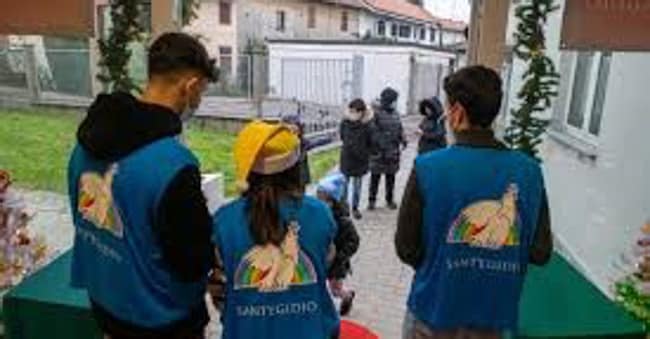
"As far as 'neet' are concerned, young people who neither study nor work, in Italy we are at the bottom of the list with 15.2 per cent of the total," he explained. Something in the school does not work, either with 'implicit' dispersion, of young people who finish the cycle of studies but without adequate learning, or 'explicit', of the real school drop-outs. For this last figure, 'we have dropped below 10 per cent, which is a bit of good news, the school is trying to take back its boys, there has been a change of trajectory over the last decade'. Sant'Egidio since 2022 has created the 'Viva la Scuola' programme, "which goes out to look for minors who are not able to enrol in school, or kids who have gone missing and are no longer looking for themselves". And "the biggest problem is school enrolment, 69% had problems enrolling in school, 10% lacked support mediators, 15% had problems with school support"..
The proposals
Here then are Sant'Egidio's proposals for the school. First of all, to extend full-time education as much as possible, "because there is a very high gap between regions like Lazio and others like Calabria and Sicily" (the gap is 1,300 school hours a year against 900, 400 less per student). "Many times full time is not done because there are no school canteens," Impagliazzo noted, "and this also has an impact on the lives of families, especially mothers, women, on the problem of reconciling work and family.
Then digital access to school services, where especially migrant or poorly educated families suffer serious problems, especially with late enrolments or transfers from one school to another, and there is also a need for counters for paper-based practices or help. Or even do more to teach Italian to children from immigrant families. 'We are very sorry that some laws have reduced the funds for teaching Italian to foreigners,' lamented Impagliazzo, 'while everything shows how language is the first tool for integration'. In this regard, Sant'Egidio has expanded its network in this field: 6,220 people are enrolled in Rome alone, 110 language and culture courses are provided, with 18 schools in the capital alone. "We work on integration also so that there is no fear of foreigners," he commented, "The migratory phenomenon is structural and we must also work to overcome fears.
"All this," he insisted, "to help young people not to get lost, not to disperse, perhaps locked up at home or working too young in the countryside of Sicily or Calabria. Since the figures are a little more positive, we say: why not insist, why not go ahead?". And while in Italy 'the school has restarted with its charm and its difficulties,' added Impagliazzo, 'we do not want to forget the many children and children without schools in Gaza, in Ukraine and in the many other war zones in Africa and Asia.
Brand connect


Newsletter Scuola+
La newsletter premium dedicata al mondo della scuola con approfondimenti normativi, analisi e guide operative
Abbonati