European Budget / Speech

The short-sightedness of Europe’s ruling classes in the scaling back of cohesion policies

The issue of the forthcoming long-term European budget for 2028–2034 is almost entirely absent from the national debate, despite the fact that the framework proposed by the European Commission introduces far-reaching changes and a significant scaling back of cohesion policies, and carries a tangible risk of territorial disparities across Europe. Following contributions from Andrea Mairate and Enrico Wolleb, we now present an analysis by Gianfranco Viesti of the University of Bari

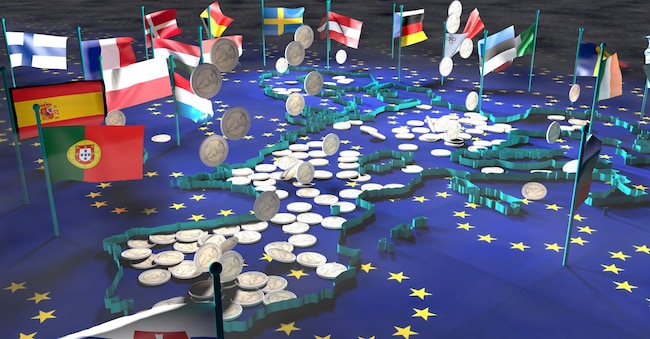
 (Adobe Stock)

8' min read

Translated by AI
Versione italiana

8' min read

Translated by AI
Versione italiana

The European Union’s budget is very small in relation to the region’s economy. Nevertheless, it is of immense importance, as it sets out the priorities we wish to establish for the future. The budget covering the years 2028 to 2034 will be particularly crucial, given the rapid changes in the economic, technological and security landscape in recent years.

We already know a great deal about this: the Commission put forward its proposals a year ago; the European Parliament has already given its views; and the European Council of 18–19 June gave the green light, subject to certain conditions. Yet the issue is absent from public debate in our country, despite the fact that – as is well known – final approval requires the unanimous consent of all Member States, including our own.

Loading...

The lack of debate is also particularly significant in relation to the content of the proposal. In a nutshell, it provides for: i) maintaining the current, minimal, size of the budget; ii) introducing three new major priorities: competitiveness, defence and enlargement; iii) funding these by reducing resources for traditional EU policies, starting with cohesion policy; iv) to radically overhaul the structure of the latter, with a view to centralising power within national governments and ensuring flexibility in the use of resources, following the PNRR model in many respects. Readers interested in the many complex technical aspects will find an excellent analysis in a recent hearing given by the Chair of the Parliamentary Budget Office. A more in-depth critical analysis can be found in essays by the author, co-written with Flavia Terribile, to be published in the *Rivista Economica del Mezzogiorno* (on Italia) and, from a European perspective, in the forthcoming *European Public Investment Outlook*.

How much money

It is clear that it is extremely difficult to ask the Union’s major contributors – first and foremost Germany – to increase their contributions: domestic political dynamics, coupled with the rapid rise of anti-European parties, make this impossible. However, new sources of the Union’s own resources should and could have been devised in good time; in other words, by resorting, as in the case of the Next Generation programme, to forms of borrowing closely linked to common objectives. The fact that this is not happening is yet further proof of the dramatic inadequacy of the continent’s current ruling classes in the face of present and future challenges. In particular, scaling back and nationalising cohesion policies represents the most short-sighted choice. The new priorities will be pursued at the expense of citizens in Europe’s weaker regions, where Eurosceptic movements already have a strong hold, and who will perceive an even greater inability on the part of Brussels to meet their needs; furthermore, the key role of national governments goes exactly in the direction demanded by the sovereigntists: a reduction in common rules and ambitions. That this is happening under an Italian Commissioner for Cohesion is part of the crux of the matter.

Quantitative aspects and the growth of inequalities

Although direct comparisons are not straightforward, the proposal under discussion would result in a cut of around one-seventh to cohesion policies. It is often said that what matters for disadvantaged regions is not so much the quantity as the quality of public policies. Allow me to disagree wholeheartedly: both aspects are fundamental. Looking at Italia, the investment needs in the South (and to some extent also in the regions of the Centre-North facing growing difficulties) are colossal: consider the costs involved in upgrading and improving the rail networks; the situation of schools without sports halls and canteens; the needs of water supply and waste treatment systems; the need for action in urban areas. And much more besides. This is against a backdrop in which, for many years, European funds have merely served to make up for a lack of national investment; and in which the post-PNRR era, with the requirements of the Stability Pact, raises serious fears of a squeeze on public investment, as was the case in the 2010s. The fading of those signs of economic growth in the South in recent years (which, as always, have a positive multiplier effect across the whole country), which were the very result of public investment.

But there is more to it than that: it is not just the lower spending on cohesion, but the nature of the new areas of intervention is also significant. Funds for competitiveness are not pre-allocated; they will be allocated by the Commission on a competitive basis. This means that, in all likelihood, they will be concentrated (as is the case with Horizon) in the strongest regions of the Union, thereby widening disparities. In the proposals, cohesion and competitiveness are two separate areas, two distinct budget headings. No effort has been made to reconcile them: as, for example, the Biden administration in the US attempted to do with the Inflation Reduction Act. On the other hand, in the rather substantial Draghi report, the theme of growth that also pursues territorial cohesion is entirely absent.

It is reasonable to assume that defence funding will be allocated to a significant extent – as is already happening in Germany – to the military conversion of parts of Europe’s manufacturing sector. Setting aside the long-term vision behind this decision (a crucial issue, though not the subject of these reflections), it is entirely possible that this will lead to a concentration of these resources in the already more industrialised areas of Europe.

Finally, enlargement. The events of 2004–06 are clear: it was primarily the weaker regions of the then EU-15 that bore the brunt of the cost: both because the same amount of cohesion funding was spread across the new Member States as well; and because their new industrial capacity – as part of the revival of Central Europe’s manufacturing heartland, led by Germany – significantly displaced production in many areas of the old Member States. Relocations to the East – from household appliances to sofas – bear witness to this. This does not in any way imply opposition to further enlargements: rather, it highlights the need to simultaneously increase – and certainly not reduce – support for adaptation and innovation in our regions. Provided, of course, that the new entrants fully comply with the Copenhagen criteria: a thorny issue (which is also beyond the scope of these reflections) but one that must be addressed.

So the first conclusion is that there is a tangible risk of growing inequalities in Europe.

Qualitative aspects: the national government is the dominant authority

The Commission proposes to pool cohesion and agriculture funds into a single fund, leaving allocation decisions to the Member States. It provides for a minimum level of funding for the least developed regions but, unlike in the past, does not pre-allocate funds for the other categories (intermediate and advanced). In other words, Europe is relinquishing its own policy: that of determining, at a continental level, the intensity of intervention based on a region’s distance from European averages. It leaves the initiative to national governments. And, as one might reasonably expect, this is likely to trigger internal conflicts over the distribution of resources: between cohesion (a weak and diffuse interest) and agriculture (which is far better placed to assert itself); and between the various regions. The thematic guidelines are modest: there is a risk of seeing funding for the objectives of the former European Social Fund reduced; and of abandoning urban policies.

The national government is in charge. There is a single plan. This situation mirrors the approach taken under the Next Generation scheme. Although the experience has, on the whole, been very positive – and bearing in mind the limited time available – it is precisely in Italia that we have seen the effects of this. A plan that is ‘blind to local contexts’, incapable of identifying and addressing the different needs and potential of regions and cities; implemented along rigidly sectoral lines. With criteria for the territorial allocation of resources (bar the general 40 per cent reserve for the South, which nevertheless excludes many ‘non-territorialisable’ interventions from version 4.0 onwards) decided upon subsequently by individual ministers. It is always worth recalling the events surrounding the measures for nurseries: three PNRR calls for proposals with political priority criteria that differed significantly from one another.

This is by no means an endorsement of the current model, in which regional presidents tend to regard EU funds as ‘their own’. However, centrally managed programmes with a national strategy – that is, plans agreed directly with the cities – can greatly improve the situation without having to swing from one extreme to the other.

Furthermore, we are well aware that the ‘final’ version of Italia’s PNRR is quite different from the ‘initial’ one. There have been eight revisions. These were managed technically by the government and the Commission without Parliament having had the opportunity to debate them – or, at times, even to be made aware of them – and without the public having been kept informed. This is the fundamental reason for the understandable – albeit highly excessive – widespread scepticism regarding the Plan’s outcomes: the community centre I had been promised is no longer there, and no one has explained to me why. A fine way to drive Italians even further away from politics.

The PNRR model: the issue of targets

Furthermore, the Commission envisages stricter time limits for reporting (technically: N+1) and considerable flexibility in reviewing allocations. The obvious risk is that this will lead to interventions being concentrated on projects that are simpler and quicker to implement; to the fragmentation of funding; and to the fulfilment of particular interests close to the heart of the executive body responsible for taking the decisions.

As in the PNRR, ‘targets’ are being introduced that must be met in order to receive funding. No longer is reimbursement based on expense reports. That’s good: because this way you can see on what basis the funds are being allocated. But: in theory. In all European PNRRs, these ‘targets’ have mainly been linked to specific outputs (technically: input indicators), such as the number of kilometres of track laid. But not to how many trains actually run on them, and even less to the impact that transport improvements have on citizens and businesses. The experience with the PNRR, moreover, has been one of constantly revised targets, often revised downwards. The issue of indicators is an important one. It must be separated from the rhetoric with which this proposal is presented: it is not a magic solution.

Nor does this mean defending the cumbersome and slow nature of current procedures and practices: but in this respect too, there is considerable room for improvement (for example, by following the proposals put forward by the group of experts coordinated by Andres Rodriguez-Pose of the LSE) without swinging from one extreme to the other.

Second conclusion: it is possible that by the end of 2027, whoever wins the elections will find themselves having to cobble together this much-talked-about ‘single plan’ – something that has never been done before – in a great hurry. Without a clear and up-to-date understanding of the situation and the dynamics at play across the regions during this turbulent period; without careful consideration of the major objectives to be pursued; without a full grasp of the enormous differences in local circumstances; and without the ability to select measures that are both feasible and genuinely significant.

If the political parties were genuinely interested in the fundamental urban and regional issues in Italia (and in the South in particular), it would make for a good election campaign issue. It is almost certainly not going to happen, but we have a duty to try and urge them to address it.

*Aldo Moro University of Bari

Copyright reserved ©

Brand connect

Loading...

Newsletter

Notizie e approfondimenti sugli avvenimenti politici, economici e finanziari.

Iscriviti