Oran: a meeting of cultures between the sea and the desert
A tour of the ancient city overlooking the Mediterranean, where Spanish, Arab and French influences blend with the legacy of Camus

Key points
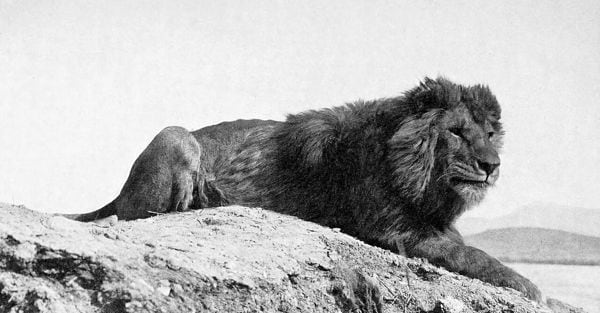
‘Watch out for the lions’: the concierge at the Grand Hotel, the historic hotel recently restored to its 1920s splendour, in the very centre of Place du Maghreb, repeats this – half-jokingly, half-seriously – to all the guests swarming beneath the graceful fan-shaped iron canopy as they set off to explore Algeria’s second-largest city. The name Oran, situated in the western part of this North African country, in fact derives from the Berber ‘wa-iharan’, which literally means ‘place of lions’. These big cats are said to have long made their home on Djebel Wahran, a barren mountain range beloved by birds, not far from the salt lagoon of the Grande Sebkha, nicknamed the ‘Montagne des Lions’. Two of them actually stand facing each other in front of the Town Hall, harmless and defenceless in their stately bronze poses.
Among the beaches of Madagh
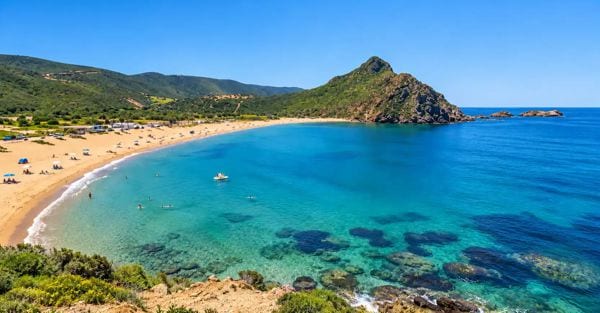
The Ahmed Zabana National Museum, too, can serve as the ideal starting point for immersing oneself in this sprawling, literary city, which Albert Camus frequented often during his youth in Algeria, loving its nature but unable to forgive it, as we read in the essay *Le Minotaure ou la halte d’Oran* (The Minotaur or the Stopover in Oran), the architectural choice to turn its back on the sea. Even now, after all, the beaches hold an irresistible appeal for bathers, especially the sandy beach at Madagh, the Plage de Bousfer sheltered by rocky outcrops, and the palm-dotted cove of Les Andalouses, where the Mediterranean is still warm. Trips to the seaside interrupted the writing of *The Plague*, which took place in a flat that now houses a shipping company: just as Camus used to do, it is still a pleasure today to wander seemingly aimlessly through the heart of Oran, finding oneself surprised and in awe before the neo-Baroque façade of the National Theatre, which boasts graceful turrets and a statue representing the Muses.
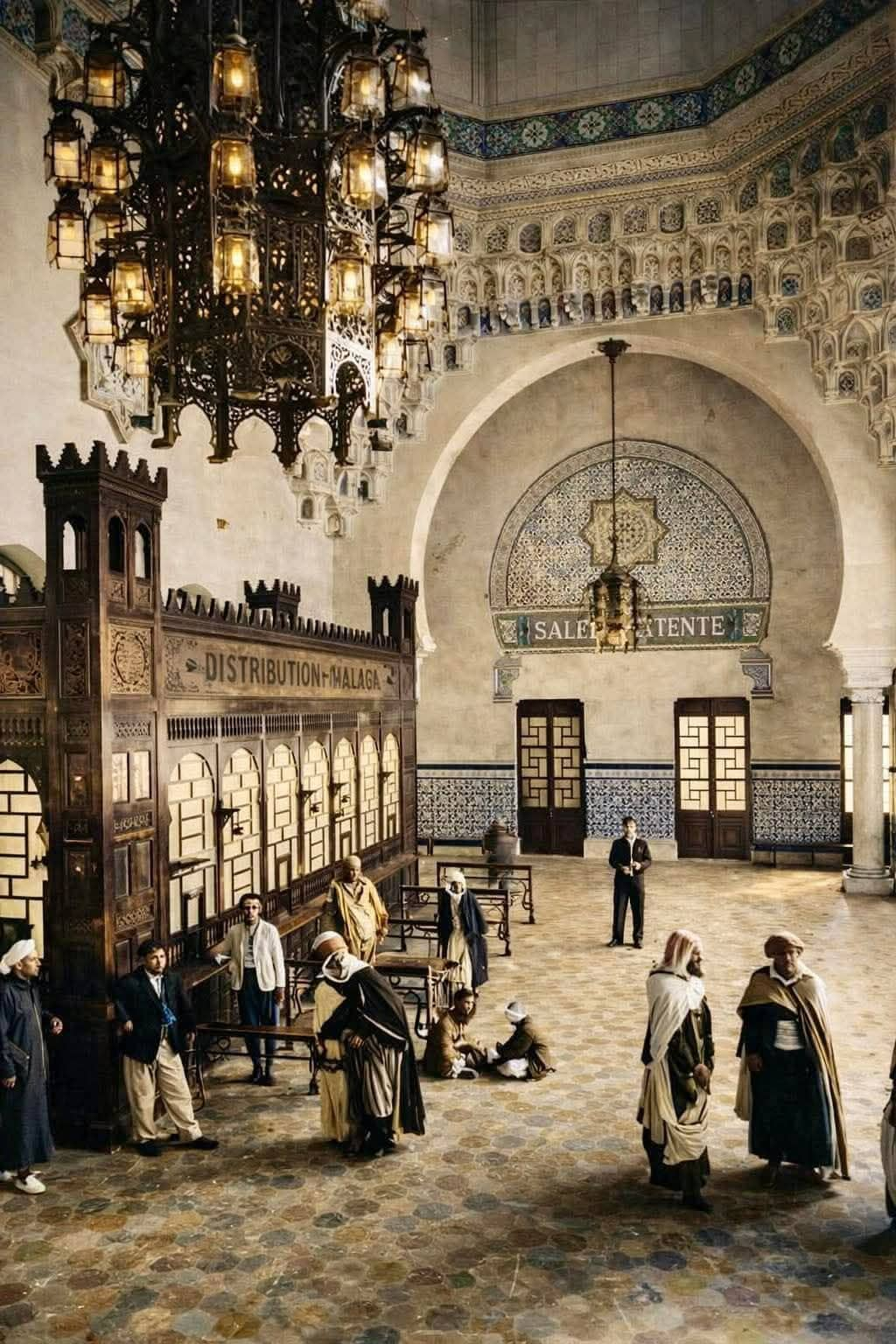
One then falls head over heels in love with the extraordinary Gare Centrale, the neo-Moorish-style station from which trains depart for the desert (from the outside it resembles a mosque, its clock resembles a minaret, whilst the doors, windows and the dome’s ceiling are embossed with the Star of David; by contrast, the frescoes on the ceiling depict Christian crosses), built during the period of French colonisation that began in 1831: the architects Marius Toudoire and Albert Ballu made it the main commercial hub of the whole of Western Algeria, particularly for the trade in textiles and tobacco. Before the French, however, it was the Spanish – having defeated the Algerian pirates – who took possession of Oran, founded in the 10th century by Muslims who had emigrated from Al-Andalus, and later conquered by the Berber Merinid dynasty, who fortified it in the 14th century.
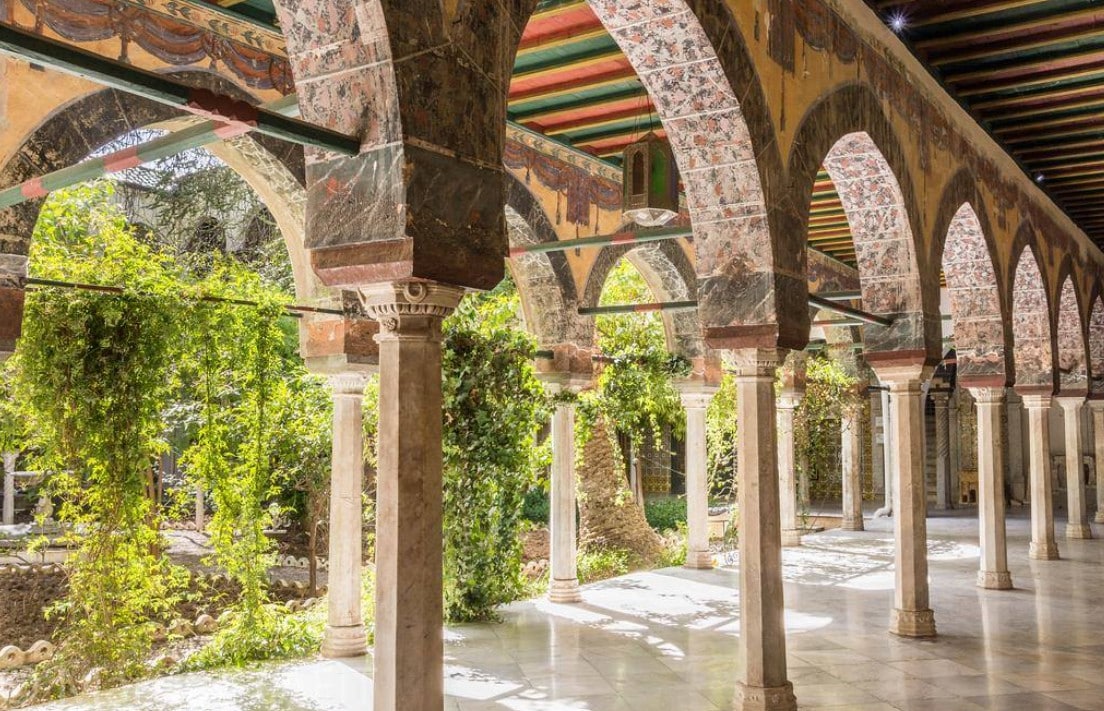
It was the Castilian rulers themselves who contributed significantly to that architectural fusion which, together with religious openness (the Great Synagogue is the largest existing Jewish place of worship in North Africa), constitutes the true hallmark of Oran: the surviving Spanish Gate, for example, exemplifies the monumental Iberian Renaissance style, whilst to celebrate the end of Spanish rule, the sumptuous and sensuous Bey’s Palace – with its intriguing harems, its rooms adorned with frescoes and stucco – were built – and the Hassan Pasha Mosque, funded by the ransom paid by Madrid for the release of captured soldiers.
The views from Santa Cruz Fort
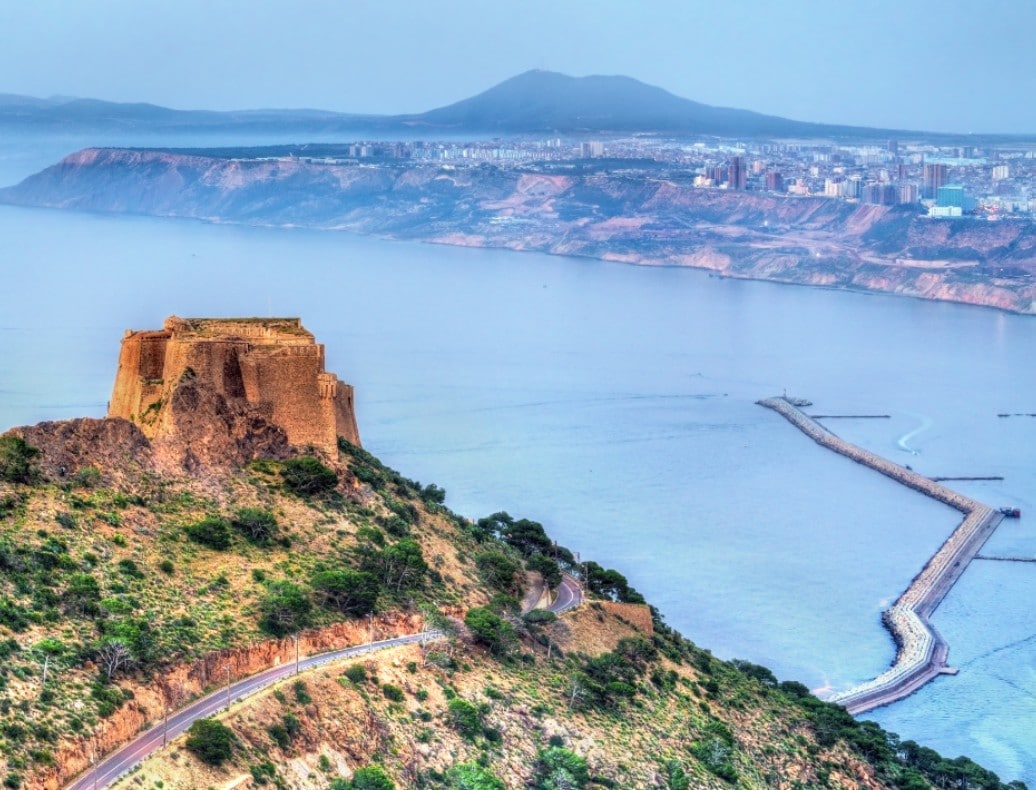
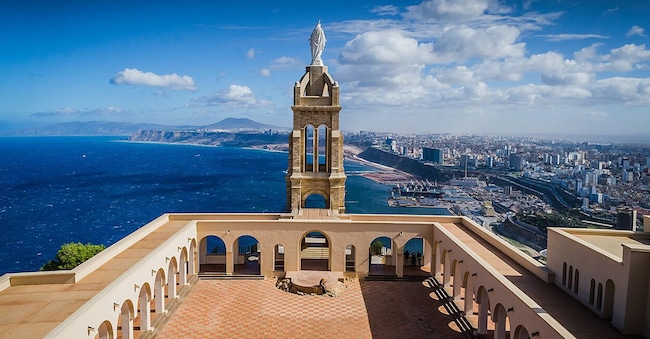
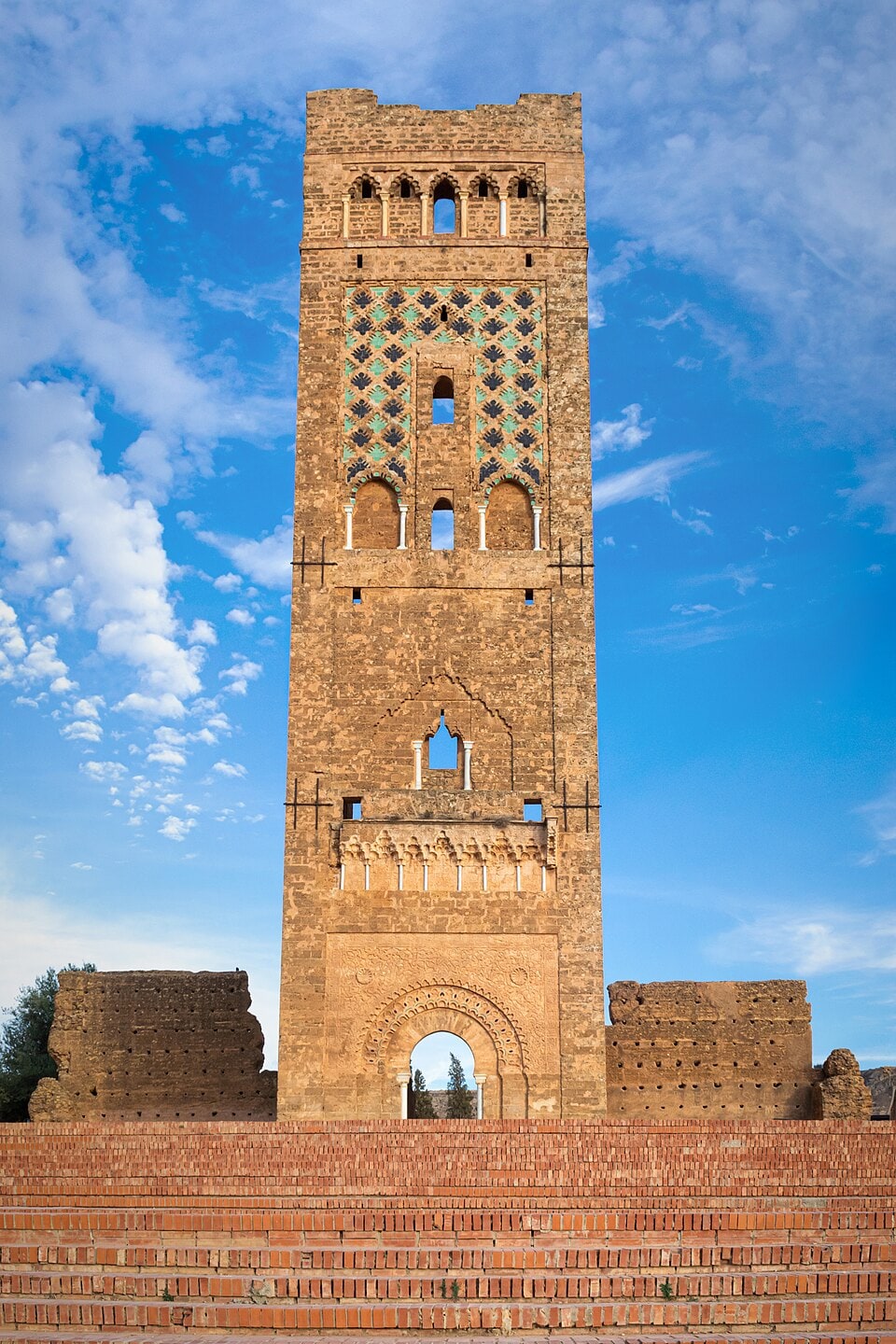
At sunset, however, one must climb to the summit of Jebel Murdjadjo, opposite the Fort of Santa Cruz, built at an altitude of 400 metres in 1563 by Álvaro de Bazán, Marquis of Santa Cruz, the sole surviving part of the Gulf of Oran’s defensive system: from up here, a single glance takes in the whole bay and the old town nestled on a terrace between the Murdjadjo massif and the sea, as well as the new town on the Karguentah plateau. Just below the fort stands the iconic silhouette of the sanctuary of Notre Dame de Santa Cruz, with its mesmerising tower crowned by a statue of the Virgin Mary and flanked by the rounded chapel, which in the collective imagination serves as a sort of secular lighthouse, welcoming or bidding farewell to those arriving or departing.